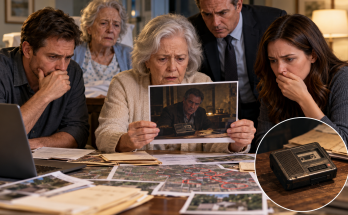
Natalie Mercer did not become sympathetic because she began cooperating.
Daniel made that clear.
So did I.
People sometimes confuse testimony with redemption.
They are not the same.
Natalie faced her own charges.
Her cooperation served her interests.
It could still reveal truth.
Both could exist.
She admitted Mercer Infrastructure financed strategic acquisitions using Victor’s network.
She admitted receiving nonpublic planning information through consultants.
She admitted approving purchases she knew involved distressed families.
Then she said something investigators had not expected.
“The system did not stop when Victor was arrested.”
Daniel leaned forward.
“How?”
“Automatic referrals.”
“What does that mean?”
“Target files continued routing through Frost Strategic’s case-management platform.”
Even after Frost operations were suspended?
Some automated integrations remained.
Westbridge borrower data.
SafeStep home reports.
Care-management referrals.
Property alerts.
No mastermind required.
The machine had processes.
Processes keep moving until someone shuts them off.
That frightened me more than Victor ever had.
Natalie identified an ordinary administrative office responsible for coordinating active cases.
Regional Transition Services.
A bland name.
Small suite.
No famous executives.
No dramatic lodge.
Clerical staff.
Schedulers.
Data analysts.
People moving files from one status to another.
Daniel searched.
The company remained open.
Its public description said:
Supporting families through complex aging transitions.
My stomach tightened.
No visible link to Shaw.
The ownership chain led to a trust managed years earlier by Frost Strategic.
Current manager?
Laura Kendricks.
The social worker.
The woman who said she did not know property sales followed her recommendations.
Emily stared.
“She runs the office?”
“According to filings,” Daniel said.
“Since when?”
“Eight months.”
“That’s before Victor was arrested.”
“Yes.”
“Did she tell you?”
“No.”
Laura had omitted something important.
Investigators moved quickly.
Not because omission proved guilt.
Because active referrals could affect real people.
At Regional Transition Services they found twenty-six open files.
Some legitimate.
Some tied to ordinary families seeking help.
That mattered.
The business was not purely fake.
Mixed legitimacy gave corrupt systems cover.
Six files overlapped with target properties.
Two involved pending assisted-living placements.
One involved a homeowner scheduled for competency evaluation the next morning.
Daniel froze all questionable referrals through emergency legal channels.
I asked about the woman.
Her name was Helen Brooks.
Seventy-seven.
Widowed.
Owned a corner property near a planned transit extension.
My stomach dropped.
The story repeating.
“Does she have family?”
“A nephew.”
“Debt?”
“Yes.”
“Of course.”
Daniel corrected me.
“Debt itself isn't suspicious.”
“I know.”
I did.
I was just tired.
Helen had agreed to a home-safety visit.
She had not agreed to assisted living.
Her nephew believed she should move.
No forged documents yet.
No sale.
The system had not completed the pattern.
That mattered too.
Preventing harm before it became dramatic felt unfamiliar.
Better.
Laura Kendricks was brought in again.
This time confronted with ownership records.
She changed her story.
She had taken management of Regional Transition Services after Calvin Frost’s death because the firm wanted social-work credibility.
She claimed she never understood the full acquisition strategy.
Daniel showed her property overlap.
She said she thought investors sometimes bought homes after families independently chose placement.
Possible.
Then investigators found internal messages.
Laura to staff:
If owner resists, reinforce safety narrative with nephew. Do not discuss property until placement stabilized.
My anger rose.
“That is not ignorance.”
No.
Another message:
Brooks property strategically sensitive. Frost client requests expedited transition.
Laura stared at it during interview.
Then asked for counsel.
The machine had not continued accidentally.
At least some people kept turning it.
Why?
Money.
Career.
Rationalization.
Same old answers.
Helen Brooks was contacted directly through independent counsel.
She laughed when told someone believed she needed assisted living.
“I need a plumber.”
That was encouraging.
She chose to remain home.
Her nephew, once informed of the property conflict, withdrew from the process and asked for legal advice.
No suitcase.
No forged signature.
No crisis.
One story interrupted early.
I wished all forty-three had been.
Natalie’s cooperation also revealed how targets were prioritized.
Not merely age.
Not merely land.
“Compliance probability.”
Families received scores.
Owners received scores.
Institutions too.
Which judges moved quickly.
Which doctors accepted family reports.
Which facilities tolerated resistance.
Which lawyers asked few questions.
A corruption map built from behavior.
Walter had spent years warning that systems could be weaponized.
Victor spent years measuring where they were easiest to weaponize.
Daniel showed us one table.
Dr. Halpern: high utility.
Silver Pines: high.
Harlan: high.
Mr. Lawson: avoid.
I laughed when I saw that.
“Congratulations.”
Mr. Lawson looked offended.
“I prefer ‘professionally inconvenient.’”
Emily smiled.
My own family had scores too.
Greg: high leverage.
Emily: obstruction risk.
Me: high resistance.
I almost felt proud.
Then another line.
Dana: influenceable.
Greg stared at that when Emily showed him during a prison visit later.
He wrote back:
Accurate.
That simplicity mattered.
Greg’s letters from custody surprised me.
He did not write every day.
He did not ask when we were coming.
He did not describe suffering dramatically.
He told me he had joined a financial-accountability class.
He hated it.
Good.
He told Emily he had begun writing a full accounting of every trust withdrawal and lie.
Not to send yet.
Only to stop remembering selectively.
That sounded useful.
Emily wrote twice.
Then three times.
No promises beyond the next letter.
Their relationship moved by inches.
I visited after two weeks.
The room was bright and unpleasant.
Greg looked smaller in institutional clothing.
Not because the clothes changed him.
Because context did.
No truck.
No house.
No role.
Just a man sitting across from his mother.
“How are you?”
“Terrible.”
“Good answer.”
He smiled.
“How’s the workshop?”
“Repairable.”
“You fixing it?”
“I hired someone competent.”
“Cruel.”
“You earned it.”
He laughed.
Then went quiet.
“Emily wrote.”
“I know.”
“She said Ruth’s cookies are still awful.”
“They are.”
“Tell Ruth I said that.”
“I value my windows.”
We spoke about ordinary things.
That felt more important than expected.
Then Greg asked:
“Did Helen Brooks stay home?”
“Yes.”
He exhaled.
“Good.”
He followed the investigation through his lawyer and news.
For the first time, someone like me remained in her home before damage happened.
Greg seemed to understand why that mattered.
“I keep thinking if somebody had stopped me after the first lie…”
I interrupted.
“Don't.”
He looked at me.
“Why?”
“Because somebody did stop you.”
“Who?”
“Your doctor told you to let me answer for myself.”
He went still.
“You ignored her.”
“Yes.”
“Emily warned me.”
“Yes.”
“Mr. Lawson.”
“Yes.”
“Even I told you no.”
“Yes.”
“There were exits.”
Greg looked down.
“Right.”
“That matters.”
He nodded.
Another excuse closed.
Good.
Outside custody, the cases expanded.
Silver Pines replaced administrators.
Marlene resigned.
Regulators required independent review of past admissions tied to referral incentives.
Some families discovered their relatives truly needed high levels of care.
Others discovered placement had been premature.
Again, no blanket answer.
Messy truth.
Halpern eventually admitted he signed some reports without sufficient independent verification.
He continued denying forgery.
Forensic evidence supported that several signatures had indeed been copied without his knowledge.
Both negligence and victimization.
Another mixed role.
His licensing board imposed suspension pending longer proceedings.
Harlan’s financial investigation uncovered indirect benefits.
Travel.
Consulting honoraria routed through his brother.
No envelope of cash.
Respectable corruption.
He denied connecting benefits to rulings.
Prosecutors disagreed.
Paul Frost provided internal correspondence showing his father discussed “keeping Harlan comfortable.”
That phrase became important.
So did several judges who refused similar outreach.
Again, systems were not uniformly corrupt.
People made choices within them.
Natalie eventually admitted she knew “capacity-supported acquisitions” sometimes depended on exaggerated reports.
She claimed she never approved outright forgery.
Prosecutors charged her with financial and conspiracy offenses supported by the broader evidence.
Witness-intimidation charges remained.
Victor, seeing everyone testify, offered cooperation.
Prosecutors wanted remaining hidden accounts.
Foreign entities.
Funds.
Victim lists.
He wanted reduced exposure.
No one asked my opinion.
Good.
This was no longer my decision.
Still, Victor requested one thing.
A copy of Walter’s letter.
I refused.
Daniel told me Victor could obtain portions through discovery if relevant.
That was law.
But I would not personally give it.
Walter’s words were not a reward.
Then a strange package arrived.
No threat.
No unknown sender.
Official chain.
Investigators returned Walter’s microcassette recorder after forensic retention.
I held it for the first time in fifteen years.
The scratch.
The tape.
His initials.
A stupid little machine.
Heavy with history.
I took it to the workshop.
Placed it on the repaired bench.
Then removed it again.
“No.”
Emily stood in the doorway.
“What?”
“I don't want a shrine.”
She smiled.
“Grandpa would hate that.”
“Yes.”
I put the recorder in a drawer with ordinary tools.
Where it belonged.
Life around evidence.
Not evidence around life.
Ruth returned fully to her home.
Linda moved into a nearby apartment rather than Ruth’s spare room.
Smart.
Help without control.
Margaret and Lydia rented adjoining units in their new community.
Not together.
Also smart.
Mrs. Alvarez received a preliminary settlement funded through receivership assets.
Not full compensation.
Enough to choose a new apartment near her sister.
Helen Brooks hired her plumber.
I liked that ending best.
One day Daniel came by without a folder.
That alarmed me.
“No paperwork?”
“Personal visit.”
“Are you ill?”
He laughed.
“I came to tell you something before public notice.”
“What?”
“The forty-three-property review is complete.”
“How many showed serious irregularities?”
“Twenty-one.”
I sat down.
More than I hoped.
Fewer than forty-three.
“How many owners displaced?”
“Fourteen.”
“How many transactions reversed or likely reversible?”
“Eight.”
“Compensation?”
“Being pursued for others.”
“Criminal cases?”
“Multiple.”
Daniel continued.
Not every target became a victim.
Some refused.
Some relatives refused.
Some doctors challenged reports.
Some attorneys stopped sales.
Some banks questioned documents.
The machine failed whenever one person insisted on independent verification.
That mattered.
“Walter would like that.”
“Yes.”
Then Daniel smiled faintly.
“Your file became training material.”
I stared.
“My what?”
“Anonymized case study.”
“For investigators?”
“Also elder-abuse prevention teams.”
I laughed.
“Wonderful. I become paperwork.”
“Useful paperwork.”
“Still.”
He stood.
“There's one more thing.”
“There always is.”
“Not a problem.”
“What?”
“Victor signed a proffer agreement.”
Meaning he would provide information under legal conditions.
“Did he confess?”
“Parts.”
“What parts?”
“Enough to confirm Walter was never a participant.”
I had not needed Victor for that.
Still, I listened.
Victor admitted altering context around Walter’s documents.
Keeping the incomplete recorder.
Using the draft deed as leverage.
Monitoring the Whitmore family.
Targeting Greg.
He admitted the family pathway strategy.
He admitted he expected Greg’s shame to prevent full cooperation.
That irritated me on Greg’s behalf even though it was accurate.
“Anything about me?”
Daniel smiled.
“Yes.”
“What?”
“He said you were supposed to be easier.”
I laughed so hard Ruth heard through the open window and shouted:
“Tell him he’s stupid.”
Daniel continued.
Victor insisted he never intended physical harm to me.
Perhaps true.
Not especially comforting.
He viewed removal, legal incapacitation, and property loss as nonviolent.
That told me enough about him.
Then Daniel said something unexpected.
“Victor also talked about Walter.”
“What?”
“He said Walter frightened him.”
I stared.
“Victor wasn't afraid of Walter.”
“He says he was.”
“Why?”
“Because Walter didn't want anything from him.”
That made sense.
Victor understood debt.
Ambition.
Fear.
Status.
Greed.
Things he could price.
Walter’s refusal confused him.
Daniel quoted Victor:
“Men are easy when you know what they want. Walter wanted me to stop.”
No transaction.
No leverage.
That was why the conflict became personal.
I looked toward the workshop.
Walter had been wrong about secrecy.
Right about refusal.
People do not need to be perfect to resist wrongdoing.
They need to stop participating.
Then Daniel told me Victor had one more request.
“He wants to apologize.”
“To me?”
“Yes.”
“No.”
Daniel nodded.
“That's what I told him you'd probably say.”
“You're learning.”
“Slowly.”
He left.
I did not feel guilty.
An apology belongs to the person offering it.
Hearing it belongs to the person harmed.
Victor did not own my attention.
That night I wrote Greg.
Not about Victor.
Not the investigation.
I wrote:
Your father was right that shame makes people hide. He was also wrong to think hiding danger protected us.
When you come home, if you come home ready to live differently, do not confuse privacy with secrecy.
Privacy is yours.
Secrets that make other people pay for your choices are not.
I almost signed Love, Mom.
Then stopped.
Why almost?
I loved him.
No need to ration truth.
Love, Mom.
I mailed it.
Two days later, the court entered final judgment clearing the old deed cloud from Emily’s title.
No unresolved Shaw interest.
No equitable claim.
No draft transfer.
Nothing.
The house legally belonged to Emily.
My lifetime occupancy remained secure.
Exactly what we had planned months ago.
The legal victory was complete.
Then Emily surprised me.
She brought another document.
“What is this?”
“A proposal.”
I frowned.
“From who?”
“Me.”
She sat across from me.
“I want to transfer part of the property back.”
“No.”
Her mouth opened.
“You didn't even read it.”
“I don't need to.”
“Grandma.”
“No.”
“Why?”
“Because we already solved that problem.”
“I don't want you feeling like a guest.”
I stared at her.
“Do I act like a guest?”
“No.”
“Do you control where I put furniture?”
“No.”
“Can you remove me?”
“Not legally.”
“Then what exactly are you trying to fix?”
Emily hesitated.
“My guilt.”
There.
Truth.
She had watched me give up legal ownership to protect myself.
Now she worried she benefited.
I reached across the table.
“You didn't take my house.”
“No.”
“I sold it to you.”
“Yes.”
“With independent advice.”
“Yes.”
“Why?”
“To protect it.”
“To protect me.”
“Yes.”
“Then don't undo a good decision because feeling guilty is uncomfortable.”
She nodded slowly.
Another family habit interrupted before it became damage.
“Okay.”
“But.”
I raised an eyebrow.
“I want the house eventually used for something meaningful.”
“That sounds suspicious.”
Emily smiled.
“Not now. Someday.”
“What?”
“Maybe a legal-aid fund tied to the property. Or housing help for older people facing coercion.”
I considered it.
“That is your choice when it is fully yours.”
“You'd be okay with that?”
“Yes.”
“Grandpa?”
“He’d complain about administrative expenses.”
She laughed.
Then became serious.
“I don’t want the house to become the thing we protect forever.”
I looked toward the hallway where my suitcase once stood.
“Neither do I.”
A home should support life.
Not replace it.
Then the phone rang.
Not Daniel.
Greg.
Approved call.
“Mom.”
“Yes?”
“I got your letter.”
“Good.”
“Privacy versus secrecy.”
“Yes.”
“I think I finally understand.”
“You think?”
“I’m practicing modesty.”
I smiled.
“How are you?”
“Still terrible.”
“Excellent consistency.”
He laughed.
Then:
“They may move me to supervised release early because of cooperation and program completion.”
My heart jumped.
“When?”
“Nothing final.”
“Okay.”
“I didn't want you hearing from someone else.”
That mattered.
“Thank you.”
He paused.
“I've never been good at saying things before they become emergencies.”
“No.”
“I’m trying.”
“I know.”
This time I allowed the phrase.
Because he was.
Then he said:
“Emily wrote me that she almost transferred the house back.”
“She told you?”
“Yes.”
“What did you say?”
“That it sounded like guilt.”
I laughed.
“You two may be learning.”
“Terrifying.”
Then he became quiet.
“Mom.”
“Yes?”
“When I get out, I don't want to live there.”
“I wasn't offering.”
“I know.”
Good.
“I want somewhere small.”
“Good.”
“Cheap.”
“Very good.”
“Maybe near work.”
“What work?”
“I don't know yet.”
Better answer than invented certainty.
“I may have to start over.”
“Yes.”
He swallowed.
“I think that’s okay.”
There was something peaceful in that.
Not inspiring.
Not dramatic.
Just acceptance.
Start over.
No asset.
No image.
No borrowed future.
His own life.
Then he added:
“I still owe Emily.”
“Yes.”
“And you.”
I thought about it.
“No.”
He hesitated.
“What?”
“You owe me behavior.”
Silence.
“Not money.”
“Okay.”
“You cannot repay trust like a loan.”
“No.”
“You rebuild it through repeated evidence.”
He laughed softly.
“You sound like Daniel.”
“Insulting.”
He laughed harder.
When the call ended, I looked around the kitchen.
Same cabinets.
Same table.
Same window.
Everything had changed.
Everything remained.
Outside, Ruth yelled at someone about parking.
Some things were eternal.
Then my doorbell rang.
A courier.
One final package from investigators returning seized personal property.
Inside was Walter’s blue cardigan.
No.
Mine.
The cardigan packed into the first suitcase.
It had somehow ended up among photographed evidence after the investigation began.
I held it.
Walter had bought it for our last Christmas.
Soft wool.
Slightly worn sleeve.
Nothing valuable to anyone else.
I put it on.
It still fit.
For months, objects carried evidence.
Now one object was only clothing again.
That felt like progress.
Click here to continue reading: PART 32: Greg Came Home to No House, No Business, and No Excuses, and the Empty Suitcase Finally Became Something Else Entirely
My Son Arrived With a Suitcase for Me, Certain I Would Leave the Home His Father and I Built
Part 31 of 35