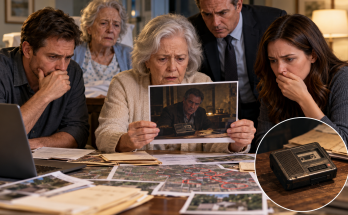
The envelope addressed to Victor was still sealed.
Mr. Lawson brought it from secure storage.
I held it at my kitchen table.
Ruth sat nearby.
Emily stood at the window.
Greg remained outside until invited.
I invited him.
Some choices mattered because they had once been impossible.
Daniel explained the request.
Victor would speak in a recorded interview room.
His attorney present.
Prosecutors present.
No private meeting.
No promises.
No exchange guaranteeing benefit.
If I chose to read Walter’s letter, it would become part of the recorded conversation.
“If I refuse?”
“Then we continue without it.”
“So Victor has no leverage over me.”
“No.”
That mattered.
I did not want this to become another situation where someone created a false choice.
“Why does he want the letter?”
Daniel had asked.
Victor gave one answer.
“Walter always believed he understood me.”
I almost laughed.
Perhaps that was the wound beneath everything.
Walter’s refusal had become personal because he saw through Victor’s language.
Not simply crooked deals.
The hunger underneath.
Control.
Success measured by making others yield.
I opened the envelope before going.
Not for Victor.
For myself.
Walter’s handwriting filled two pages.
The first line:
Victor—
If Eleanor is reading this to you, then you failed.
I laughed aloud.
Ruth said, “I like him.”
“You would have fought constantly.”
“Probably.”
I continued.
Walter wrote that failure did not mean arrest.
Not losing companies.
Not losing money.
Victor’s real failure would be spending his life proving everyone had a price and eventually discovering some people refused the transaction.
He mentioned Celeste.
Lydia.
Margaret.
Even Paul.
People Victor thought fear permanently owned.
Then:
You will tell yourself I hated you. I did not. Hate would have required me to carry you home.
I paused.
That sounded exactly like Walter.
He refused to let enemies occupy more space than necessary.
Then came the cruelest line.
You mistook my refusal to fear you for disrespect.
I did not disrespect you. I simply never admired you.
I sat back.
Greg whispered, “Dad.”
Emily almost smiled.
Walter understood Victor’s vanity.
Victor wanted enemies because enemies confirmed importance.
Walter gave him indifference.
The letter continued.
He wrote that Victor could still choose to stop.
Not because Walter believed in miraculous redemption.
Because every system depends on repeated choices.
If one person stops signing.
Stops lying.
Stops threatening.
The machinery changes.
Then the final paragraph.
If you are ever caught, do not blame Frost, Mercer, Harlan, Greg, your mother, your sister, me, or the people whose property you took.
A machine can influence you.
It cannot make you choose.
That sentence hit Greg visibly.
He looked away.
Walter’s message to Victor was also a message to him.
Context without absolution.
Again.
I agreed to read the letter.
At the detention facility, Victor entered wearing plain jail clothing.
Without the coat, the polished shoes, the controlled environment, he looked smaller.
Not harmless.
Smaller.
He sat across the table.
His attorney beside him.
Daniel behind glass.
A prosecutor at the far end.
Victor looked at me.
“Eleanor.”
“Victor.”
“You have it.”
“Yes.”
“Did you read it?”
“Yes.”
He smiled faintly.
“Of course you did.”
“It was addressed to you, not classified.”
His smile disappeared.
“Read it.”
“No.”
That startled everyone.
Victor stared.
“You came here to read it.”
“I came here to decide whether you deserved to hear it.”
His attorney shifted.
Victor leaned back.
“And?”
“Tell investigators where the records are.”
He smiled.
“So there is a bargain.”
“No.”
“You just asked for something.”
“I asked.”
“What do I get?”
“The possibility I read the letter.”
He almost laughed.
“You learned.”
“From people better than you.”
His face hardened.
The prosecutor intervened, making clear no legal promises were being offered.
Victor could speak or remain silent.
Victor looked toward me again.
“Why should I trust you?”
“You shouldn't.”
That answer stopped him.
“I don't need your trust.”
He studied me.
Perhaps nobody had ever refused the framing so completely.
He eventually said the records were in a climate-controlled commercial unit registered through a defunct Frost entity.
Location across state lines.
Investigators would verify.
“What records?” the prosecutor asked.
“Original Harlan correspondence. Mercer planning documents. Frost drafts.”
“Anything tied to current acquisitions?”
“Yes.”
“Natalie?”
“Yes.”
“Halpern?”
“Some.”
“Why keep them?”
Victor looked almost offended.
“Insurance.”
Of course.
The prosecutor asked whether anyone else knew the location.
“Lydia knew part.”
“Paul?”
“No.”
“Dennis?”
“No.”
“Chuck?”
“No.”
He had kept his final leverage private.
“What else?” Daniel asked through the room speaker.
Victor ignored him.
“Read the letter.”
I considered refusing.
Then I thought of Walter’s condition.
Not revenge.
Truth.
I unfolded the pages.
I read every word.
Victor’s face remained still until the line:
I simply never admired you.
Something changed.
Tiny.
His eyes moved.
He looked away.
I continued.
When I reached the final paragraph about blame, Victor interrupted.
“He didn't understand.”
I stopped.
“What?”
“He thinks choice exists in a vacuum.”
“No.”
“He had you. A family. A house.”
“You had a mother.”
Victor laughed bitterly.
“A mother who preferred Lydia.”
I felt no sympathy yet.
Only recognition.
Family stories begin earlier than their worst acts.
“That doesn't explain Ruth.”
“No.”
“Or Margaret.”
“No.”
“Or me.”
He said nothing.
I continued reading.
A machine can influence you.
It cannot make you choose.
Victor stared at the table.
Then he said, “Easy for Walter.”
Greg had said almost the same thing about himself.
Different man.
Same temptation.
Blame circumstances until choice disappears.
I folded the letter.
“You spent fifteen years proving Walter wrong.”
Victor looked up.
“And?”
“You proved him right.”
His face hardened.
“I built companies.”
“You built leverage.”
“I created projects worth billions.”
“With other people’s homes.”
“I paid them.”
“Sometimes.”
He stared.
“You think your son is better than me?”
There it was.
He wanted comparison.
Hierarchy.
One sinner against another.
“I think Greg is responsible for Greg.”
Victor almost smiled.
“And me?”
“You're responsible for you.”
No ranking.
No rescue.
No excuse.
Victor leaned back.
“Then why are you helping him?”
“Because accountability doesn't forbid relationship.”
He looked away.
That concept seemed to bother him.
Perhaps in Victor’s world, people were either useful or discarded.
Greg had believed the same thing about himself after confessing.
Destroy me or forgive me.
Walter’s letter offered another path.
Consequences and relationship can coexist.
The interview ended after forty minutes.
Victor gave no confession to the entire scheme.
But he confirmed enough details to lead investigators toward the storage unit.
The records existed.
Originals.
Emails.
Signed directives.
Court correspondence.
Planning maps.
Payment authorizations.
Natalie’s handwritten instructions.
Harlan’s off-record notes.
Halpern’s consulting invoices.
Calvin Frost’s strategy memos.
The structure finally had documentary continuity from fifteen years ago to now.
Not one heroic piece of evidence.
Layers.
That mattered.
Real cases rarely turn on a single dramatic letter.
Truth becomes stronger when many imperfect sources agree.
Walter.
Celeste.
Margaret.
Lydia.
Priya.
Paul.
Chuck.
Marlene.
Halpern’s notebook.
Greg’s files.
Dana’s envelope.
Financial records.
Recordings.
Each incomplete.
Together difficult to dismiss.
Charges expanded.
Victor faced additional conspiracy, fraud, obstruction, coercion, and financial offenses.
Natalie faced a growing case tied to funding, advance planning knowledge, and intimidation.
Harlan’s investigation deepened.
Halpern’s license came under emergency review while prosecutors evaluated his conduct.
Frost Strategic Partners suspended operations.
Westbridge entered receivership.
Silver Pines faced regulatory investigation.
None of that restored anyone’s lost years.
Margaret’s competency restrictions were formally lifted after an independent evaluation found mild memory impairment but preserved decision-making capacity in major personal and financial matters.
The report included a sentence I loved.
Cognitive imperfection does not equal global incapacity.
I wanted it printed on every wall in every courtroom.
Ruth returned home.
Linda stayed nearby.
Not controlling.
Helping.
They were learning the difference.
Mrs. Alvarez’s family challenged her property transfer.
Others began doing the same.
Some houses would return.
Some compensation might come later.
Some losses could never be fully reversed.
Justice was beginning.
Not finishing.
At home, repairs started on Walter’s workshop.
Greg asked if he could help.
I said yes under conditions.
He worked when invited.
Left when asked.
Did not treat access as restoration of ownership.
One afternoon he replaced the loose stair rail Walter mentioned in his letter.
I stood at the bottom watching.
“You finally did it.”
Greg tightened the last screw.
“Only about two years late.”
“Your father considered lateness a moral failure.”
“He considered five minutes late evidence of social collapse.”
I laughed.
Greg smiled.
Then his expression became serious.
“Mom.”
“Yes?”
“I have another court meeting next week.”
His own case.
Trust theft.
Fraudulent documentation.
His cooperation would matter.
Restitution would matter.
His conduct would matter.
“I know.”
“I might go to jail.”
“Yes.”
He swallowed.
“You okay with that?”
The question surprised me.
“I'm not okay with any of this.”
“That’s not what I meant.”
“I know.”
I walked toward him.
“If a court decides incarceration is appropriate, I will not campaign to erase what you did.”
His face tightened.
“I figured.”
“But I will visit you.”
He looked at me.
That was the difference.
Not rescue.
Relationship.
Tears appeared in his eyes.
“Okay.”
Emily arrived carrying paperwork.
Greg wiped his face before she saw.
Probably pride.
Progress remains uneven.
She had been reviewing her restored trust structure.
Walter’s reserve fund, Greg’s asset transfers, and recovered Westbridge money would return most of what was lost.
Not all immediately.
But enough to restore the purpose Walter intended.
“What are you doing with it?” I asked.
Emily smiled faintly.
“Nothing dramatic.”
“Good.”
“I’m rebuilding the long-term account.”
“Very sensible.”
“Grandpa would be unbearable about how sensible.”
“Yes.”
Then she looked toward her father.
“I also changed trustees.”
Greg nodded.
“You should.”
“No family trustee.”
“That’s smarter.”
She watched him carefully.
“Does that bother you?”
“Yes.”
Emily seemed surprised.
Greg continued.
“It should.”
She nodded.
“Okay.”
Another truth that cost something.
That evening Margaret and Lydia visited.
Margaret moved slowly but independently.
Lydia still carried scars on her arm.
Ruth came over.
Soon my kitchen held more women than Walter would have believed possible without food being served.
So I served food.
Victor’s name came up only once.
Margaret said his attorney had asked her for a character letter.
“What did you say?” Ruth asked.
“No.”
Ruth nodded approvingly.
“Excellent letter.”
Margaret smiled.
“I told Victor I love him.”
The room quieted.
“And?”
“I told him love is not testimony.”
I understood completely.
Later, after everyone left, I walked into Walter’s workshop.
The repaired wall was unfinished.
Fresh wood beside smoke-darkened boards.
Old and new visible at once.
I liked it.
Covering every scar would have felt dishonest.
On the workbench sat the letter Victor heard.
Beside it, Walter’s family letter.
I reread the last line.
Save the people first.
For months I interpreted the story as a fight over my house.
Then as a fight over independence.
Then fraud.
Then family betrayal.
But Walter had understood something more basic.
A home is dangerous when people become less important than owning it.
Greg forgot that.
Victor built a life around forgetting it.
I nearly did too when anger became the only thing holding me upright.
The front door opened.
Emily called, “Grandma?”
“In the workshop.”
She appeared carrying a certified envelope.
“What now?”
She smiled strangely.
“Court notice.”
“Whose?”
“Dad’s.”
My stomach tightened.
“Already?”
“Not sentencing.”
She handed it to me.
Greg had entered a formal guilty plea on two charges connected to misuse of her trust and falsified trustee records.
He would continue cooperating on others.
No trial on those counts.
No forcing Emily to testify about basic facts he no longer disputed.
I looked at her.
“Did he tell you?”
“No.”
“Why not?”
“He said he wanted me to hear from my lawyer first so I wouldn't think he was asking for credit.”
That was different.
A choice made without controlling our reaction.
Emily sat on Walter’s stool.
“I don't know how to feel.”
“You don't have to.”
“I’m still angry.”
“Good.”
“I also feel relieved.”
“Also good.”
“I hate that he might go to jail.”
“That’s allowed.”
“I don't want him spared just because I hate it.”
I sat beside her.
“That’s allowed too.”
She leaned her head against my shoulder.
For a while we said nothing.
Then my phone rang.
Daniel.
I almost ignored it.
Habit won.
“What now?”
He sounded tired.
“We found something in Victor’s final storage records.”
I sighed.
“Another conspiracy?”
“No.”
“What?”
“A deed.”
My stomach tightened.
“To what?”
“Your property.”
I stood.
“That’s impossible.”
“Current deed is Emily’s. This is older.”
“How old?”
“Fifteen years.”
Walter’s time.
“Whose names?”
Daniel paused.
“Walter and Victor Shaw.”
The workshop seemed to tilt around me.
“What are you saying?”
“It's not a recorded deed.”
“Then?”
“A draft.”
“Draft for what?”
“Transfer of fifty percent interest.”
Emily stared.
I gripped the phone.
“Signed?”
“Yes.”
“By Walter?”
Daniel’s voice became careful.
“His signature appears genuine.”
For months, Walter had stood in my memory as the man who protected the house from Victor.
Now an old document suggested he once considered giving Victor half.
Maybe leverage.
Maybe trap.
Maybe compromise.
Maybe something worse.
The fight over Walter’s secrets was not finished.
And for the first time, I wondered whether the house itself carried one decision my husband had never confessed even in his final letters.
Click here to continue reading: PART 29: The Draft Deed Suggested Walter Once Planned to Give Victor Half Our Home, but the Missing Witness Signature Told a Different Story
My Son Arrived With a Suitcase for Me, Certain I Would Leave the Home His Father and I Built
Part 28 of 35