Thomas Harlan had retired four years earlier.
He was seventy-eight.
Respected.
Decorated by local legal organizations.
His official biography described decades of public service.
I had learned to distrust biographies that contained only clean nouns.
Daniel refused to assume Walter’s note meant corruption.
“Harlan authorizes access could refer to lawful court authority.”
“Of course.”
“You sound sarcastic.”
“I’m practicing restraint.”
He ignored that.
Investigators pulled Margaret’s old competency case.
Judge Harlan had signed several orders.
Some routine.
One granted Victor temporary authority over financial records before a full hearing.
Another permitted sale preparation on certain assets.
Margaret’s attorney at the time raised objections.
Those objections were denied.
“Illegal?” I asked.
“Not on their face.”
“Unusual?”
Daniel hesitated.
“Somewhat.”
“Meaning?”
“Broad authority based on limited evidence.”
“Halpern’s evidence?”
“One evaluation came from Northline.”
There it was.
Medical assessment connected financially to Dennis.
But that relationship may not have been known then.
Emily asked, “Did Harlan know?”
“We don't know.”
“Walter thought something.”
“Yes.”
We searched his files.
Walter had attended at least one public hearing involving another homeowner.
Not Margaret.
A man named Samuel Greene.
Greene’s property later appeared in an early Shaw acquisition.
Walter’s notes from the hearing included:
Same doctor.
Same appraiser.
Harlan again.
Then:
Pattern impossible to ignore.
I felt the old anger return.
Walter had seen pieces years before anyone else.
Yet he kept trying to prove them quietly.
Maybe because accusations against judges require evidence.
Maybe because he was afraid.
Maybe because he believed he could protect me by keeping danger outside our kitchen.
“What happened to Greene?” I asked.
Daniel searched.
Died six years ago.
“Family?”
“Daughter.”
“Find her.”
Daniel gave me a look.
“Investigators are capable of thinking too.”
“I like supporting the process.”
Emily laughed.
Greg did not.
He had been unusually silent all morning.
I noticed.
“What's wrong?”
“Nothing.”
That answer no longer survived in my presence.
“Try again.”
He looked toward Daniel.
Then Emily.
Then me.
“I need to tell you something.”
Emily immediately stiffened.
“Another installment?”
Greg absorbed the blow.
“Yes.”
I felt tired before he began.
“What?”
“The first time Chuck talked about capacity.”
“We know.”
“No.”
Greg shook his head.
“You know about the meetings after Westbridge.”
My stomach tightened.
“When was the first?”
He stared at the table.
“Dad’s funeral.”
Silence.
Emily’s face changed.
“Chuck talked about Grandma’s capacity at Grandpa’s funeral?”
“Not directly.”
“Then say exactly what happened.”
Greg took a breath.
After the visitation, Chuck approached him in the parking lot.
He introduced himself as someone who had known Walter professionally.
That part was true enough.
He asked whether I would manage alone.
Greg said yes.
Chuck asked whether I had ever considered downsizing.
Greg said I would never leave the house.
Then Chuck said:
“Sometimes people need family to make the practical decision for them.”
I felt cold.
“What did you say?”
Greg looked at me.
“I said you’d kill me.”
Despite myself, I almost smiled.
“What else?”
“He laughed.”
“And?”
“He gave me his card.”
“Then?”
“I called him.”
Emily stood.
“When?”
“Three weeks later.”
“Why?”
Greg’s voice dropped.
“Money.”
His business problems had begun earlier than he admitted.
Not catastrophic yet.
But serious.
Chuck had mentioned financing.
Greg called.
That meant Victor’s access to him predated the Westbridge networking event.
The event was not first contact.
It was escalation.
“Why didn't you tell us?”
“Because it makes everything look worse.”
Emily laughed bitterly.
“Because it is worse.”
“Yes.”
I held up my hand.
“Continue.”
Greg met Chuck at a restaurant.
Chuck asked about the business.
Debts.
Assets.
Inheritance expectations.
Greg answered.
“How much did you tell him about me?”
“Too much.”
“What?”
“House value.”
“Mortgage?”
“Yes.”
“Your estimate of what I'd leave you?”
“Yes.”
My stomach turned.
Walter had been dead three weeks.
My son was discussing my estate with a man he barely knew.
Greg’s eyes filled.
“I know.”
“No. You know now.”
“Yes.”
“Then?”
“Chuck said there might be ways to unlock family equity without waiting.”
Emily whispered, “Without waiting for Grandma to die.”
Greg closed his eyes.
“Yes.”
The ugliness of the phrase settled over us.
“What did you say?”
“I told him you’d never agree.”
“And?”
“He said agreement was sometimes a process.”
The early version of the strategy.
Not yet assisted living.
Not yet forged forms.
But the seed.
“What did you do?”
“I left.”
That surprised me.
“You refused?”
“At first.”
“What changed?”
“My business got worse.”
Months later, Greg called Chuck again.
That call led to Westbridge.
So Victor had not simply found a desperate man.
He planted a contact before desperation matured.
Then waited.
Greg continued.
“There’s more.”
Emily muttered, “Naturally.”
He looked at her.
“I deserve that.”
“Yes.”
He turned toward me.
“The first loan wasn't for the business.”
“What?”
“Not entirely.”
“How much?”
“Two hundred thousand.”
“For what?”
“Paying off another lender.”
“So refinancing.”
“Mostly.”
“What else?”
Greg swallowed.
“Twenty thousand went to me personally.”
“For?”
He looked ashamed.
“Dana and I were behind on everything.”
I felt anger rise.
“You used borrowed money to maintain appearances.”
“Yes.”
“Then borrowed more.”
“Yes.”
“Then Emily’s trust.”
“Yes.”
The progression became painfully clear.
Every lie required another.
Every hidden debt created another vulnerability.
Victor did not need to invent Greg’s weakness.
He only needed to measure it.
“When did Chuck first suggest Silver Pines?”
“About eleven months ago.”
“Before the first suitcase?”
“Yes.”
“How?”
“He said moving you could solve multiple problems.”
“What problems?”
“Your safety.”
I stared.
“And the house.”
“Yes.”
“And your debt.”
“Yes.”
“One action solving three problems.”
Greg nodded.
“That’s how he sold it.”
“Did you tell him I was unsafe?”
“No.”
“Did he ask?”
“Yes.”
“What did you say?”
“That you were fine.”
That surprised Emily.
Greg continued.
“He told me fine changes quickly at your age.”
I almost laughed from anger.
“Generous.”
“He said I should start documenting things.”
“Before there were things.”
“Yes.”
“So from the beginning, you knew.”
Greg’s eyes dropped.
“Yes.”
The confession hurt differently now.
Not because I was discovering his wrongdoing.
Because I was discovering how early he recognized the wrongness and continued anyway.
Emily sat again.
“Why tell us now?”
Greg looked toward Walter’s letter.
“Because Mom said truth has to cost something.”
“That line isn't magic,” I said.
“I know.”
“What does this cost?”
“My defense.”
Daniel looked at him.
Greg continued.
“My attorney told me not to volunteer anything before the Westbridge relationship unless asked.”
Daniel’s expression hardened.
“Your attorney told you to lie?”
“No. He told me to answer questions precisely.”
That sounded plausible.
Greg looked at me.
“If I tell investigators I contacted Chuck voluntarily before the business collapsed, it weakens the argument that I was targeted without knowing.”
“Yes.”
“It makes me look more responsible.”
“Yes.”
“And I am.”
For the first time, the confession felt complete because he offered it before evidence forced him.
Maybe that was what Walter meant.
Not that truth erased wrongdoing.
That genuine truth sometimes removes your best excuse.
Daniel turned off the informal recorder.
“We need to do this properly with your counsel present.”
Greg nodded.
“I know.”
“Do you still want to disclose it?”
“Yes.”
“Call your attorney.”
Greg did.
Emily watched him.
Her anger remained.
So did mine.
But something shifted.
Not forgiveness.
Not yet.
Trust certainly not.
Only the recognition that Greg had finally chosen a truth that made his position worse.
Walter’s condition had been met.
One chance.
What Greg did with it remained his responsibility.
Daniel’s phone rang before the formal interview could begin.
Officers had located Samuel Greene’s daughter.
Her name was Patricia Greene.
She remembered Walter.
That startled me.
“How?”
“He contacted her after her father’s competency proceeding.”
“What did he ask?”
“Whether anyone pressured the family to sell.”
“And?”
“Yes.”
“Who?”
“Chuck Bennett.”
Years earlier.
Same man.
Same method.
Patricia had kept letters from Walter.
She agreed to provide them.
One contained something our files did not.
Walter had written:
I believe Harlan is either being misled repeatedly or has decided not to see what is in front of him. I cannot yet tell which.
That distinction mattered.
Walter did not claim the judge was corrupt.
He suspected.
He preserved uncertainty.
Victor’s leaked version would not.
Another letter described Richard Mercer.
Mercer appears to know which parcels matter before acquisition efforts begin.
Then a final sentence:
If Harlan’s court orders create access, Mercer’s money creates motive, and Victor’s people create pressure, someone is coordinating all three.
Someone.
Not necessarily Harlan.
Not Mercer.
Not Victor.
Walter believed there was another coordinator.
Lydia had said Victor claimed Mercer was only the money.
The same conclusion from opposite directions.
“Who?” Emily asked.
We returned to Walter’s notes.
Harlan authorizes access.
R.M. financing.
V.S. operations.
Then another abbreviation appeared repeatedly.
C.F.
At first we assumed it meant company file.
But Walter used it beside meetings.
C.F. present.
C.F. spoke to Harlan afterward.
Victor defers to C.F.
Mercer asks C.F. approval.
My pulse quickened.
A person.
“Who is C.F.?”
No one knew.
Mr. Lawson searched his memory.
Then stopped.
“What?”
He looked pale again.
“There was a lawyer.”
“Name?”
“Calvin Frost.”
Daniel began searching.
Calvin Frost had been counsel to several development companies.
He later became a lobbyist.
Then adviser to regional planning boards.
He died three years ago.
I stared.
“Of course he did.”
But Frost had a firm.
Frost Strategic Partners.
Still operating.
Current managing partner?
His daughter.
Rebecca Frost.
Another inherited network.
Another child carrying a parent’s business.
But unlike Victor and Lydia, we had no evidence Rebecca knew anything.
Daniel made that clear.
Then Anita found something.
Frost Strategic Partners had consulted for Mercer Infrastructure.
And Westbridge.
And Silver Pines’ parent company.
One firm connected all three.
Not ownership.
Not proof of conspiracy.
But connection.
“What did they consult on?” Emily asked.
Anita opened filings.
“Regulatory strategy.”
I thought of court access.
Planning information.
Property acquisition.
Medical placement.
Separate systems.
Someone had to understand how they interacted.
Walter believed that person was Calvin Frost.
If true, Victor had not invented the machine.
He had operated one part.
After Frost died, perhaps Victor gained more control.
Or perhaps someone else inherited the coordinating role.
Daniel’s phone rang again.
This time he stepped away.
When he returned, his face had changed.
“Lydia contacted us.”
“Directly?”
“Yes.”
“Where is she?”
“She wants protection.”
Margaret, listening remotely, closed her eyes.
“Victor?”
“With her.”
“Does he want protection too?”
“No.”
“What does he want?”
Daniel looked at me.
“He wants to trade the original records.”
“For?”
“Immunity.”
Greg laughed once.
“Good luck.”
Daniel continued.
“But Lydia says Victor is lying about what he has.”
“How?”
“He claims the records implicate Natalie Mercer.”
“Don't they?”
“Some.”
“What else?”
Daniel paused.
“Lydia says the most important record is a recording Walter made fifteen years ago.”
My breath stopped.
“Walter recorded Victor?”
“Not only Victor.”
“Who else?”
“Calvin Frost.”
“Where is it?”
“Victor has it.”
I looked at Walter’s old notes.
“What’s on the recording?”
Daniel’s answer was quiet.
“According to Lydia, Frost explains the entire acquisition model.”
No one spoke.
“Debt leverage?”
“Yes.”
“Capacity challenges?”
“Yes.”
“Court access?”
“Yes.”
“Hidden buyers?”
“Yes.”
The scheme’s origin.
Not inference.
A voice explaining intent.
“If Victor has had that recording for years, why keep it?”
“Insurance.”
Of course.
Everyone kept evidence against everyone else.
A system built on mutual distrust.
“Where is Victor now?”
“Lydia won't say until terms are discussed.”
Then Margaret’s phone buzzed.
A message from Lydia.
One photograph.
Victor sitting in a dim room.
Alive.
Angry.
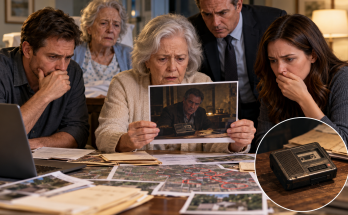
Beside him, on the table, was an old microcassette recorder.
I recognized it immediately.
Walter’s.
He used it for repair notes because his hands were often dirty.
I had not seen it since he left that old job.
Lydia’s message contained one sentence:
ELEANOR WILL KNOW WHETHER THIS IS HIS.
I did.
Walter had hidden his strongest evidence so well that even I never knew it existed.
And Victor had spent fifteen years making sure the recording could never reach me.
Click here to continue reading: PART 21: Walter’s Old Recorder Held the Conversation Victor Feared Most, but One Missing Minute Suggested Someone Had Reached the Evidence Before Us
My Son Arrived With a Suitcase for Me, Certain I Would Leave the Home His Father and I Built
Part 20 of 35