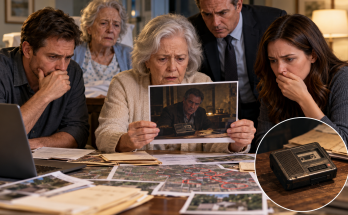
By morning, Greg had become afraid of the ledger.
Not because it mentioned him.
Because it described him.
FAMILY COOPERATION ADVANCE.
Twenty-five thousand dollars.
A clean entry.
A date.
His name.
Anyone reading it would assume the obvious.
He had been paid to deliver me.
Emily sat across from him at the kitchen table.
“Did you receive anything around that date?”
“No.”
“Cash?”
“No.”
“Transfer?”
“No.”
“Business payment?”
“I don't think so.”
“You don't think so?”
Greg rubbed his forehead.
“I had money moving everywhere.”
Emily laughed bitterly.
“Excellent defense.”
“It wasn't meant as one.”
I intervened.
“We find the records.”
Greg's bank statements arrived through his attorney that afternoon.
Business accounts.
Personal accounts.
Loan disbursements.
The trust account.
We traced the ledger date.
No $25,000 deposit.
No matching transfer.
But there was something else.
A debt reduction.
Exactly twenty-five thousand dollars.
Westbridge had reduced Greg's outstanding balance on the same date.
His lawyer pointed toward it.
“There.”
Greg stared.
“I never asked for this.”
“How was it described?”
“Strategic adjustment.”
Emily leaned closer.
“They didn't pay Dad.”
“They reduced what he owed.”
I looked toward Greg.
“That is still compensation.”
His face tightened.
“I didn't know.”
“Did your balance change afterward?”
“I don't remember.”
“Would you have noticed?”
He stared at the page.
“No.”
That answer mattered.
Victor could plausibly record the reduction as payment without Greg understanding it had been tied to me.
But ignorance was not innocence.
Greg had accepted the loan terms.
Worked with Chuck.
Pursued my property.
The question was narrower.
Had he knowingly been paid?
Daniel arrived with a forensic accountant.
Her name was Anita Perez.
She had the calm expression of someone who enjoyed making numbers confess.
She reviewed the statements.
“This credit did not occur automatically.”
“What does that mean?” Emily asked.
“Someone manually posted a principal adjustment.”
“Who?”
“Westbridge.”
“Could Greg have requested it?”
“Possibly.”
Greg shook his head.
“I didn't.”
Anita did not react.
“Records will help.”
The ledger contained seven similar entries labeled family cooperation.
Some were cash.
Some debt reductions.
Some consulting fees.
One was a vehicle purchase.
People could be paid without receiving envelopes.
That was part of the design.
Benefits hidden inside ordinary transactions.
Daniel asked Greg to sign releases for every account.
He did.
His lawyer objected only to scope.
They negotiated.
For once, Greg did not complain.
By evening, Anita found another anomaly.
A consulting invoice from Greg's business to a Shaw-affiliated company.
Twenty-five thousand dollars.
“That's impossible,” Greg said.
“Why?”
“My business never consulted for them.”
“Invoice number?”
Greg examined it.
“Not ours.”
“Logo?”
“Ours.”
“Signature?”
He looked closer.
“My electronic signature.”
Emily's face hardened.
“Forged?”
“Copied.”
Anita said, “Possibly generated from prior documents.”
Someone had created a false paper trail suggesting Greg earned the amount.
Then instead of transferring cash, Westbridge reduced his loan.
On paper, everything could appear legitimate.
Consulting work.
Payment.
Debt offset.
In reality, the service never occurred.
“What was the invoice description?” I asked.
Anita read it.
Family transition facilitation.
My stomach turned.
Greg stood.
“That's not business language.”
“No,” Anita said. “It sounds intentionally vague.”
Daniel took the document.
“This helps.”
Greg looked at him.
“How?”
“It suggests someone wanted a record showing you were compensated.”
“For helping them move Mom.”
“Potentially.”
“Why?”
Daniel gave the answer I already suspected.
“Insurance.”
Greg stared.
“Against me?”
“Against everyone.”
If the scheme collapsed, Victor could point to families.
Greedy sons.
Daughters.
Relatives.
People who signed forms.
People who received money.
He could present himself as merely responding to family requests.
The vulnerable owners would seem like victims of their own children.
Victor's companies would become service providers.
I felt sick at the elegance of it.
He had built betrayal into the structure.
Everyone below him could be blamed.
That afternoon, police located Margaret again.
Not physically.
A surveillance camera captured the vehicle leaving the lodge.
It traveled south.
Then disappeared.
The registered plate belonged to a commercial van reported stolen two months earlier.
“They planned for this,” Emily said.
Daniel nodded.
“Yes.”
“Can you find her?”
“We're trying.”
I hated that phrase more every time I heard it.
Then Daniel received a call.
He stepped into the hallway.
When he returned, his expression had changed.
“We found Dr. Halpern.”
“Where?”
“Clinic outside the county.”
“Did he talk?”
“His attorney did.”
“What did he say?”
“He denies knowingly falsifying assessments.”
I laughed.
“Of course.”
Daniel continued.
“But he admits conducting evaluations based heavily on family reports.”
“Without examining residents?”
“Sometimes via telehealth.”
“Did he evaluate me?”
“No.”
“Yet his office appears in my paperwork.”
“That's part of the problem.”
The forged physician form in my file carried Dr. Patel's name, not Halpern's.
Why?
Because I already had a doctor who knew me.
A new physician would raise questions.
They copied the familiar name.
Professional appearance mattered more than authenticity.
“What about Margaret?”
“Halpern did evaluate her.”
“And?”
“He claims she showed impairment.”
“Independent records?”
“We're reviewing.”
I thought of Margaret speaking clearly.
Competence was not all or nothing.
She could have memory problems and still understand that her son was taking property.
That distinction mattered.
Too often, people treated any cognitive decline as permission to erase every decision.
Daniel asked whether I would be willing to give a formal statement about our call.
“Yes.”
He looked surprised.
“You didn't argue.”
“I save time occasionally.”
Greg almost smiled.
Later, after Daniel left, Emily found something inside Walter's estate files.
A letter from Westbridge.
Addressed not to Greg.
To Walter.
Dated three years earlier.
Before Walter died.
I stared.
“What is that?”
Emily handed it to me.
Westbridge had offered financing against “underutilized residential equity.”
Walter had written one word across the top.
NO.
In thick black ink.
My throat tightened.
“Your grandfather knew of them.”
Greg took the letter.
“I never saw this.”
I looked through the folder.
Another page.
Walter's handwritten notes.
Aggressive.
Won't explain ownership.
Asked too many questions about Eleanor.
My skin prickled.
Westbridge had approached Walter too.
Before Greg.
Before the house became solely mine.
Emily whispered, “They were targeting the property years ago.”
“Yes.”
Walter had refused.
Then he died.
And they tried a different route.
Through our son.
Greg sat down slowly.
“They already knew about me.”
“Maybe.”
Walter's notes continued.
Contact through Bennett referral.
Chuck.
Three years earlier.
“Walter met Chuck?” I asked.
I had no memory of it.
Greg looked stunned.
“He never told me.”
Walter apparently had.
Just not directly.
He had written everything in his estate file.
One line stood out:
Bennett says family succession could unlock value. Told him my family isn't a financing instrument.
I laughed despite myself.
“That sounds like your grandfather.”
Emily smiled through tears.
Greg stared at the page.
“He saw it.”
“Yes.”
“He knew what they wanted.”
“At least partly.”
Then another note.
If they come back after I'm gone, Lawson knows what to do.
My heart stopped.
“Mr. Lawson.”
We called immediately.
He answered from home.
When I read Walter's note, he went quiet.
“Eleanor.”
“What did Walter tell you?”
“A great deal.”
My anger rose.
“Then why didn't you tell me?”
“Because he instructed me not to alarm you unless someone approached about the property.”
“They did.”
“You never told me the Bennett name until recently.”
That was true.
I hated that it was true.
“What did Walter know?”
Mr. Lawson explained.
Three years earlier, Chuck had approached Walter with an offer.
Far below market value.
Walter rejected it.
Then Westbridge proposed financing.
Walter rejected that too.
Afterward, Walter discovered several older homeowners nearby had received similar solicitations.
“He thought there was coordination?”
“He suspected predatory acquisition.”
“Did he contact police?”
“No evidence of crimes then.”
“What did he do?”
“Updated your estate planning.”
I looked toward Emily.
“The house.”
“Yes.”
“He wanted it solely in my name.”
“Yes.”
“Not Greg's.”
“Correct.”
Greg stared at the floor.
Walter had anticipated the possibility his son could be used.
Perhaps not the details.
But the vulnerability.
“What else?” I asked.
Mr. Lawson hesitated.
“He created a sealed file.”
“Where?”
“My office.”
“What's in it?”
“Correspondence. Offers. Notes. Copies of communications.”
“Why didn't you mention this when Greg started?”
“Because I did not connect the old solicitation to what was happening until you identified Bennett.”
My frustration faded slightly.
The scheme had been spread across years.
Different companies.
Different contexts.
That was probably deliberate.
“Bring it tomorrow,” I said.
“I will.”
The next morning, Mr. Lawson arrived with a thick sealed envelope.
Walter's handwriting covered the front.
FOR ELEANOR IF THE HOUSE BECOMES A PROBLEM.
I almost laughed.
Even dead, my husband had understated danger.
Inside were letters.
Emails.
Offers.
Notes.
One photograph.
Chuck Bennett standing beside Victor Shaw at a neighborhood development meeting three years earlier.
On the back Walter had written:
These two are interested in land, not homes.
I touched the words.
He had understood.
Then we found something else.
A business card.
Celeste Ward.
Strategic Acquisitions Coordinator.
Shaw Development Group.
Margaret's former assistant.
The woman who allegedly practiced signatures.
On the back, Walter had written a phone number and:
She called privately. Says something wrong. Afraid to put in writing.
Everyone went still.
Emily whispered, “Celeste tried to warn Grandpa.”
Greg looked toward Daniel, who had joined us.
“Can you find her?”
Daniel copied the information.
“We've been trying.”
“Try this number.”
“It may be old.”
“Try anyway.”
He stepped aside.
Five minutes later, he returned.
The number was disconnected.
But subscriber records produced an address.
Celeste Ward had moved.
Then vanished from public records eighteen months earlier.
Around the same time several property transfers accelerated.
I felt the pattern closing.
Margaret knew.
Celeste knew.
Walter suspected.
Victor removed obstacles one by one.
Not necessarily violently.
Sometimes through paperwork.
Sometimes through isolation.
Sometimes by making people disappear socially before they disappeared physically.
Daniel's phone rang again.
He answered.
His face changed.
“What?”
We watched him listen.
Then he looked at us.
“Margaret has been found.”
I stood.
“Alive?”
“Yes.”
Relief hit so hard I gripped the table.
“Where?”
“Emergency room outside Millhaven.”
“What happened?”
“A driver found her walking along a county road.”
“Was she hurt?”
“Dehydrated. Confused. Some bruising.”
“Did she escape?”
“We don't know yet.”
“Can I see her?”
“Not yet.”
“What did she say?”
Daniel hesitated.
“She keeps repeating one sentence.”
“What?”
He looked directly at Greg.
“Greg Whitmore didn't take the money.”
Greg stopped breathing.
Emily stared.
Then Daniel added:
“And she says she knows who did.”
Click here to continue reading: PART 12: Margaret Identified the Person Framing Greg, but Her Testimony Also Forced Me to Confront What Walter Had Hidden From Me
My Son Arrived With a Suitcase for Me, Certain I Would Leave the Home His Father and I Built
Part 11 of 35