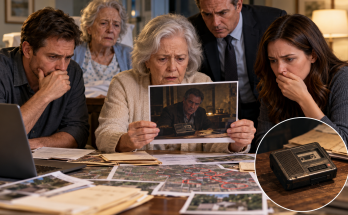
Victor Shaw did not come quietly.
By the time Daniel called from Silver Pines, Victor had already demanded an administrator, an attorney, and access to Margaret’s medical file.
He carried a leather portfolio thick with documents.
According to Daniel, he behaved as if bureaucracy itself were a weapon he had every right to wield.
I understood the strategy immediately.
Victor had spent years creating documents that made other people’s wishes disappear beneath professional language. Now that the truth was closing in, he had returned to what he trusted most.
Paper.
Emily stood beside the kitchen table while I relayed Daniel’s call.
Greg remained near the doorway.
“What exactly is Victor claiming?” Emily asked.
“That Margaret is delusional.”
“Convenient.”
“He says she has become paranoid, confused, and vulnerable to manipulation.”
Greg looked toward me.
“By you?”
“Among others.”
He rubbed his face.
“That’s almost impressive.”
“What?”
“He’s using the same method even after everyone knows the method.”
I thought about that.
People did not abandon successful habits merely because those habits had become obvious.
Especially people who believed they were smarter than everyone watching.
Daniel asked us not to come to Silver Pines.
I agreed.
That surprised him.
“I mean it,” I said.
“I’m documenting this moment.”
“I can still change my mind.”
“Please don’t.”
After the call ended, Greg sat at the table.
“What happens if Victor convinces them Margaret is incompetent?”
Emily answered before I could.
“Her testimony could be attacked.”
Greg nodded.
“And if her testimony gets attacked, so does the Cedar Lake information.”
“And the lodge,” I said.
“And Dennis Vale,” Emily added.
A chain.
That was what Victor wanted to break.
Not necessarily every fact.
Only enough connections to make the entire story appear uncertain.
Greg looked sick.
“He did this to Mom too.”
“Yes.”
“He knew if enough people wrote the same thing, eventually someone would believe it.”
I thought of my own file.
Possible financial vulnerability.
Worsening judgment.
Resistance to transition.
Language designed to sound neutral while moving toward a predetermined conclusion.
That was the trick.
Not outright lies at first.
Interpretations.
Then recommendations.
Then signatures.
Then ownership changed.
At ten that morning, Mr. Lawson arrived carrying another folder from Walter’s sealed records.
“I found something last night.”
He placed it on the table.
Inside was correspondence between Walter and an elder-law organization.
Emily leaned closer.
“What is this?”
“Your grandfather had concerns years ago about coercive guardianship and property transfers.”
Greg stared.
“He researched that?”
Mr. Lawson nodded.
“He was worried after hearing about another homeowner who lost control of property during a competency dispute.”
My chest tightened.
“Who?”
“Margaret Shaw.”
The room went still.
I looked at him.
“Walter knew what Victor did to his mother?”
“Not all of it.”
“How much?”
“Enough to suspect something improper.”
Mr. Lawson opened a letter.
Walter had written to the elder-law group describing a woman whose son had gained control through medical evaluations arranged by people with financial interests.
No names.
But now the identity was obvious.
Walter had asked a simple question:
How can an older person protect legal decision-making authority before someone claims they have lost it?
Emily touched the paper.
“That’s why Grandpa updated Grandma’s documents.”
“Yes.”
Mr. Lawson nodded.
“He became increasingly concerned about how incapacity could be used as leverage.”
Greg looked devastated.
“My father saw the entire danger.”
“He saw part of it.”
“And I walked straight into it.”
No one corrected him.
Because that part was true.
Around noon Daniel called again.
Victor’s petition had been submitted to an emergency probate judge.
He sought temporary authority over Margaret’s medical decisions.
“On what basis?” I asked.
“Claimed acute cognitive deterioration following her disappearance.”
“She disappeared because his people moved her.”
“That is our position.”
“Our position?”
I hated the phrase.
Daniel understood.
“It’s what the evidence currently supports.”
“And Victor?”
“Claims Margaret wandered away voluntarily.”
I almost laughed.
“With bruises?”
“He says she fell.”
“Medication bottles at the lodge?”
“He says he moved her there for private care.”
“The nurse?”
“He denies involvement.”
“Of course.”
Daniel continued.
“There will be a hearing tomorrow.”
“Can Margaret attend?”
“If doctors clear her.”
“Does she have her own lawyer?”
“Yes.”
“Independent?”
“Yes.”
“Good.”
I meant it.
For the first time, Margaret would have someone in the room who did not owe Victor anything.
That afternoon, Emily visited Ruth Porter.
Ruth had been returned home under an emergency order while her competency and sale documents were reviewed.
She came back furious.
“Ruth wants to testify.”
“That sounds like Ruth.”
“She says if anyone calls her confused again, she’s going to prove she remembers every insult individually.”
I laughed.
“What did Linda say?”
“She cried.”
Linda had cooperated fully after understanding what had happened.
Her relationship with Ruth remained bruised.
But not broken.
Perhaps that mattered more than perfection.
Greg had spent the day with Anita Perez, tracing Westbridge transactions.
He arrived at five carrying a notebook.
“I found something.”
Emily’s expression immediately hardened.
“What now?”
“Not another confession.”
“That’s a refreshing category.”
Greg ignored the jab.
“Westbridge paid a medical consulting company.”
“Halpern?”
“Not directly.”
He opened the notebook.
“Northline Clinical Assessments.”
I recognized the name from nothing.
“What about it?”
“Company ownership leads to Dennis Vale’s sister.”
Emily stared.
“Dennis controlled the financial side.”
“Yes.”
“And his sister owned the medical company?”
“On paper.”
“Who performed the assessments?”
“Contract doctors.”
Mr. Lawson frowned.
“That creates a financial bridge between lending and incapacity documentation.”
Greg nodded.
“That’s what Anita said.”
The structure became clearer.
Westbridge created debt pressure.
A related assessment company created medical justification.
Silver Pines created physical relocation.
Chuck created property transfer.
Victor’s companies acquired land.
Different businesses.
Same result.
“Did they assess me?” I asked.
Greg flipped pages.
“No payment tied directly to your name.”
“Because they used my own doctor’s forged signature.”
“Yes.”
“So when the system couldn’t create legitimate medical support, someone manufactured it.”
Emily looked toward me.
“Grandma, this is bigger than the property fraud unit.”
I knew.
Daniel knew too.
By evening, state investigators had joined the case.
Then federal financial investigators.
Not because anyone had suddenly decided to rescue old people.
Because money crossed companies and jurisdictions.
Sometimes justice needed the language of finance before institutions paid attention.
The next morning we watched Margaret’s hearing remotely from Mr. Lawson’s office.
I expected something dramatic.
Courtrooms rarely deliver drama the way television promises.
Mostly there were documents.
Questions.
Long pauses.
Victor sat beside two attorneys.
Margaret entered in a wheelchair.
Not because she could not walk.
Because the hospital required it.
The distinction seemed symbolic.
Victor’s attorney began with medical records.
Past memory complaints.
Medication errors.
Moments of confusion.
Margaret did not deny them.
That surprised Victor’s side.
“Yes,” she said. “Sometimes I forget things.”
The attorney asked whether she had become lost before.
“Once.”
“Did you recognize your surroundings?”
“No.”
“Did that frighten you?”
“Yes.”
“Would you agree your memory has declined?”
“Yes.”
Victor leaned back slightly.
He seemed almost relieved.
Then Margaret’s attorney stood.
“Mrs. Shaw, do memory problems prevent you from understanding that your son transferred your property?”
“No.”
“Do you know approximately what property you owned?”
She listed it.
Addresses.
Dates.
Values.
“Do you understand what legal authority your son obtained?”
“Yes.”
“Do you believe every financial decision he made was against your wishes?”
“No.”
Victor looked surprised.
Margaret continued.
“Some were necessary. Some were theft.”
That sentence mattered.
She did not exaggerate.
She separated legitimate help from exploitation.
Her credibility strengthened because she allowed complexity.
Victor’s attorney tried another approach.
“You claim you were held at a lodge.”
“Yes.”
“Was the door locked?”
“No.”
“Were you physically restrained?”
“No.”
“So you could leave.”
Margaret stared at him.
“I am eighty-one years old. The lodge was miles from town. My phone was taken. My medications were controlled. Two men watched me. You tell me whether a locked door was necessary.”
The judge looked toward Victor’s attorney.
He sat down.
Then came the unexpected witness.
The nurse.
Her name was Claire Moreno.
She had lent Margaret the phone.
Claire testified that Victor’s representatives repeatedly instructed staff to limit Margaret’s calls because contact with outsiders “agitated” her.
She also described the day Margaret disappeared.
Two men arrived claiming to transport her for a medical appointment.
No appointment existed.
Claire questioned it.
Hours later, she was confronted in the parking lot by men who demanded to know whether Margaret had used her phone.
The next thing she remembered was waking in the abandoned rehabilitation property.
Victor’s attorney objected repeatedly.
The judge allowed most of it.
Then Daniel presented the photograph sent to me.
Margaret in the car.
Newspaper beside her face.
The image Victor’s side insisted could not be tied to anyone.
Until Claire identified part of the vehicle interior.
She had seen the same van at Silver Pines.
One of Victor’s contractors used it.
The hearing lasted four hours.
At the end, the judge declined Victor’s request for emergency control.
Instead, Margaret’s existing guardianship authority was suspended pending review.
An independent fiduciary would temporarily oversee disputed financial matters.
Margaret retained control over personal decisions unless a neutral medical evaluation found otherwise.
Victor’s face remained still.
But I saw his hand tighten around his pen.
For years he had taken authority from others through procedure.
Now procedure had taken authority from him.
Afterward, Daniel called.
“Don’t celebrate yet.”
“I wasn’t.”
“You sound like you were thinking about it.”
“Thinking is still legal.”
“For now.”
I smiled.
“What happens next?”
“Victor is being questioned.”
“Arrested?”
“Not yet.”
“Dennis?”
“Cooperating discussions are underway.”
“Meaning he wants a deal.”
“Likely.”
“Chuck?”
“Same.”
“Marlene?”
“Providing records.”
The structure was beginning to turn inward.
Everyone who had protected Victor while the system worked now had reasons to protect themselves.
Greg entered while I was still on the phone.
He looked pale.
“What happened?”
I put Daniel on speaker.
“Mr. Whitmore.”
“Daniel.”
“We need you downtown.”
Greg’s shoulders tightened.
“Why?”
“We recovered messages between you and Chuck.”
His face changed.
“What messages?”
“Deleted ones.”
Emily came closer.
Greg looked genuinely frightened.
“What do they say?”
Daniel paused.
“One appears to show you asking Chuck how quickly your mother could be declared incapable.”
Silence.
I looked at my son.
He stared at the phone.
“I never sent that.”
Daniel’s voice remained neutral.
“That’s what we need to determine.”
Greg turned toward me.
“Mom.”
I held up a hand.
“Go.”
“You believe me?”
“I believe we need evidence.”
Pain crossed his face.
But he nodded.
That was what Walter meant.
Love without accountability became permission.
Greg left with his lawyer.
Hours passed.
At four, Emily received a call from Anita.
She put the phone on speaker.
“We traced the metadata.”
“What metadata?” I asked.
“The deleted message Daniel mentioned.”
Greg’s account had sent it.
But the device identifier did not match his phone.
Emily stood.
“So someone logged into his account.”
“Yes.”
“Who?”
“We don’t know.”
“Can you tell where?”
“IP records point to Westbridge.”
My stomach tightened.
Another piece of manufactured cooperation.
A system designed not only to manipulate people into betrayal, but to create evidence of betrayal whether they participated or not.
Greg returned after seven.
He looked exhausted.
“They think someone cloned access to my account.”
Emily nodded.
“Anita told us.”
He sat.
For a long time nobody spoke.
Then Greg said quietly, “I don’t know which things I actually did anymore.”
That frightened me.
Not because he was confused.
Because the evidence had become so polluted that guilt and fabrication overlapped.
I sat across from him.
“You know some.”
“Yes.”
“You packed my suitcase.”
“Yes.”
“You lied about my health.”
“Yes.”
“You gave Chuck documents.”
“Yes.”
“You took Emily’s money.”
“Yes.”
“You tried to force the sale.”
“Yes.”
“Those are yours.”
He nodded.
“The fake message isn’t.”
He looked at me.
“How do I prove the difference?”
“By telling the truth even when the truth makes you look bad.”
He closed his eyes.
Walter’s lesson again.
Not innocence.
Precision.
The next morning Daniel called with another discovery.
The account used to send the fake message had accessed dozens of borrower profiles.
Greg was not unique.
Several relatives tied to target properties had messages or emails that appeared suspiciously convenient.
Evidence of cooperation.
Evidence of greed.
Evidence that could be shown later if anyone denied involvement.
Victor had built insurance against his own accomplices.
Then Daniel said something that changed the case again.
“One of the account logins belongs to Celeste Ward.”
I stood.
“Margaret’s assistant.”
“Yes.”
“The woman who tried to warn Walter.”
“Yes.”
“Then she was involved?”
“We don’t know.”
“What do you know?”
“She had credentials used to alter several files.”
Emily frowned.
“But Grandpa’s note said she was afraid.”
“People can be frightened and involved.”
That was true.
Again, categories refused to stay clean.
Victim.
Accomplice.
Witness.
Sometimes one person occupied all three.
“Where is she?”
Daniel hesitated.
“We found her.”
My pulse jumped.
“Alive?”
“Yes.”
“Where?”
“Under another name in Oregon.”
“Will she talk?”
“She already is.”
“What did she say?”
Daniel’s voice changed.
“She says Victor made her create false records.”
I gripped the phone.
“And?”
“She says Walter helped her escape.”
The room went silent.
My husband had not merely suspected Victor.
He had helped one of his employees disappear.
And once again, Walter had carried a secret to his grave.
Click here to continue reading: PART 14: Celeste Ward Revealed What Walter Had Done Years Ago, and Why Victor Had Been Waiting for a Chance to Strike Back
My Son Arrived With a Suitcase for Me, Certain I Would Leave the Home His Father and I Built
Part 13 of 35