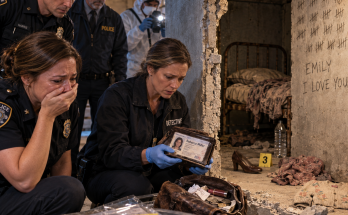
DNA confirmed the adult remains forty-eight hours later.
Margaret Vale.
Thomas Miller and Marcus Vale’s mother.
She had not run away.
She had not abandoned her sons.
She had died approximately thirty-two years earlier, when Thomas was nine and Marcus fourteen.
Carter read the report twice.
Cause of death could not yet be established with certainty, but investigators found evidence of significant trauma to the skull.
Daniel sat across from her.
“Their father?”
“Most likely person to investigate first.”
Their father, Gerald Vale, had died twelve years earlier.
Old police records showed repeated domestic-disturbance calls to the family home.
No charges.
Neighbors described Gerald as controlling and violent.
One report mentioned Margaret attempting to leave with the boys.
Three weeks later, relatives were told she had abandoned the family.
Nobody reported her missing.
Gerald raised the sons alone.
The foundational story of Thomas’s childhood had been manufactured.
His mother had not chosen to disappear.
She had tried to leave.
Someone had prevented her.
Mary delivered the information to Rebecca privately.
Rebecca sat silent for a long time.
“Thomas always said women leave.”
“He believed his mother did.”
“His father told him that.”
“Yes.”
Rebecca closed her eyes.
“That’s why he watched me.”
Mary waited.
“When we first married, it was little things. He wanted to know where I was. Who called. Why I was late.”
Rebecca looked toward Emily’s room.
“After she was born, it got worse. He said mothers destroy families when they decide they want freedom.”
“Did he ever talk about Margaret?”
“Constantly.”
“How?”
“Like she was a warning.”
Rebecca rubbed her hands together.
“He hated her and missed her at the same time.”
Mary understood how a childhood lie could become a wound.
But Rebecca had already made the distinction herself.
Understanding was not forgiveness.
Thomas had grown up with a false story.
He had still chosen what he did with it.
Carter requested permission through Thomas’s attorney to present the identification.
The attorney agreed to a limited meeting.
Thomas entered the interview room in jail clothing.
He looked older than he had four days earlier.
Carter placed no photographs of children before him.
Only the forensic report.
“We identified remains on a property connected to Marcus.”
Thomas stared.
“One adult woman.”
No reaction.
“Margaret Vale.”
His eyes moved.
“That’s impossible.”
“DNA confirmed it.”
“No.”
“Your mother never left.”
Thomas shook his head.
“My father saw her leave.”
“The evidence says she died approximately thirty-two years ago.”
“No.”
“Her remains were buried less than twenty miles from your childhood home.”
Thomas looked toward his attorney.
The lawyer said nothing.
Carter continued.
“She suffered significant head trauma.”
Thomas’s breathing changed.
“My father said…”
His voice failed.
Carter waited.
Thomas stared at the report.
“He said she chose somebody else.”
“She may have been trying to leave Gerald.”
Thomas’s hands began trembling.
“No.”
Carter did not press harder.
The truth was already doing that.
“She didn’t leave you.”
Thomas looked up.
His face twisted.
For one second Carter saw the nine-year-old boy beneath the adult offender.
Then Thomas whispered, “Marcus knew.”
Carter became still.
“What?”
His attorney touched his arm.
“Thomas.”
Thomas ignored him.
“Marcus knew.”
“How?”
“He remembered.”
Carter leaned forward.
“What did Marcus remember?”
The attorney interrupted.
“We’re ending this interview.”
Thomas stood.
Then he looked at Carter.
“He saw Dad put her in the truck.”
The lawyer repeated, “We are done.”
Thomas was removed.
But the statement was enough to open another line of investigation.
Marcus had been fourteen.
Old enough to understand more than Thomas.
Perhaps Gerald forced him into silence.
Perhaps Marcus learned that a person could disappear and that a story, repeated often enough, could replace them.
Thomas grew up believing abandonment.
Marcus grew up knowing concealment worked.
The brothers had built different lessons from the same crime.
Then Marcus disappeared again.
No confirmed sightings for thirty-six hours.
His accounts were frozen.
Known vehicles watched.
Family contacts monitored.
Properties searched.
Nothing.
Carter believed he had prepared for this possibility years earlier.
A man who built hidden rooms for a living would build himself exits too.
The breakthrough came from Megan.
She was sitting with her biological mother for their second supervised reunion when she asked for Mary.
Mary arrived expecting another memory.
Instead Megan handed her a folded sheet of paper.
“I remembered a number.”
“What number?”
“Marcus made me memorize it.”
“Why?”
“He said if everything went wrong, I had to call.”
Mary unfolded the paper.
Ten digits.
“Did you ever call it?”
“No.”
“Do you know whose number it is?”
Megan shook her head.
Carter traced it.
Prepaid mobile.
Currently active.
Location unavailable without carrier cooperation.
They obtained emergency authorization.
The phone had connected to a tower twice that morning.
A rural area near the state border.
Teams moved.
But before they could narrow the location, the phone called Rebecca.
Her hospital room phone rang at 2:17 in the afternoon.
Rebecca answered because she expected a nurse.
“Hello?”
Silence.
Then a voice.
“You look better.”
Rebecca froze.
Marcus.
She looked toward Mary, who was standing near the door.
Mary saw her face change.
Rebecca pointed urgently at the phone.
Mary alerted Carter.
The call was transferred into monitoring equipment without disconnecting.
Rebecca kept Marcus talking.
“Where are you?”
“You know I won’t tell you.”
“Police are looking for you.”
“I know.”
“Then surrender.”
Marcus laughed softly.
“You sound like yourself again.”
Rebecca’s hand tightened around the receiver.
“I am myself.”
“No. You’re whatever they need you to be this week.”
“You don’t get to tell me who I am.”
A pause.
“Thomas did that too.”
“Thomas is finished.”
“Yes.”
Marcus sounded almost amused.
“He was always going to be the weak one.”
Rebecca stared at the wall.
“You left him.”
“He left himself.”
“What do you want?”
“To fix something.”
Rebecca’s stomach tightened.
“What?”
“A mistake.”
“Which one?”
“Several.”
Carter’s team traced the signal.
Tower sector narrowed.
Still too broad.
Keep him talking.
Rebecca asked, “Did you kill Hannah?”
Marcus was silent.
“You knew she was sick.”
“She was already dying.”
“You could have taken her to a hospital.”
“And explain where she came from?”
Rebecca closed her eyes.
“So you let her die.”
“I didn’t call to discuss Hannah.”
“Did you kill Margaret?”
The silence changed.
Marcus’s voice lost its casual tone.
“Who told you that name?”
“They found her.”
No answer.
“They found your mother.”
Marcus breathed once into the phone.
“Where?”
“The place with the children.”
“That’s not where she was supposed to be.”
Carter stared at the audio monitor.
Interesting.
Someone had moved Margaret’s remains.
“Who buried her there?”
Marcus asked.
Rebecca almost laughed.
“You’re asking me?”
“Thomas?”
“He was nine when she died.”
Marcus said nothing.
“Your father killed her, didn’t he?”
Another silence.
Then Marcus whispered, “He taught us what happens when people leave.”
Rebecca felt nausea rise.
“You helped him.”
“I was fourteen.”
“You were fourteen then.”
Her voice hardened.
“You were an adult when you helped Thomas take children.”
Marcus did not answer.
“You were an adult when you locked me up.”
Still nothing.
“You were an adult when Hannah needed a doctor.”
“Careful.”
The word came softly.
Rebecca’s eyes narrowed.
“There you are.”
Marcus breathed.
“What?”
“The real you.”
She looked toward Mary.
“You don’t like being reminded that you chose.”
Marcus laughed again, but the sound was thin.
“You think police saved you.”
“They did.”
“No.”
“They saved Emily.”
That silenced him.
Rebecca continued.
“She beat you.”
“She’s a child.”
“Exactly.”
Marcus’s breathing grew heavier.
“A little girl found a phone and destroyed everything you spent years building.”
Carter gestured to Rebecca.
Keep pushing.
Marcus said, “Nothing is destroyed.”
Rebecca felt cold.
“What does that mean?”
“You found rooms.”
“Yes.”
“You found files.”
“Yes.”
“You found people I wanted you to find.”
Carter frowned.
Rebecca repeated, “Wanted us to find?”
“You think I kept one archive?”
Digital analysts immediately began reassessing.
Marcus continued.
“You think Thomas knew everything?”
“No.”
“Good. At least captivity didn’t make you stupid.”
Rebecca flinched but kept her voice steady.
“What does Thomas not know?”
“The beginning.”
“What beginning?”
“The first child.”
Carter leaned forward.
Rebecca asked, “Who was the first child?”
Marcus did not answer directly.
“Ask Thomas about Daniel.”
Officer Daniel Harris looked up sharply in the monitoring room.
Carter immediately shook her head.
Not him necessarily.
Rebecca frowned.
“Daniel who?”
Marcus laughed.
“Exactly.”
Then the call ended.
Carrier data produced a location estimate.
Officers reached the area within twenty minutes.
They found the prepaid phone hanging inside a plastic bag from a roadside tree.
Marcus had remotely or automatically routed the call.
Another deliberate misdirection.
But his words remained.
Ask Thomas about Daniel.
Carter searched every archive file for the name.
No relevant result.
Thomas’s attorney initially refused another interview.
Then Thomas himself requested one.
He had heard through his lawyer that Marcus contacted Rebecca.
Carter entered with Daniel.
Thomas looked at Officer Harris.
His face changed.
“Not you.”
Daniel stared.
“Apparently not.”
Carter sat.
“Who is Daniel?”
Thomas looked toward the table.
“My brother.”
Carter stopped.
“Marcus is your brother.”
“My other brother.”
Nothing in the official family records showed a third son.
“Older or younger?”
“Younger than Marcus. Older than me.”
“Where is he?”
Thomas shook his head.
“He died.”
“When?”
“When I was little.”
“How?”
“My father said he drowned.”
“Body recovered?”
“I don’t know.”
Carter felt the pattern immediately.
Margaret left.
Daniel drowned.
Stories told by Gerald Vale.
No questions.
No bodies.
“What was Daniel’s full name?”
“Daniel Vale.”
“How old was he?”
“Eleven.”
“And you?”
“Seven.”
Two years before Margaret’s death.
“What do you remember?”
Thomas stared at his hands.
“Marcus and Daniel fought.”
“About what?”
“I don’t know.”
“Try.”
Thomas closed his eyes.
“Daniel wanted to tell someone.”
“Tell them what?”
“My father hurt Mom.”
Carter waited.
“Then what?”
“Dad took Daniel fishing.”
“And?”
“Dad came back alone.”
Thomas’s voice became distant.
“He said Daniel fell into the river.”
“Did police come?”
“I don’t remember.”
“Funeral?”
Thomas shook his head.
“No body.”
“Did Marcus go fishing?”
“No.”
“What happened afterward?”
“Marcus stopped talking for weeks.”
Carter exchanged a glance with Daniel.
“Did Marcus ever tell you what really happened?”
“No.”
“Did you ask?”
“Once.”
“What did he say?”
Thomas looked at Carter.
“He said Daniel wasn’t dead.”
The room went still.
“What did that mean?”
“I thought he was trying to hurt me.”
“When did he say it?”
“Years later.”
“How old were you?”
“Sixteen.”
“Where was Marcus?”
“Leaving home.”
“What exactly did he say?”
Thomas swallowed.
“He said, ‘Daniel got out. Mom didn’t.’”
Carter felt the first pieces align.
Maybe Daniel had not drowned.
Maybe the first disappearance in the Vale family was not a death.
Maybe it was an escape.
“Did Marcus know where Daniel went?”
“I don’t know.”
“Why would Marcus tell Rebecca to ask about him?”
Thomas stared toward the observation glass.
“Because Marcus thinks everything started with Daniel.”
“What started?”
Thomas whispered, “People disappearing.”
Carter returned to command and ordered a search through records more than three decades old.
Daniel Vale.
Born approximately forty years earlier.
School records existed.
Medical records.
Then nothing after age eleven.
No death certificate.
No drowning report.
No burial record.
Gerald Vale had simply withdrawn him from school.
The stated reason was relocation to relatives.
There was no record of which relatives.
Daniel Vale had vanished administratively.
Exactly as later children would.
An analyst searched name changes, foster records, juvenile records, and historical Social Security activity.
Hours passed.
Then she found something.
A boy matching Daniel’s age had entered emergency foster care in another state weeks after his supposed drowning.
His name there was Daniel Ward.
He told authorities he had run from an abusive father.
He refused to give his home address.
Records were incomplete and never connected to the Vale family.
Daniel Ward was later adopted.
He grew up.
Married.
Had children.
And he was still alive.
Carter stared at the current photograph.
Daniel Vale—now Daniel Ward—was fifty-one.
He lived nearly six hundred miles away.
Marcus’s first missing child had not been abducted.
He had escaped.
And he might be the only living person who remembered what happened inside the Vale family before Margaret died.
Carter contacted him.
At first Daniel Ward denied knowing Thomas or Marcus.
Then she mentioned Margaret.
Silence.
“Mr. Ward?”
His voice changed.
“My mother?”
“Yes.”
“What about her?”
“We found her.”
Another silence.
Longer.
“Alive?”
Carter closed her eyes.
“No.”
Daniel Ward began crying quietly over the phone.
After more than thirty years, some part of him had apparently still hoped.
Carter gave him time.
Then Daniel asked, “Did Marcus do it?”
“We don’t know.”
“He became like Dad.”
“How do you know?”
“Because Marcus found me.”
Carter straightened.
“When?”
“Twenty years ago.”
“What happened?”
“He asked me to come back.”
“Why?”
Daniel Ward’s answer made Carter grip the phone tighter.
“He said we could build the family we should have had.”
Carter looked through the glass toward Thomas.
“What did you say?”
“I told him never to contact me again.”
“Did he?”
“Once.”
“When?”
“About nine years ago.”
The beginning of the known abduction period.
“What did he say?”
Daniel Ward breathed shakily.
“He sent me a photograph of a little boy.”
“Who?”
“I didn’t know.”
“What message came with it?”
Daniel paused.
“He wrote, ‘Nobody leaves this one.’”
Carter asked him to describe the child.
Brown hair.
Eleven.
Scar across his forehead.
Aaron Wells.
Marcus had contacted his escaped brother after taking Aaron.
The first child in the modern network had been chosen as a symbolic replacement.
Not for Thomas.
For Daniel.
And Marcus’s obsession with replacements had begun with the brother who escaped their father.
Before Carter could finish arranging a formal interview with Daniel Ward, another call reached command.
State police.
A vehicle associated with Marcus had been spotted.
This time the driver had been visually confirmed.
Marcus Vale.
He was heading south at speed.
And according to the trooper following him, there was someone else in the vehicle.
A child.
Click here to continue reading: PART 13: Marcus Is Seen Driving With a Child, but the Pursuit Ends at an Empty Vehicle and a Message Meant for His Brother
A Frightened Child Calls 911 With Three Strange Words That Make an Experienced Dispatcher Refuse to Hang Up
Part 12 of 20