
Julian chose home care in late April.
No dramatic declaration.
No family meeting.
His cardiologist asked whether another hospitalization aligned with what mattered most.
Julian answered:
“No.”
Mara sat beside him.
Celia stood near the window.
The doctor nodded.
Then asked:
“Still want symptom treatment at home?”
“Yes.”
“Still want antibiotics if they're likely to make you more comfortable?”
“Yes.”
“Hospital transfer only if comfort can't be managed?”
Julian thought.
“Yes.”
Each answer separate.
No single label swallowing every future decision.
That mattered to him.
On the drive home, Mara was silent.
Julian noticed.
“You disagree.”
“I don't know.”
“That's allowed.”
“I hate that phrase now.”
“You hate most useful phrases.”
“Genetics.”
He smiled.
They entered the house slowly.
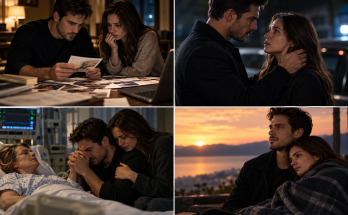
Celia had moved a bed into the room overlooking the garden.
Julian complained immediately.
“I am not dying in the living room.”
“It has the best light.”
“I have a bedroom.”
“You can't manage the stairs.”
“Details.”
He lost.
That amused Mara.
Even near the end, not every decision required philosophy.
Sometimes three people simply told an old man no.
Julian adjusted.
He liked the window.
Pretended not to.
Mara remained home.
Her employer had long since accepted the arrangement.
Her apartment abroad was gone.
Most belongings were in storage.
She did not know where she would live afterward.
For once, she did not force an answer.
One morning Julian asked:
“What are you doing after?”
Mara looked up.
“After what?”
He raised an eyebrow.
“Don't make me say it.”
She laughed softly.
“I don't know.”
“Good.”
“That surprises you?”
“Yes.”
“You trained me.”
“I tried.”
Mara moved her chair closer.
“I might go back.”
“Good.”
“I might stay.”
“Good.”
“I might do something else.”
“Also good.”
She narrowed her eyes.
“You're suspiciously easy.”
“I am dying. It simplifies my schedule.”
“Terrible.”
“I know.”
He slept more each day.
When awake, he told stories.
Not the grand family ones.
Small things.
Caroline burning toast and blaming the toaster.
Noah hating plaques.
A childhood dog Mara had forgotten.
The year she refused to wear anything except a red raincoat.
Mara listened.
She began to understand why the family had spent so much time trying to preserve ordinary details around Sarah.
Without them, death flattened people.
Julian did not want flattening either.
“Tell people I was difficult.”
“I've been preparing.”
“And attractive.”
“No evidence.”
“Cruel.”
“You taught me accuracy.”
They laughed.
Then he coughed until he could not.
Mara held water.
Waited.
Did not tell him to calm down.
Did not say everything was fine.
When his breathing settled, Julian closed his eyes.
“That's the hard part.”
“What?”
“Letting someone help without feeling managed.”
Mara smiled.
“You're bad at it.”
“Very.”
Several days later, his cousin Anna visited.
She had strong opinions about home hospice.
She believed Julian should return to the hospital.
“There may still be reversible things.”
Mara knew that.
Julian knew that.
Anna continued.
“You're letting him give up.”
Mara felt anger rise.
Then stopped.
Anna was afraid.
Fear deserved understanding.
Not authority.
Mara said:
“He's made the decision with his doctors.”
Anna looked toward Julian.
He was awake.
“Did you?”
“Yes.”
“Are you sure?”
Julian smiled weakly.
“No.”
Anna froze.
Mara almost laughed.
Julian continued.
“I'm sure enough.”
“That isn't the same.”
“No.”
“Then you should keep options open.”
“I did.”
Anna sat beside him.
“What if you feel different tomorrow?”
“Then we ask again tomorrow.”
She looked at Mara.
“Is that true?”
“Yes.”
Anna's anger softened.
She had expected a door closed permanently.
Instead she found a decision that remained alive as long as Julian could still participate.
She stayed for two hours.
Before leaving, she hugged him.
“I hate this.”
Julian whispered:
“Allowed.”
She cried.
Mara thought of generations repeating the same structure.
A family member hating the decision.
The person still owning it.
Love surviving disagreement.
That evening Julian asked:
“Was I too hard on her?”
“No.”
“Too soft?”
“No.”
“Useless answer.”
“Accurate.”
He smiled.
Another week passed.
Julian's pain increased.
Medication changed.
One afternoon he became confused.
Called Mara by Caroline's name.
Then corrected himself.
“Sorry.”
“You don't have to apologize.”
“I know you.”
“I know.”
He looked frightened.
“Don't let them think I don't.”
Mara's throat closed.
“Okay.”
He slept.
When he woke, he remembered again.
The next morning he asked for Sarah's letter.
Mara stared.
“You want the archive copy?”
“No.”
“Then what?”
“You have notes.”
She did.
Years ago, after reading the archive, she had copied several lines into a notebook.
Not the whole letter.
Just what mattered to her.
Sarah expecting to come home.
Daniel loving the baby.
Margaret being trusted.
Mara brought the notebook.
Julian asked her to read.
She did.
He listened with eyes closed.
When she finished, he said:
“She was a kid.”
“Yes.”
“Everyone made her life huge afterward.”
“Yes.”
“Do you think she would've hated that?”
Mara smiled.
“I'm not answering.”
Julian laughed weakly.
“Good.”
Then he became serious.
“I wonder if that's what grief does.”
“What?”
“Turns a person's life into the part we lost.”
Mara looked toward the garden.
“Probably.”
“Don't do that to me.”
She looked back.
“What do you want me to remember?”
Julian thought.
“Bad jokes.”
“Easy.”
“Tomatoes.”
“You hated tomatoes.”
“Exactly.”
“The six lemons?”
“That was Caroline.”
“I know.”
He smiled.
“Good.”
Then:
“Remember I changed my mind a lot.”
Mara laughed through tears.
“Especially that.”
“I don't want people saying I was brave about dying.”
“Were you?”
“No.”
“Good.”
“Terrified.”
“Also good.”
He looked at her.
“Still chose.”
“Yes.”
There it was.
Choice did not require fearlessness.
Sarah had taught that long before anyone understood.
Julian's condition worsened overnight.
The hospice nurse came before dawn.
Mara called Anna.
Celia arrived.
No one else.
Julian had been clear.
Around nine, he opened his eyes.
“Hospital?”
Mara leaned close.
“Do you want to go?”
He frowned.
For a moment she could not tell whether he understood.
Then:
“No.”
“Okay.”
“Pain?”
“The nurse is treating it.”
He nodded.
Minutes later he whispered:
“Changed my mind.”
Mara's heart stopped.
“About hospital?”
He shook his head.
“What?”
“Coffee.”
She stared.
“Coffee?”
“Want some.”
Mara began laughing.
So did Celia.
Even the nurse smiled.
They gave him a small spoonful.
He grimaced.
“Terrible.”
“It's instant.”
“Criminal.”
Those were his last clear words.
By afternoon, Julian mostly slept.
Mara held his hand.
At one point Anna began crying harder.
“I'm sorry.”
Mara looked at her.
“For what?”
“For arguing.”
Mara shook her head.
“You loved him.”
“That doesn't excuse it.”
“No.”
Anna blinked.
Mara smiled.
“Both can be true.”
Another inheritance.
Not forgiveness erasing responsibility.
Not blame erasing love.
Both.
Near sunset, Julian's breathing changed.
The nurse explained what was happening.
No euphemism.
No false reassurance.
Mara appreciated that.
She leaned close.
“Dad.”
No response.
“I'm here.”
His hand moved slightly.
Maybe reflex.
Maybe recognition.
She did not need to decide.
“I don't know where I'm going after this.”
Her voice broke.
“But I'll choose something.”
She laughed softly through tears.
“Probably badly at first.”
Julian's breathing slowed.
“I'll change my mind.”
Another breath.
“And that's okay.”
She rested her forehead against his hand.
“You don't have to stay for me.”
That sentence was the hardest.
For generations, staying had symbolized love.
But keeping someone alive for your own fear was not the same as staying with them.
Mara whispered:
“I'll stay.”
The distinction mattered.
Julian died shortly after dark.
No dramatic sign.
No final message from Sarah.
No hidden document.
His breathing stopped.
The room became quiet.
Mara remained beside him until the nurse confirmed what she already knew.
Anna sat nearby.
Celia closed the curtains.
For several minutes nobody moved.
Then Mara stood.
She felt empty.
Not wise.
Not transformed.
Grief did not reward people for understanding it.
At the funeral, she kept the service small.
Julian had asked.
She told three stories.
The red raincoat.
His terrible folding.
The instant coffee.
People laughed.
Nobody gave a speech about patient autonomy.
Nobody mentioned Sarah.
That pleased Mara.
Afterward, she drove alone to the memorial park.
Sarah's grave.
Margaret's.
She had no planned words.
She sat on the grass.
For years she had thought the family story was about protecting choice.
Then about resisting control.
Then about staying.
Now she understood something broader.
No rule was sufficient.
Ask.
Listen.
Challenge.
Help.
Stay.
Respect.
Every one of those could become harmful if treated as absolute.
The work was relationship.
Seeing the person in front of you.
Not the historical person.
Not the version you wanted.
The actual one.
Changing.
Contradictory.
Afraid.
Capable.
Dependent.
Free.
Mara touched Sarah's stone.
“You didn't give us a rule.”
Wind moved through the grass.
“We kept trying to make one.”
She smiled.
“That was probably the mistake.”
Months later, Mara returned abroad.
Not permanently.
Not temporarily either.
She stopped requiring labels.
She took a teaching position at a university.
Not law.
Not medicine.
Ethics and design policy.
An odd combination.
Julian would have laughed.
On the first day of class, a student asked:
“What is the single most important principle for respecting people's choices?”
Mara almost answered automatically.
Ask what they want.
Then she stopped.
The class waited.
Finally she said:
“There isn't one.”
The student looked disappointed.
Mara smiled.
“But there is a first step.”
“What?”
“Notice when you're tempted to decide for someone because uncertainty is uncomfortable.”
She wrote nothing on the board.
No slogan.
No dead person's name.
Then she continued.
“After that, you have to keep paying attention.”
Years later, Mara would visit the archive again.
Sarah's letter would still be there.
Daniel's unfinished sentence too.
No answer added.
Nothing completed.
That felt right.
The family had finally learned that unfinished did not mean failed.
Sarah's life was unfinished.
Daniel's sentence unfinished.
Leo's understanding kept changing.
Noah revised his own ethics.
Caroline forgot pieces near the end.
Julian changed his mind until the last days.
Lives were not arguments waiting for conclusion.
They were lived while incomplete.
Mara left the archive without asking to preserve anything else.
Outside, students crossed campus carrying coffee and phones and private worries.
Ordinary choices waiting ahead.
Some would choose badly.
Some would change their minds.
Some would need help.
Some would need challenge.
Some would need people to step back.
Some would need someone to stay.
No single rule could tell them which.
But one truth had survived every generation.
Nobody else got to own the unfinished sentence.
Mara walked into the crowd.
And for the first time in the family's long history, that was enough.
The End
Read more original stories on Feel Every Story.
Ten Years After My Daughter Died, a Stranger Came to Her Grave Carrying the Truth She Had Hidden
Part 35 of 35

One Comment on “PART 35 – In Julian’s Final Days, Mara Learned the Family’s Longest Lesson Was Never About Choosing Correctly, but About Letting Love Survive the Choice”