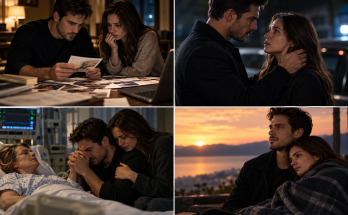
Sarah lived another twenty-four years.
Long enough to become old in ways the first Sarah never had the chance to imagine.
Her hair turned silver.
Her hands developed arthritis.
She began complaining about restaurant music.
The first time she did it, David laughed for nearly a minute.
“What?”
“You've become Leo.”
“I have not.”
“You just said the music was too loud.”
“It is.”
“He said exactly that.”
Sarah pointed at him.
“Don't tell anyone.”
David told everyone.
By seventy-five, Sarah had retired from architecture.
She still consulted occasionally.
Mostly when younger architects asked questions she considered interesting.
She refused projects requiring endless travel.
She grew tomatoes despite having inherited the first Sarah's dislike of eating them.
“Why grow them?”
David asked.
“They're satisfying.”
“You give them all away.”
“Also satisfying.”
The family archive remained at the university.
Sarah visited less often.
Eventually not at all.
She no longer needed to touch the papers to know what they contained.
Daniel's letters.
Marianne's notes.
Leo's statement.
My recording.
The crooked heart.
History remained available.
That was enough.
The hospital's Sarah Reed Family Care Initiative continued too.
Its name eventually became less important than its practices.
New staff often did not know who Sarah Reed had been.
At first, this bothered Sarah.
Then she recognized success.
A policy should not require a tragedy story every time someone followed it.
It should become normal.
Check who the patient wants.
Verify information.
Document coercion.
Keep support people informed when permitted.
Ask rather than assume.
Ordinary things.
The maternity center Sarah designed expanded.
A new wing opened.
Younger architects modified her original plans.
She complained privately.
Then admitted their design was better.
“Growth,” David said.
“Don't be smug.”
“I've waited forty years for this.”
When Sarah was eighty-one, David died.
Cancer.
Six months from diagnosis to death.
He remained himself until near the end.
One evening he found Sarah sitting beside his bed holding the lake photograph.
Not the original.
Still the same copy Elise had kept.
“You always bring them when you're scared.”
Sarah looked at him.
“Who?”
“The ancestors.”
She smiled.
“I don't.”
“You do.”
He pointed weakly toward the photograph.
“That's Sarah and Daniel.”
“I know.”
“You could've brought our wedding picture.”
“You complained about your hair in that.”
“My hair was bad.”
“Exactly.”
David smiled.
Then his expression softened.
“You know you don't have to make this meaningful.”
Sarah's eyes filled.
“What?”
“My dying.”
She looked away.
“I wasn't.”
“Yes, you were.”
He knew her too well.
“Our family does that.”
He squeezed her fingers.
“Everything becomes a lesson.”
Sarah laughed through tears.
“Leo would've hated hearing you say that.”
“Leo would've agreed.”
Probably.
David continued.
“Sometimes something just hurts.”
Sarah nodded.
“Yes.”
“So let this hurt.”
It did.
After David died, Sarah spent a year moving slowly through grief.
No project.
No memorial.
No archive donation.
She missed him.
That was enough.
At eighty-four, she moved into a smaller home.
While packing, she found Nora's old drawing.
The original.
EVERYBODY WAS LATE BUT THEY CAME.
Sarah sat on the floor.
She had believed it lost.
The paper had become fragile.
Crayon lines faded.
There they all were.
Sarah.
Daniel.
Leo.
Me.
Evelyn.
Ruth.
Marianne.
A child's impossible attempt to fit a complicated family onto one page.
Sarah laughed.
Then she cried.
For several minutes she considered sending it to the archive.
Instead she framed it.
It hung in her kitchen.
Some things belonged in history.
Some belonged beside the refrigerator.
At eighty-seven, Sarah developed pneumonia.
She recovered.
Mostly.
But her body did not return to its previous strength.
She understood what that meant.
Her doctor did not need to soften it.
Sarah arranged her affairs.
No children meant fewer arguments.
Her estate went partly to family, partly to scholarships for architecture students, and partly to a patient-advocacy organization.
She left the lake photograph to Lena Martin's granddaughter.
Not because of blood.
Because Lena had once brought the Avery documents rather than deciding Sarah could not handle them.
Another line of people who chose disclosure over control.
Sarah's final hospitalization happened in winter.
Nothing dramatic.
Breathing difficulty.
Fluid around her heart.
She agreed to treatment.
Then treatment stopped helping.
Her physician, Dr. Reyes, sat beside the bed.
“We can keep trying interventions.”
Sarah nodded.
“Or?”
“Comfort-focused care.”
“Will I go home?”
“Probably not safely.”
Sarah looked toward the window.
Snow fell beyond the glass.
“Then here.”
Dr. Reyes nodded.
“Who do you want us to call?”
Sarah smiled.
That question.
After all these years.
After everything.
“There's a list in my phone.”
The doctor did not assume.
A nurse brought the phone.
Sarah unlocked it herself.
Several relatives.
Friends.
Former colleagues.
No single designated person.
The nurse asked, “Anyone else?”
Sarah thought.
“No.”
“Are you sure?”
“Yes.”
The nurse documented it.
Then actually made the calls.
Sarah watched.
Such a small thing.
A century earlier, an eighteen-year-old girl had asked for her mother.
Someone decided she did not need her.
Now an eighty-seven-year-old woman was asked whom she wanted.
Nobody edited the answer.
Nobody protected her from information.
Nobody completed her sentence.
By evening, people arrived.
Not everyone.
Some lived too far away.
One niece joined by video.
A former colleague came carrying terrible coffee.
A neighbor brought Sarah's glasses, though she no longer wanted to read.
Lena Martin's daughter came.
So did Jonah Park.
He was an older physician now.
Sarah laughed when she saw him.
“You look terrible.”
“Good to see you too.”
“Doctors age badly.”
“Architects become rude.”
“I started rude.”
“Fair.”
He sat beside her.
They talked about nothing important.
Weather.
Hospital food.
His grandchildren.
That felt right.
Later, after everyone left for the night, Sarah remained awake.
A young nurse named Camille checked her medication.
“You need anything?”
“No.”
“Anyone you want me to call?”
Sarah smiled.
“You people really learned that question.”
Camille looked confused.
“What?”
“Nothing.”
Sarah closed her eyes.
Then reopened them.
“Actually.”
Camille waited.
“There's something in my bag.”
The nurse brought it.
Inside was Nora's drawing.
Sarah had carried it to the hospital without consciously deciding why.
Camille unfolded it.
“Cute.”
“My grandmother drew it.”
“How old was she?”
“Maybe eight.”
Camille read the words.
“Everybody was late but they came.”
Sarah nodded.
“Long story.”
Camille smiled.
“I've got twelve hours.”
Sarah laughed.
For a moment she considered telling everything.
The eighteen-year-old mother.
The unidentified father.
The grandmother who raised Leo.
The cemetery.
Evelyn.
Daniel.
Ruth.
Dr. Bell.
Marianne.
The nineteen minutes.
The forged letter.
The returned letters.
Avery.
The archive.
The hospital program.
All of it.
Then she remembered Leo.
Don't make them carry us.
Sarah folded the drawing.
“Another time.”
Camille nodded.
No disappointment.
No pressure.
Sarah handed it back.
“Put it beside the bed.”
The nurse did.
Near midnight, Sarah woke to voices in the hallway.
A woman was upset.
Another person was asking for information.
The details were unclear.
Sarah listened without meaning to.
Then she heard Camille say:
“Let me check who the patient wants with her.”
Sarah smiled.
No one in that hallway knew.
No one needed to know.
Camille disappeared down the corridor.
A few minutes later, footsteps returned.
A door opened.
Someone began crying with relief.
Ordinary.
Almost disappointingly ordinary.
Sarah closed her eyes.
For generations, her family had tried to decide where the story ended.
At Sarah's grave.
At Daniel's return.
At Dr. Bell's exposure.
At Leo becoming a father.
At my death.
At Daniel's.
At the hospital reform.
At Leo's final day.
At the maternity center.
Every ending produced another life.
Another question.
Another choice.
Now Sarah understood why.
Families did not have endings while someone remained to inherit the consequences.
But consequences could change shape.
Pain could become caution.
Caution could become practice.
Practice could become culture.
Eventually, nobody remembered why the door was kept open.
They simply kept it open.
Sarah slept.
Morning came pale through the window.
Camille returned.
“Good morning.”
Sarah opened her eyes.
“Debatable.”
Camille laughed.
“Want breakfast?”
“No.”
“Coffee?”
“Terrible here.”
“Correct.”
Sarah looked toward Nora's drawing.
“Can you do me a favor?”
“Sure.”
“When I'm gone, throw that away.”
Camille looked startled.
“The drawing?”
“Yes.”
“Are you sure?”
Sarah smiled.
There was the question again.
Are you sure?
Choice verified.
“Yes.”
“Family doesn't want it?”
“They have copies.”
That was a lie.
Sarah realized it immediately.
Then laughed.
“No, they don't.”
Camille waited.
Sarah thought.
“Still throw it away.”
“Okay.”
No archive.
No preservation.
No future curator deciding how to explain it.
A child's drawing had done its work.
Everybody was late.
They came.
Enough.
By afternoon, Sarah's breathing worsened.
Jonah returned.
So did several relatives.
Nobody spoke constantly.
Nobody needed to.
Sarah drifted in and out.
At one point she dreamed of a lake she had never visited.
A young woman stood near the water.
Not a ghost.
Not really Sarah.
Only the face from the photograph reconstructed by an aging mind.
Beside her stood Daniel.
Young too.
Before the cane.
Before fatherhood arrived decades late.
Sarah did not approach them.
They did not turn.
The image dissolved.
When she woke, Camille was adjusting her blanket.
“Someone waiting outside?” Sarah whispered.
Camille looked toward the hallway.
“Your niece just arrived.”
Sarah smiled.
“Let her in.”
The nurse did.
No delay.
No permission sought from anyone else.
No hidden authority.
The door opened.
Her niece entered and took Sarah's hand.
“There you are.”
Sarah could barely speak.
But she managed.
“Here.”
It was the simplest word.
And perhaps the entire story.
Here.
Her mother had been there.
Marianne had checked.
Daniel eventually came.
Leo stayed.
Nora carried what she chose.
Sarah built what she wanted.
And now, at the end, nobody had to wonder who was waiting.
Sarah died that evening.
Camille followed her instructions.
After the family left, she picked up Nora's drawing.
She hesitated.
Then remembered the patient had been clear.
Are you sure?
Yes.
Camille tore the paper once.
Then again.
She placed it in the confidential waste bin.
No miracle occurred.
No history vanished.
The hospital continued through the night.
Babies were born.
People recovered.
People died.
Families waited.
Nurses checked.
Doors opened.
Years later, the Sarah Reed Family Care Initiative was renamed during a hospital restructuring.
The original name disappeared.
No one in the family remained to object.
The procedures stayed.
The maternity center was renovated.
Sarah's sentence on the wall was painted over.
The policy behind it remained.
The university archive received fewer requests for the Reed collection.
Then almost none.
Sarah's letter rested in darkness.
Daniel's unfinished sentence remained unfinished.
Marianne's notes stayed preserved.
Leo's warning waited unread.
And that, finally, was not forgetting.
It was freedom.
The people who came afterward did not need to know Sarah's name in order to benefit from what her life had changed.
They did not need to mourn her.
They did not need to visit her grave.
They did not need to carry photographs or letters or explanations.
They only needed to be treated as though their choices mattered.
One night, long after everyone in the story was gone, a frightened young woman in labor asked a nurse whether her mother could come inside.
The nurse checked the chart.
Then she checked the hallway.
A woman was waiting there.
“She's right outside,” the nurse said.
The patient closed her eyes with relief.
“Can you get her?”
“Of course.”
The nurse opened the door.
And this time, nobody stopped her.
Click here to continue reading: PART 21: Long After Sarah’s Name Disappeared From the Hospital Walls, a Young Nurse Discovered Why One Question Still Mattered
Ten Years After My Daughter Died, a Stranger Came to Her Grave Carrying the Truth She Had Hidden
Part 20 of 35