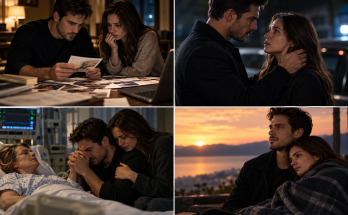
Leo lived to ninety-three.
This annoyed him.
At eighty-eight he declared ninety sufficient.
At ninety he complained the world had become too complicated.
At ninety-two he admitted streaming television was useful.
At ninety-three he still refused to use voice assistants.
“I don't want appliances listening.”
Elise reminded him that for half his childhood a private investigator had actually watched him.
“That was different.”
“How?”
“He was human.”
“That is worse.”
“I didn't say it wasn't.”
His final illness was slow.
Heart failure.
Kidneys weakening.
Nothing dramatic.
Doctors could treat symptoms.
Not reverse age.
He understood.
The family did too.
Young Sarah, now nineteen, spent evenings with him during university breaks.
She had chosen architecture.
Leo was delighted.
“No hospitals?”
“No.”
“Excellent.”
Nora objected.
“I work in a hospital.”
“I know. I love you despite it.”
Elise rolled her eyes.
By then Nora was in her seventies.
Retired.
Still correcting everyone's medication schedules.
Family habits persisted.
One evening Leo asked for the box.
Nora knew which one.
“You gave it to me years ago.”
“I know.”
“You said it was mine.”
“It is.”
“Then why do you want it?”
“I need to check something.”
She brought it.
The box had become much smaller.
Sarah's letter.
Marianne's note.
Daniel's returned letter.
The lake photograph.
My recordings.
A copy of the hospital program materials.
Nora placed everything on his blanket.
Leo touched each item.
Not sentimentally.
Like someone verifying inventory.
Young Sarah sat nearby.
“What are you doing?”
“Making sure nobody buried anything ridiculous with me.”
She laughed.
Nora did not.
“You're not dying tonight.”
“Probably not.”
“Then stop talking like that.”
Leo looked at her.
“Grandma hated when I did this too.”
“Which grandma?”
“My grandma.”
He smiled.
“The original bossy one.”
Nora's eyes filled.
Leo reached for her hand.
“I'm okay.”
“No, you're not.”
“I mean with this.”
She shook her head.
“That doesn't help.”
“I know.”
He had said that phrase many times in his life.
Sometimes nothing helped.
Truth could still accompany.
Leo looked at the box.
“I want the originals divided.”
Nora frowned.
“Why?”
“Sarah's letter goes to the family.”
“Obviously.”
“No.”
He shook his head.
“Not to one person.”
“What do you mean?”
“Make copies for everyone who wants one.”
Nora began to argue about preservation.
Leo ignored her.
“The original can go to the archive with restrictions.”
Young Sarah looked surprised.
“The hospital?”
“No.”
He smiled.
“They've got enough.”
A local university had agreed years earlier to preserve family papers connected to the historical medical case.
Leo wanted Sarah's original letter stored properly.
Not hidden inside someone's closet.
Not carried as private obligation.
“If someone wants to see it, they should have to go somewhere and ask.”
Nora stared.
“That's very specific.”
“Grandma taught me to ask sooner.”
Nora smiled through tears.
Leo continued.
“Marianne's note too.”
“What about Dad's letter?” Nora asked.
Leo picked it up.
Daniel's returned letter.
Written when he was eighteen.
A father asking how to find a son he feared had been taken from him.
Leo held it for a long time.
Then handed it to Nora.
“You keep that.”
“Why me?”
“Because you knew him long enough to understand both versions.”
“The young one and the old one?”
“Yes.”
Nora took the letter.
Young Sarah pointed at the lake photograph.
“And that?”
Leo smiled.
“You.”
She froze.
“Me?”
“You're named after her.”
“You told me the name doesn't mean I owe anything.”
“It doesn't.”
“Then why give me that?”
“Because you like the picture.”
Sarah looked down.
He was right.
“Do I have to keep it forever?”
“No.”
“Can I give it away?”
“Yes.”
“Can I lose it?”
Nora gasped.
Leo laughed.
“Yes.”
“Dad!”
“What?”
“That is the original.”
“Objects survive less reliably than people imagine.”
Nora stared at him.
Leo winked at Sarah.
“Your grandmother is still an archivist.”
Weeks later, the family met with the university archivist.
Leo insisted on attending by video.
He asked tedious questions about storage temperature.
Nora looked impressed.
“You finally care about preservation.”
“I care about them not ruining Sarah's letter.”
“That's preservation.”
“Don't make this ideological.”
Young Sarah laughed.
The archivist explained that researchers would not have unrestricted access.
The family could set privacy conditions.
Digital copies would be created.
Leo agreed.
Then he asked one final question.
“What happens if no one cares in fifty years?”
The archivist seemed surprised.
“The materials remain.”
“That wasn't my question.”
She thought.
“If no one requests them, they remain preserved anyway.”
Leo nodded.
“Good.”
After the call, Nora asked why that answer mattered.
“Because I don't want future people forced to care.”
She frowned.
“Why preserve it then?”
“Choice.”
He looked toward the window.
“That whole story started because powerful people thought choice didn't matter.”
Nora understood.
Preserving Sarah's story did not require demanding attention.
It meant making truth available.
Nothing more.
Nothing less.
Leo's condition worsened in autumn.
The hospital offered admission.
He refused.
Home care was safe.
So he stayed with Nora.
He slept in a room overlooking a small garden.
It amused him.
“Grandma ended in a garden room too.”
Nora adjusted his blanket.
“Stop comparing death arrangements.”
“Family tradition.”
“No.”
Young Sarah visited almost every day.
She brought architectural drawings.
Leo pretended to understand them.
One evening she showed him a design for a student project.
A community clinic.
Large windows.
Family waiting areas.
Clear sightlines between reception and treatment corridors.
Leo studied it.
“Why so much waiting space?”
Sarah shrugged.
“People wait.”
He looked at her.
“That's your reason?”
“Isn't that enough?”
He smiled.
“Yes.”
She pointed to one section.
“I made private rooms for families who get bad news.”
Leo became quiet.
“Good.”
“And there's a small room where staff can meet support people.”
“Why?”
“So nobody has to shout medical information in hallways.”
Leo looked at her for a long time.
“You sure you don't want medicine?”
“No.”
“Good.”
“Why good?”
“Because buildings matter too.”
She smiled.
A week later, Leo asked Nora to drive him to the cemetery.
She resisted.
He insisted.
Young Sarah came.
They brought a wheelchair.
First Sarah's grave.
Then mine beneath it.
Leo sat quietly.
Young Sarah stood beside him.
“What are you thinking?”
“Too much.”
Nora waited.
Leo looked at the first Sarah's name.
“I spent most of my life coming here.”
“Do you want us to keep coming?”
That was the question.
He had expected it.
“No.”
Nora blinked.
“No?”
“Come if you want.”
He looked at young Sarah.
“But don't make it a duty.”
She nodded.
“What about birthdays?”
“Celebrate living people.”
Nora smiled sadly.
“You're serious.”
“Yes.”
“Grandma would argue.”
“She argued recreationally.”
Young Sarah laughed.
Leo rested his hand on the arm of the wheelchair.
“When I was ten, I asked whether dead people know when we remember them.”
Young Sarah had heard the story.
“What do you think now?”
He smiled.
“I think I asked the wrong question.”
“What should you have asked?”
Leo looked at the graves.
“What do the living do with the time left?”
No one answered.
They didn't need to.
On the drive home, Leo asked to stop at the baseball field.
The original one was gone.
A newer complex stood in its place.
Still, he recognized the location.
He remembered the surveillance photograph.
Daniel eventually cheering in the stands.
Me knocking over a chair.
He smiled.
“Dad loved baseball.”
Nora corrected him.
“He was bad at baseball.”
“Same thing.”
They watched children practice for fifteen minutes.
Then went home.
Leo's final week was quiet.
He slept more.
Ate little.
Spoke less.
Nora remained nearby.
Young Sarah came after class.
Elise brought food no one finished.
One night Leo woke confused.
“Grandma?”
Nora moved closer.
“I'm here.”
He squinted.
For a second she thought he meant me.
Then he smiled.
“No.”
“What?”
“Wrong generation.”
She laughed through tears.
“Yeah.”
Leo closed his eyes.
“Everybody keeps getting old.”
“That's the plan.”
“Bad plan.”
“Still the plan.”
The next morning he was clearer.
He asked for young Sarah.
She came.
He held her hand.
“You building that clinic?”
“Eventually.”
“Make the chairs comfortable.”
She laughed.
“I promise.”
“People wait a long time.”
“I know.”
Then he looked at Nora.
“Come here.”
She sat on the other side.
Leo's breathing had become shallow.
Still, his voice was steady.
“Don't turn this into another family story.”
Nora cried.
“Too late.”
“I mean it.”
“You're impossible.”
“Genetics.”
Even then.
The joke remained.
Leo looked at young Sarah.
“Live.”
Then at Nora.
“Let her.”
Nora nodded.
“I will.”
He closed his eyes.
Several minutes passed.
Then he whispered something.
Nora leaned closer.
“What?”
“Did I do okay?”
Her heart broke.
Ninety-three years.
A lifetime shaped by one unanswered question.
Was he wanted?
Did he belong?
Had he done enough with the life so many people fought over?
Nora held his hand.
“You did more than okay.”
Young Sarah touched his shoulder.
Leo breathed out.
Then smiled.
“Good.”
He died that afternoon.
No hospital.
No emergency.
No hidden conversation.
No one kept away.
The room was full.
At the funeral, Nora spoke briefly.
As Leo requested.
She did not retell the whole family history.
No one needed it.
She said only:
“My father spent his childhood trying to understand who had left him. He spent his adulthood learning that love is not proven by never leaving. It is proven by respecting who people become.”
Then young Sarah spoke.
She held no notes.
“My great-grandfather told me I did not owe our family story anything.”
She looked at the people gathered.
“So I'm going to honor him by believing him.”
Nora smiled.
Sarah continued.
“I won't build my life around tragedy.”
A pause.
“But I will build things where people are treated like they matter.”
That was all.
Leo was buried near Daniel.
Not beside Sarah.
Not beside me.
His choice.
His own place.
Months later, young Sarah's clinic design won a student award.
Years later, she became an architect.
One of her first major projects was a maternity center.
At the entrance she refused a memorial plaque.
Instead, near the family waiting area, she placed a simple sentence on the wall.
IF SOMEONE IS WAITING FOR YOU, WE WILL HELP YOU FIND THEM.
Nobody walking through the building knew the full history behind those words.
They did not need to.
The story had finally become what Leo wanted.
Not an obligation.
Not a shrine.
Not a wound every generation had to reopen.
A choice built into the future.
A door left unlocked.
A waiting room where someone would check.
And a family finally free to keep living.
Click here to continue reading: PART 17: Decades After Leo Let the Past Go, Young Sarah Discovered One Forgotten Name That Changed What the Family Thought They Knew
Ten Years After My Daughter Died, a Stranger Came to Her Grave Carrying the Truth She Had Hidden
Part 16 of 35