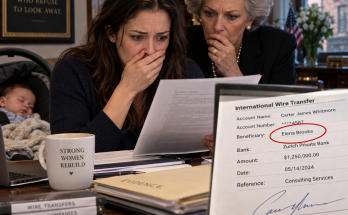
The federal investigator in the photograph was named Laura Chen.
Harrison confirmed it by noon.
She had retired from government service three years earlier after a career involving financial crimes and public corruption.
Whether she had formally investigated the Whitmores was not immediately clear.
Federal agencies did not answer questions merely because Harrison Sterling asked politely.
Fortunately, Laura Chen did.
She agreed to speak through counsel.
The interview took place remotely.
Laura appeared from a home office filled with books and framed photographs.
She was in her early sixties, with a calm expression and the wary precision of someone accustomed to people choosing every word carefully around her.
Harrison began with Thomas.
“Did you meet him?”
“Yes.”
“When?”
“Several times over approximately eight years.”
Emily felt the timeline expand again.
Thomas’s investigation had not begun eighteen months before his death.
It had been alive for nearly a decade.
“What was he reporting?” Harrison asked.
“Initially, financial irregularities involving Whitmore-controlled entities.”
“Crimes?”
“Potential crimes.”
Laura emphasized the distinction.
“Thomas had suspicions before he had evidence.”
Emily understood immediately.
That was often how financial cases began.
A pattern that looked wrong.
Then records.
Then proof—or disappointment.
“What specifically concerned him?”
“Related-party transfers. Payments to politically connected intermediaries. Trust assets moving into private companies. Transactions structured in ways that appeared designed to obscure beneficial ownership.”
“Did your office open a case?”
Laura hesitated.
“A preliminary inquiry existed.”
“What happened?”
“It did not mature into a prosecutable case at that time.”
“Why?”
“Insufficient admissible evidence.”
Emily asked, “Did Thomas stop cooperating?”
Laura looked at her.
“No.”
“Then what changed?”
“Our investigative priorities changed. Some records were unavailable. Some witnesses refused interviews. And someone became aware Thomas was speaking to us.”
“Victor.”
Laura did not immediately answer.
“We suspected surveillance.”
“Did you identify him?”
“Not conclusively at the time.”
Emily thought of the photograph Victor placed in the archive.
He had not merely suspected Thomas.
He had proof.
“Did Richard know Thomas was talking to you?”
Laura’s expression became more guarded.
“I don’t know.”
“Evelyn?”
“I don’t know.”
“Victor?”
“I believe Victor knew.”
Harrison asked whether Laura had ever met Victor.
“Yes.”
That surprised everyone.
“When?”
“About six years ago.”
“Why?”
“He approached me.”
Emily leaned closer.
“Victor contacted a federal investigator?”
“Yes.”
“About Thomas?”
“No.”
Laura’s answer came slowly.
“About Richard.”
The pattern inverted again.
Victor, who appeared to have watched and threatened people for Richard, had once approached federal authorities about Richard himself.
“What did he say?” Harrison asked.
“That Richard was moving assets through undisclosed structures.”
“Did he provide evidence?”
“Fragments.”
“Why?”
Laura considered.
“I believed he was trying to protect himself.”
That sounded exactly right.
“From prosecution?”
“From Richard. From Evelyn. From anyone who could later blame him.”
Victor had been building insurance years before M-42.
“When did you last speak with Thomas?” Emily asked.
“Approximately three weeks before his death.”
Mark looked up.
“What did he say?”
Laura’s expression softened.
“He told me he finally understood the structure.”
“What structure?”
“He said everyone assumed Richard sat in the center.”
Emily waited.
“Thomas believed that was no longer true.”
“Who did he think did?”
“Victor controlled information. Evelyn controlled hidden liquidity. Richard controlled the formal companies.”
Three centers.
Three kinds of power.
Mark asked, “And me?”
Laura looked at him.
“Thomas said you were useful to all three because you wanted approval more than you wanted authority.”
The sentence hurt visibly.
Mark nodded.
“That sounds like him.”
Emily almost wished Thomas had lived long enough for her to know him properly.
His bluntness might have been exhausting.
It was also clarifying.
Laura continued.
“Thomas believed the three systems had begun feeding off one another. Richard moved money to preserve control. Evelyn siphoned portions into independent reserves. Victor took fees and built leverage. Eventually none of them had complete visibility.”
“That explains why the books became impossible,” Emily said.
Laura nodded.
“Exactly.”
“Did Thomas think any one of them caused his danger?”
“He was most afraid of Victor.”
“Why?”
“Richard wanted obedience. Evelyn wanted security. Victor wanted optionality.”
Emily frowned.
“Meaning?”
“He wanted the ability to survive whichever side collapsed first.”
That described M-42 perfectly.
A warehouse full of leverage.
“What did Thomas give you before he died?”
“Nothing new.”
“Did he mention his ledger?”
“No.”
“The recording?”
“No.”
“The key?”
“No.”
“So he kept the final evidence outside law enforcement.”
Laura looked regretful.
“Yes.”
“Why?”
“Because he stopped trusting institutions to move fast enough.”
Emily understood the impulse.
She also understood the danger of it.
Thomas had built a private case.
That had made his evidence powerful but his personal risk greater.
Harrison asked about the photograph Emily’s father had seen.
Laura could not identify which meeting it showed.
But the likely date matched a conversation seven years earlier in a park outside the city.
Thomas had brought preliminary trust records.
Victor’s surveillance placed him nearby.
“Did you warn Thomas?”
“Yes.”
“Did he stop?”
“No.”
Of course not.
After the interview, Harrison sat silently for several moments.
Then he said, “We now have independent confirmation that Thomas was pursuing these issues years before his death.”
Emily nodded.
“But still no proof his crash was caused.”
“Correct.”
Mark looked frustrated.
“What would prove it?”
“Evidence about the accident.”
The crash file had been requested.
It arrived that afternoon.
Thomas’s car had left a rural road during heavy rain.
No other vehicle was recorded at the scene.
Blood alcohol negative.
No drugs.
Seat belt worn.
Cause listed as loss of control.
Mechanical inspection found substantial front-end damage but no obvious pre-impact failure.
The case had been closed.
Emily read everything.
Weather records.
Road photographs.
Tire condition.
Witness statements.
Then she found a detail.
A tow-yard photograph showed the brake-fluid reservoir.
Empty.
“That could be crash damage,” Harrison said.
“I know.”
The mechanic’s report noted a ruptured brake line.
Again, possibly caused by impact.
Emily forced herself not to conclude.
Then Sarah called.
“My dad had the brakes serviced two days before he died.”
The repair shop still existed.
Records confirmed it.
New brake line.
Fluid replacement.
Inspection.
No known defect.
Harrison contacted the mechanic.
The man remembered Thomas because he had complained about a soft pedal.
“What caused it?” Harrison asked.
The mechanic checked archived notes.
A loose fitting.
“Accidental?”
“Could be.”
“Tampering?”
“Could be.”
“Which?”
“I can’t tell you.”
Again the evidence stopped just short.
Sarah sounded furious.
“Everyone knew he was afraid.”
Harrison said, “Fear does not establish murder.”
“Then what does?”
“Proof.”
Emily appreciated his steadiness even when she hated it.
The court examiner meanwhile completed the transfer of box forty-one from Canada.
Its contents matched Claire’s description.
Agreement.
Account ledgers.
Copies from M-42.
Evelyn’s records.
One envelope was marked THOMAS.
Inside was the missing photograph.
Thomas and Laura Chen seated on opposite ends of a park bench.
Timestamped seven years earlier.
On the back Victor had written:
SUBJECT CONFIRMED CONTACT. R.W. NOT ADVISED.
Emily stared.
“Richard wasn’t told.”
“Apparently.”
So Victor had kept Thomas’s federal contact secret from Richard.
Why?
Another document answered partly.
A memo from Victor to Evelyn:
T.W. external contact creates risk. Recommend containment through financial pressure, not disclosure to R.W. at this stage.
Evelyn had written beneath it:
Agreed. No escalation.
Mark read it twice.
“My mother knew Thomas was speaking to federal investigators.”
“Yes,” Emily said.
“And didn’t tell Dad.”
“No.”
Harrison asked Evelyn about the note.
Her new lawyer arranged a second interview.
This time Evelyn did not hesitate.
“Victor convinced me Richard would react badly.”
“What did you think Richard would do?” Harrison asked.
“Destroy Thomas.”
“Financially?”
“Yes.”
“Physically?”
“No.”
“You are certain?”
Evelyn looked offended.
Then stopped herself.
“I was certain then.”
“And now?”
She looked down.
“I don’t know what Richard is capable of when cornered.”
Emily watched her carefully.
That answer felt more honest than certainty.
“Why did you choose financial pressure?”
“To make Thomas stop.”
“How?”
“We purchased debt tied to his business.”
Emily remembered Mark describing the same tactic.
Richard had supposedly used it.
Now Evelyn admitted participation.
“You destroyed his company.”
“No. We pressured him.”
“What happened?”
“He lost contracts.”
“Because you interfered?”
“Yes.”
“Did Richard know?”
“Eventually.”
“Did he approve?”
“He didn’t object.”
Thomas’s resentment suddenly had deeper roots.
It had not been paranoia.
His family had intentionally damaged his livelihood to stop him from exposing them.
“What did Victor gain?” Emily asked.
Evelyn hesitated.
“Influence.”
“Money?”
“Yes.”
“How much?”
“I don’t know.”
“You transferred him millions.”
“Over years. For services.”
“Threatening Peter Lang was a service?”
Evelyn looked away.
“No.”
“Following me?”
“No.”
“Photographing my child?”
Her face changed.
“I did not know about that.”
Emily believed her.
Not because she trusted Evelyn.
Because disgust came too quickly to manufacture.
Evelyn whispered, “If I had known, I would have stopped him.”
“Like you stopped him with Thomas?”
That landed.
Evelyn closed her eyes.
“No.”
The next major break did not come from financial records.
It came from Victor’s missing phone.
Police had been unable to locate it.
But Northline’s dispatch system kept automatic synchronization data from devices used to authorize bookings.
One device identifier matched Victor’s missing phone.
Its last sync occurred the day he disappeared.
Location metadata placed it near a private airfield forty miles outside the city.
Harrison immediately notified investigators.
The airfield’s camera records showed Victor arriving in a rental car.
He boarded no registered commercial flight.
But one private aircraft departed seventeen minutes later.
Owner:
Bellweather Aviation LLC.
Mark stared at the name.
“Bellweather.”
Marianne Cole’s company family.
Evelyn’s nominee.
Harrison contacted Evelyn.
She looked genuinely shocked.
“I don’t own an aircraft.”
“The company linked to Marianne does.”
“I never authorized that purchase.”
“Did you know Bellweather had aviation assets?”
“No.”
“Who manages Bellweather day to day?”
“Marianne.”
“And who introduced Marianne to Victor?”
Evelyn stopped.
“I did.”
Years earlier.
A charity event.
Victor needed help structuring consulting payments.
Marianne handled corporate administration.
Another bridge.
Emily said, “You built the path he used to disappear.”
Evelyn looked sick.
“I didn’t know.”
Mark’s voice hardened.
“You keep saying that.”
Evelyn looked toward him.
“So do you.”
Silence.
Mother and son sat facing the same accusation.
Different generations.
Same defense.
They did not know because they had chosen not to look closely enough.
The aircraft flew to Nassau.
After that, Victor’s trail blurred.
No immigration record under his name.
No hotel reservation.
No obvious card use.
But the aircraft returned without him.
Who else had been aboard?
Flight records listed one passenger.
Marianne Cole.
She came back alone.
Harrison immediately sought an interview.
Marianne declined.
Then, twelve minutes later, she called Evelyn.
Evelyn answered with counsel listening.
“Marianne?”
Her old friend was crying.
“You have to stop them.”
“Stop what?”
“Looking for Victor.”
Evelyn’s face changed.
“Where is he?”
“I don’t know anymore.”
“You flew him to Nassau.”
“I thought I was helping you.”
“What?”
“He said the archive would destroy you.”
Evelyn stared.
“What did you give him?”
Marianne sobbed.
“Access.”
“To what?”
“The reserve accounts.”
Emily stood.
Harrison leaned toward the speaker.
“How much?”
Marianne heard the unfamiliar male voice.
“Who is that?”
“Answer him,” Evelyn said.
A long pause.
Then Marianne whispered, “All of it.”
Evelyn went white.
“How much did Victor take?”
Marianne began crying harder.
“Seven-point-two million.”
The offshore reserve Victor had blamed on Evelyn was gone.
And he had used Evelyn’s own oldest friend to take it.
Click here to continue reading: PART 15: Victor Stole Evelyn’s Secret Reserve and Vanished Offshore, but One Transfer Proved He Was Still Watching Emily From Much Closer Than Nassau
Before Dawn, Mark Said One Word and Expected Emily to Break, but She Had Already Started Counting Everything He Hid
Part 14 of 24