Marriage changed less than people expected.
Marcus moved into my apartment gradually enough that no single day felt like a transition.
One week, three boxes appeared in the hallway.
The next, his books occupied half a shelf.
Then a lamp replaced the one I hated but had never bothered to change.
Eventually, his apartment stopped being somewhere he slept and became somewhere we stored furniture neither of us wanted to admit we should sell.
Maisie adapted faster than either of us.
She added Marcus to the morning routine without ceremony.
“Mommy coffee. Marcus toast. Me cereal.”
Apparently our household had been reduced to assigned breakfast duties.
I kept waiting for marriage to create some emotional shift.
A sense that I had crossed from independence into something else.
It never came.
Maybe because Marcus never behaved as though marriage gave him rights he had not earned before.
He still asked.
Still listened.
Still accepted no.
And when we disagreed, which happened with irritating regularity, neither of us treated the marriage license like a winning argument.
That mattered more than romance.
The cabin Kyle gave us became our first weekend away as husband and wife.
I almost canceled twice.
Not because of Maisie.
At least that was what I told myself.
Everyone had the childcare plan.
Derek and Elena had Friday night.
Mom and Dad Saturday afternoon.
Vanessa had backup.
Kyle had apparently been assigned snacks, which was probably the safest responsibility.
Still, the morning we were supposed to leave, I stood in the kitchen checking the schedule again.
Marcus watched.
“You know there are six adults involved.”
“Seven if you count Brinn.”
“You are not allowed to count Brinn. She has a newborn.”
“June is three months old.”
“Exactly.”
I looked at the printed schedule.
Marcus took it gently from my hands.
“Jenna.”
“What?”
“They know.”
“I know.”
“You gave everyone emergency numbers.”
“Yes.”
“Medical authorization.”
“Yes.”
“Medication list.”
“She takes no medication.”
“Yet you made a list.”
I frowned.
“Preparedness.”
“Control.”
“Preparedness.”
He smiled.
“Come on.”
I looked toward Maisie’s bedroom.
She had spent the previous night with Derek and Elena and had already video-called me that morning to complain Sophie was using too much bathroom time.
She was fine.
I was the problem.
“I hate leaving.”
“No.”
Marcus picked up our bag.
“You hate not being needed.”
I stared.
“That was unnecessarily accurate.”
“I’m your husband now. Apparently I have privileges.”
“No.”
“Fair.”
We left.
The cabin sat near a lake two hours east of Seattle.
Nothing luxurious.
Wood stove.
Small kitchen.
Deck facing water.
Exactly what Kyle could reasonably afford after his newfound financial discipline.
The first afternoon felt almost unnatural.
No schedule.
No child.
No hospital calls.
No family obligations.
Marcus made coffee.
I read a book.
Then realized I had read the same page six times.
“You okay?”
“Yes.”
“Liar.”
I closed the book.
“I keep expecting someone to call.”
“They might.”
“That doesn’t help.”
“You want me to promise nothing will happen?”
“No.”
He nodded.
“Good.”
There it was again.
The absence of false reassurance.
I had come to love that about him.
We walked beside the lake before sunset.
Cold air.
Pine needles underfoot.
The path reminded me of Montana.
Not visually.
Emotionally.
The feeling of being somewhere I had not earned through suffering.
I told Marcus.
He listened.
“You still think good things need justification.”
I looked at him.
“Sometimes.”
“Why?”
“Because bad things always demanded explanations.”
He considered that.
“Maybe.”
We walked farther.
“Or maybe because when people are used to surviving, pleasure feels suspicious.”
That sounded annoyingly insightful.
“You have become unbearable.”
“Marriage.”
“Yes.”
At dinner, my phone rang.
I froze.
Marcus looked at it.
“Derek.”
My stomach dropped.
I answered immediately.
“What happened?”
He laughed.
“Nothing.”
I closed my eyes.
“Never open with silence when calling a parent during a child-free weekend.”
“Noted.”
“What do you want?”
“Maisie wants to tell you something.”
He handed her the phone.
“Mommy!”
“Hi.”
“I lost tooth!”
I sat up.
“What?”
“My tooth!”
She opened her mouth directly into the camera.
A gap.
My daughter had lost her first tooth while I was away.
The irrational part of me felt punched.
“When?”
“Dinner.”
“Did it hurt?”
“No!”
Derek appeared behind her.
“She has already negotiated tooth-fairy rates.”
“Do not let Kyle advise her.”
“Too late.”
From somewhere in the room, Kyle shouted:
“Inflation!”
Of course he was there.
I laughed.
Then Maisie said:
“You sad?”
Children noticed everything.
“No.”
A lie.
Small.
But still.
She narrowed her eyes.
“Mommy.”
I sighed.
“A little.”
“Why?”
“Because I like being there for your first things.”
She thought about that.
“You see second tooth.”
I laughed.
“That is true.”
“And picture.”
Derek had already sent one.
“And I come tomorrow.”
“Yes.”
She smiled.
“Then okay.”
Then okay.
Not every missed moment was a lost relationship.
That lesson still needed repetition.
When the call ended, I sat quietly.
Marcus poured more water into my glass.
“You okay?”
“Yes.”
This time true.
“Mostly.”
Better.
He reached across the table.
“You know you didn’t miss her losing the tooth.”
“I was not there.”
“No.”
“But you’re still part of it.”
I looked at him.
He continued.
“She called you.”
That mattered.
Presence had more than one form.
The next morning, I woke before Marcus.
The lake outside was silver.
I made coffee.
Then checked my phone.
One message from Mom.
“Happy anniversary.”
I frowned.
Not wedding anniversary.
Then I checked the date.
Her birthday.
The birthday.
Five years.
I had known the month.
Not the exact day.
Apparently my body had stored it even when my mind did not.
I sat at the table.
Five years ago, I had driven toward Portland.
Five years ago, Mom had texted.
Five years ago, I had turned around.
Marcus entered wearing a sweatshirt.
“You look like you saw a ghost.”
“Date.”
He checked the calendar.
“Oh.”
I had told him the story enough that he understood.
“Your mom’s birthday.”
“Yes.”
He poured coffee.
“What do you want to do?”
I didn’t know.
Call her?
Ignore the significance?
Send flowers?
Nothing?
Then another thought came.
“I want to go somewhere.”
Marcus waited.
“The rest area.”
He didn’t ask why.
“Okay.”
We drove back toward Seattle.
I texted Derek.
“Can you meet us with Maisie at Exit 63?”
His reply:
“Why?”
I typed:
“I’ll explain.”
Ten minutes later:
“Okay.”
No interrogation.
That still felt like a miracle sometimes.
We arrived first.
The rest area looked ordinary.
Cars.
Vending machines.
Wet pavement.
A few trees.
The same kind of place thousands of travelers used without changing their lives.
I stood near the parking space I remembered.
Maybe it was not the exact one.
Memory had softened some details.
The tree was definitely larger.
Or perhaps a different tree entirely.
Marcus stood beside me.
“You sure this is it?”
“No.”
He nodded.
“That seems right.”
Twenty minutes later, Derek’s car pulled in.
Maisie jumped out.
She ran toward us.
“Mommy!”
I hugged her.
Then looked at the gap where her tooth had been.
“Oh my God.”
She grinned.
“Money!”
“Capitalism has found you.”
Derek walked over.
“What are we doing?”
I looked at Maisie.
She was old enough now.
Not for every detail.
Enough.
“This is where I turned around.”
Her face showed confusion.
“Car?”
“Yes.”
“Why?”
I crouched.
“Remember the message you saw once? From Grandma?”
Her expression changed slightly.
“Yes.”
“After Grandma sent it, you and I were driving to her house.”
“I baby.”
“Very baby.”
I smiled.
“And I stopped here.”
“Why?”
“Because I had to decide whether we kept going.”
Maisie looked around.
“And?”
“We went home.”
She thought.
“Grandma sad?”
“Later.”
“Mommy sad?”
“Yes.”
“Baby me sad?”
I looked at her.
“You were hungry.”
She smiled.
“Baby always hungry.”
“Exactly.”
Then I became serious.
“I wanted to show you something.”
“What?”
“This place mattered.”
She waited.
“But it isn’t special because something bad happened.”
Marcus stood quietly.
Derek too.
“It matters because this is where I made a choice.”
“What choice?”
“That if someone wanted me but not you, I was not going.”
Maisie stared.
Then shrugged slightly.
“Obviously.”
I laughed.
Derek looked away, smiling.
Of course it was obvious to her.
That was the point.
I had worked for years to make it obvious.
Children should not be taught to accept rejection as the price of belonging.
Maisie took my hand.
“Grandma like me now.”
“Yes.”
“Grandma love me.”
“Yes.”
“And you still leave.”
“What?”
She pointed toward the highway.
“You leave then.”
“Yes.”
“But Grandma change.”
“Yes.”
“Then good.”
Not because the pain had been good.
Because change had followed.
Children could hold complexity with fewer words than adults.
I stood.
Derek walked closer.
“You never told me exactly where.”
“I didn’t think it mattered.”
“And now?”
I looked at the parking lot.
“Maybe it matters less.”
That surprised me as I said it.
For years, the rest area had existed in my mind as sacred ground.
The place where the old family ended.
But standing there now, I understood something else.
A boundary was not the moment of leaving.
It was everything you chose afterward.
Turning around had been one decision.
Maintaining the line had required hundreds.
Saying no.
Letting people apologize.
Refusing money requests.
Allowing Derek back slowly.
Accepting help.
Taking promotions.
Dating.
Marrying.
Leaving Maisie with people I trusted.
Letting her love them.
The rest area had been the first step.
Not the whole journey.
Maisie tugged my hand.
“Snack.”
Of course.
We bought vending-machine crackers.
Then sat outside.
Derek told Marcus the story of Maisie trying to lick the museum fossil.
Marcus had somehow never heard it.
Maisie denied everything.
“You did.”
“No.”
“You absolutely did.”
“No evidence.”
I stared.
“Who taught her that phrase?”
Derek looked guilty.
“Possibly Kyle.”
When we finally left, I took one photograph.
Not of the rest area.
Of Maisie standing beside Marcus and Derek.
The two men both looking annoyed because she had insisted on making dinosaur claws.
That was the image I wanted.
Not the wound.
The life after.
On the drive home, I called Mom.
She answered.
“Birthday girl.”
She laughed.
“At my age, girl is generous.”
“Happy birthday.”
“Thank you.”
I paused.
Then:
“I went to the rest area today.”
Silence.
Mom understood.
“Oh.”
“With Maisie.”
Longer silence.
“How was that?”
“Strange.”
“I’m sorry.”
I smiled.
“You don’t need to apologize every time it comes up.”
“I know.”
Another pause.
“Did you tell her?”
“Some.”
“How did she react?”
“She said leaving was obvious.”
Mom laughed softly.
Then cried.
I could hear both.
“Of course she did.”
“Yes.”
“You taught her that.”
I looked through the windshield.
Maybe.
But not alone.
“We all did eventually.”
Mom was quiet.
Then said:
“I’m glad you went home that day.”
The sentence had been spoken before.
Still powerful.
“So am I.”
We ended the call.
At home, Maisie placed her lost tooth under her pillow.
Marcus asked how much the tooth fairy was supposed to leave.
I said two dollars.
He said five.
We argued.
Derek texted:
“Kyle told her twenty.”
I immediately called Kyle.
“You are dead to me.”
He laughed.
“Inflation.”
“I will send you the bill for every future tooth.”
“Boundaries.”
“I hate you.”
“No, you don’t.”
Unfortunately true.
That night, Marcus and I stood outside Maisie’s room.
She was asleep.
The tooth fairy money waited on the dresser.
Marcus whispered:
“You know what struck me today?”
“What?”
“She thinks your choice was obvious.”
I smiled.
“Yes.”
“Which means she has no idea how hard it was.”
I looked at my daughter.
“No.”
Marcus slipped his hand into mine.
“That’s probably the best outcome.”
He was right.
Children should not have to understand how difficult it was for their parents to create safety.
They should simply inherit the expectation.
The next morning, Maisie woke screaming about five dollars.
Apparently Marcus had won while I slept.
I glared.
He looked innocent.
“Joint finances.”
“This is abuse.”
Maisie ran through the apartment holding the bill.
Her laughter filled every room.
And I realized the rest area no longer felt like the place where my family rejected us.
It felt like the place where I first understood that my daughter would never have to earn her place beside me.
That truth had carried us farther than I ever expected.
Click here to continue reading: PART 34: When Mom Asked to Tell Maisie the Whole Truth Herself, I Had to Decide Whether Accountability Meant Protecting Her From Shame or Letting Her Own It
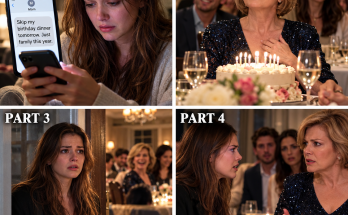
Halfway to My Mother’s Birthday, One Message Made Me Turn Around and Question Everything My Family Had Taught Me About Love
Part 33 of 35