Three months before the wedding, Vanessa called.
Not unusual.
Her first sentence was.
“Lauren is coming to Seattle.”
I stopped typing.
“Lauren?”
“Montana Lauren.”
As if there were multiple women who had once changed my life by inviting me to a private lodge for Thanksgiving.
“When?”
“Next week.”
“Why?”
“Conference.”
I leaned back.
“Okay.”
Vanessa waited.
“You want to see her?”
That question stirred more emotion than expected.
I had seen Lauren occasionally over the years.
Holiday messages.
Birthdays.
A few group dinners.
But life had moved.
People had schedules.
Friendships sometimes became seasonal without becoming less real.
Still, Lauren occupied a strange place in my personal history.
She had made room when my family had not.
I remembered that more sharply than almost anything else.
“Yes.”
We arranged dinner.
Lauren arrived with the same calm confidence I remembered.
Older.
Maybe.
Or maybe I was.
She hugged me.
Then held me at arm’s length.
“Director.”
I laughed.
“Don’t.”
“Engaged.”
“Also don’t.”
She looked toward Marcus.
“So this is him.”
Marcus shook her hand.
“I’ve heard about Montana.”
Lauren smiled.
“That sounds ominous.”
“Only good things.”
Vanessa arrived late and immediately ordered wine.
For an hour, we talked about ordinary things.
Work.
Travel.
Lauren’s teenage nephew.
Vanessa’s inability to maintain houseplants.
Marcus’s architectural project.
Then Lauren looked at me.
“Do you remember that Thanksgiving?”
The table went quiet.
“Yes.”
“I almost didn’t invite you.”
That surprised me.
“What?”
Lauren smiled.
“Not because I didn’t want you.”
“Then why?”
“I barely knew you.”
True.
“Vanessa said you were having a bad week.”
Vanessa looked at her glass.
I turned.
“A bad week?”
Vanessa shrugged.
“I summarized.”
Lauren continued.
“She said you and the baby might be alone for Thanksgiving.”
I swallowed.
“So you invited us.”
“Yes.”
“Why?”
Lauren seemed surprised.
“Because there was room.”
That answer.
Again.
Room.
Nothing heroic.
No rescue.
No sense that she had changed my life.
She simply had space and offered it.
I looked at Vanessa.
“You told her?”
“You would never have asked.”
True.
Lauren continued.
“I remember you apologizing constantly.”
Marcus looked at me.
I winced.
“For Maisie crying.”
“Yes.”
“You kept saying you hoped she wasn’t bothering anyone.”
I looked down.
That version of me felt both distant and painfully close.
Lauren smiled gently.
“You were waiting to be told you had overstayed.”
I remembered.
Every room had once felt temporary.
Every invitation revocable.
Every kindness something I needed to repay quickly enough to avoid becoming a burden.
Then Lauren said:
“I’m glad you stayed.”
My eyes filled.
Vanessa immediately complained:
“No crying. I wore mascara.”
I laughed.
The moment loosened.
After dinner, Lauren asked to see the ring.
Then the wedding invitation.
“You’re coming?”
“Absolutely.”
Good.
Before she left, she hugged me again.
Then said quietly:
“You look different.”
“Older?”
“Less apologetic.”
That meant more than she knew.
The following day, I found myself thinking about the Thanksgiving photograph.
The mountain.
The lake.
The single word.
Grateful.
That picture had triggered everything.
Mom’s message.
The confrontation.
The first real boundary.
For years, I thought of it as an accidental detonator.
Now I saw it differently.
It had exposed the family's hidden contract.
I was expected to be available.
Grateful.
Useful.
Modest.
Uncomplicated.
And when I had a life outside them, the contract became visible.
That realization gave me an idea.
A terrible one.
Maybe meaningful.
I called Mom.
“I want to ask you something weird.”
“Those are usually expensive.”
“No.”
“Good.”
“Do you still have the birthday gift from that year?”
Silence.
“What?”
“The year you texted me not to come.”
Long silence.
“I don’t know.”
That surprised me.
“I thought it was in my trunk.”
“It was.”
“What happened to it?”
“You mailed it later.”
I had forgotten.
Of course.
I remembered the box now.
No note.
Just the gift.
A scarf.
Expensive.
Thoughtful.
Still trying to complete the obligation after being rejected.
Mom said:
“I still have it.”
My throat tightened.
“Do you wear it?”
“No.”
“Why?”
Another silence.
“Because it reminds me.”
Of the message.
Of the person she had been.
“What color?”
“Blue.”
I remembered.
Deep navy.
Soft wool.
I had spent too much.
Of course.
“Can you bring it to the wedding?”
Mom went quiet.
“Why?”
“I don’t know yet.”
“Jenna.”
“I’m serious.”
She hesitated.
Then:
“Okay.”
The wedding drew closer.
My anxiety increased.
Not about Marcus.
About the event.
Everyone wanted something.
Not maliciously.
Mom wanted family photographs.
Dad wanted to give a toast.
Vanessa wanted a speech and claimed there was a difference.
Kyle wanted to know whether he could bring a date.
Brinn wanted to breastfeed June wherever necessary and dared anyone to complain.
Derek wanted to know where Maisie should sit during dinner.
Elena wanted to help without overstepping.
Lauren wanted no role whatsoever.
Smart.
I created a spreadsheet.
Marcus saw it.
“Of course.”
“Necessary.”
“It has color coding.”
“Necessary.”
“It has a tab called Boundary Risks.”
“Extremely necessary.”
He kissed my forehead.
“Carry on.”
Then one evening, Maisie found the seating chart.
She stared at it.
“Why Daddy Derek there?”
She pointed.
“He’s sitting with Elena and Sophie.”
“Why not us?”
I looked at the chart.
Our table.
Me.
Marcus.
Maisie.
Vanessa.
Then Derek’s family at the adjacent table.
“Because he has his own family unit.”
Maisie frowned.
“But he my family.”
“Yes.”
“So same.”
I paused.
Children once again refusing adult categories.
“What do you want?”
“Daddy close.”
“He is close.”
“Closer.”
I thought.
Then asked:
“Do you want to sit between us?”
Her eyes widened.
“Yes.”
That would mean my daughter sat at my wedding between her mother’s new husband and her biological father.
Unconventional.
Complicated.
Potentially awkward.
And absolutely fine.
I called Derek.
“Maisie wants you at our table.”
Silence.
Then:
“Are you sure?”
“No.”
He laughed.
“What does Marcus think?”
I looked at Marcus.
He was making tea.
“Ask him.”
Derek did.
Marcus took the phone.
Listened.
Then said:
“She wants her father close.”
Pause.
“Yes.”
Another pause.
“No, I don’t feel threatened.”
I smiled.
Marcus looked at me.
Then said:
“Honestly, I’d be more concerned if her father felt excluded from a major family event.”
My throat tightened.
Derek said something.
Marcus laughed.
“No, you don’t have to like me.”
Then handed the phone back.
“Resolved.”
The table changed.
No symbolism.
No statement.
Just a six-year-old asking for people she loved near her.
That was enough.
A week before the wedding, Mom came to Seattle.
She brought the scarf.
Folded carefully.
Still blue.
Still beautiful.
She placed it on my bed.
“I almost threw it away.”
“Why?”
“Shame.”
I touched the fabric.
“I’m glad you didn’t.”
Mom sat.
“What are you going to do with it?”
I had finally decided.
“Wear it when we leave.”
She stared.
“Jenna.”
“It’s October.”
“That isn’t what I mean.”
I knew.
She looked at the scarf.
“That came from one of the worst things I did.”
“No.”
I sat beside her.
“It came from before.”
“You bought it for me.”
“Yes.”
“Then I told you not to come.”
“Yes.”
“And you still mailed it.”
“Yes.”
Mom’s eyes filled.
“I don’t deserve for it to become something nice.”
“That isn’t what this is.”
“What is it?”
I thought.
Then answered:
“It’s mine too.”
The memory.
The object.
The story.
I did not want pain to own every thing that touched it.
Mom looked at me.
“I’m sorry.”
“I know.”
Not needed.
Still welcome.
Then she said:
“I’m proud of you.”
I smiled.
“Careful.”
“No.”
She shook her head.
“I don’t mean because you’re getting married.”
Good.
“I mean because you built a life that doesn’t require anyone else to stay broken for you to feel right.”
That sentence stopped me.
For years, I had feared healing would invalidate the harm.
That if Mom improved, maybe my anger had been excessive.
If Derek became a good father, maybe his abandonment had not been so bad.
If my siblings changed, maybe I had been unfair.
But none of that was true.
People improving did not rewrite what happened.
It only meant the story kept going.
I hugged Mom.
She held on.
Then whispered:
“You know what I wish?”
“What?”
“That I could go back to the morning I sent that text.”
I waited.
“And stop myself.”
I understood.
“But you can’t.”
“I know.”
“And if you could…”
I looked toward the scarf.
“We wouldn’t be here.”
Mom frowned.
“I hate that.”
“So do I.”
Because pain did not become necessary just because growth followed.
Cruelty was not a gift.
Abandonment was not a blessing.
We could be grateful for who we became without thanking what hurt us.
That distinction mattered.
The wedding morning arrived clear and cold.
Vanessa appeared at seven carrying coffee and enough emergency supplies to survive a natural disaster.
Brinn arrived with June.
Elena brought Maisie.
Mom came last.
No one took over.
That may have been the greatest miracle.
They helped when asked.
Waited when not.
I dressed.
Simple gown.
No enormous train.
No elaborate veil.
The ring looked warm against my hand.
Then Mom brought the scarf.
I touched it.
“Later.”
She nodded.
Maisie entered wearing her flower-girl dress.
She had successfully negotiated one small dinosaur pin hidden near the sash.
“Flower dinosaur.”
I laughed.
“You won.”
“I always.”
“Unfortunately.”
She looked at me.
“Mommy pretty.”
My throat tightened.
“Thank you.”
Then she said:
“Marcus lucky.”
I laughed harder.
“Correct.”
Before the ceremony, I stood alone for one minute.
Not because tradition demanded it.
Because I asked.
I looked in the mirror.
Five years earlier, I had sat in a parked car believing family rejection meant I had done something wrong.
Now the room outside held nearly every person who had been part of that story.
Mom.
Dad.
Brinn.
Kyle.
Derek.
Elena.
Vanessa.
Lauren.
Maisie.
Marcus.
None perfect.
None erased.
All changed.
A knock came.
Dad.
“Ready?”
I smiled.
“Yes.”
He offered his arm.
Then hesitated.
“Do you want me to walk you?”
Another question.
Not assumption.
I took his arm.
“Yes.”
We walked.
Not because he was giving me away.
Because he was beside me.
The difference mattered.
Click here to continue reading: PART 32: On My Wedding Day, the People Who Once Made Love Feel Conditional Showed Me How Different Family Could Look When Nobody Owned the Moment
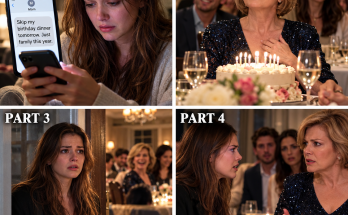
Halfway to My Mother’s Birthday, One Message Made Me Turn Around and Question Everything My Family Had Taught Me About Love
Part 31 of 35