Years passed without another anonymous letter.
That fact took Rebecca a long time to trust.
At first every unfamiliar envelope made her pulse quicken.
Every unexpected call created a moment of dread.
Then weeks became months.
Months became years.
The silence changed.
Once, silence had meant someone was hiding something.
Eventually it became what silence was supposed to be.
Nothing happening.
Rebecca grew older.
So did Sophie.
Chloe remained part of the family with such persistence that nobody could identify the point when inviting her stopped being necessary.
Emily lived close enough for occasional weekends.
Thomas became someone Rebecca spoke to carefully rather than someone she avoided completely.
No miraculous reconciliation occurred.
They built something smaller.
More honest.
That was enough.
The fund created from Helen’s recovered inheritance expanded.
Rebecca continued working with organizations supporting people affected by financial coercion and institutional abuse.
She was frequently invited to tell her story.
She declined most invitations.
When she accepted, she refused the version people wanted.
They wanted a villain, a basement, a heroic rescue, and a satisfying conviction.
Rebecca insisted on patterns.
A hungry child.
A frightened child.
A teacher with notes but no report.
A friend saying something rude because she lacked better language.
A mother who initially corrected manners instead of asking why.
Those details mattered more to her than the criminal conspiracy that came later.
One afternoon, years after Sophie moved away, Rebecca returned to the old school for another spring event.
She almost did not recognize the courtyard.
A new playground occupied the area where the temporary fair booths once stood.
Trees planted after Sophie’s rescue had grown tall enough to shade the benches.
The gate had been replaced.
Rebecca noticed that and smiled.
Even objects moved on.
Sophie came with her.
So did Chloe.
They were both in their thirties now.
Chloe had arrived late and blamed traffic.
Sophie accused her of having been late since second grade.
“I was never late.”
“You missed the bus twice a week.”
“That was strategic transportation avoidance.”
Rebecca walked ahead while they argued.
Their voices followed her across the courtyard.
For one brief moment she could hear the children they had been inside the adults they had become.
The school had expanded its student-support program.
Teachers received training on patterns of neglect, abuse, housing instability, caregiver illness, and food insecurity.
Students learned how to identify trusted adults.
No lesson told children they were responsible for rescuing anyone.
That distinction mattered deeply to Sophie.
“You tell,” she had explained during one planning session. “Then adults do the adult part.”
A counselor showed them the latest collection of safe-place drawings.
Yellow doors still appeared occasionally.
Sophie no longer reacted with surprise.
The drawing exercise belonged to the school now.
Not to her trauma.
Outside, Chloe found the bench where they used to sit.
“This thing survived?”
Sophie examined it.
“Apparently.”
Chloe sat.
“Do you remember when you refused to talk to me for two days?”
“You told Mason I had a crush on him.”
“You did.”
“That wasn’t your information.”
“I was eight.”
Sophie stared at her.
“You were nine.”
Chloe put a hand to her chest.
“I withdraw my defense.”
Rebecca laughed.
Then Chloe became quiet.
“I do remember something else.”
Sophie sat beside her.
“What?”
“The first day I noticed the smell.”
Rebecca stopped walking.
Sophie looked at Chloe.
“You remember the first day?”
“I think so.”
Chloe had never told them this.
It happened during reading time.
Sophie sat beside her.
Chloe noticed the odor when Sophie opened her backpack.
Not strong.
Just strange.
She assumed something had spoiled inside.
“I asked if you had food in there.”
Sophie frowned, trying to remember.
“You said no.”
“Then you looked scared.”
Sophie’s face changed.
“I remember.”
Rebecca sat on the opposite end of the bench.
“What happened?”
Sophie looked toward the school building.
“Marlene had made me carry something downstairs.”
Rebecca’s stomach tightened even after all these years.
“What?”
“A bag of food.”
Marlene had ordered Sophie to leave it near the basement door.
Rebecca remembered receiving food that day.
A sandwich.
An apple.
A bottle of water.
Sophie had not been allowed to open the door.
She pushed the bag through a narrow gap after Marlene unlocked it and stepped away.
The bag brushed against the damp floor.
Later Sophie shoved it into her backpack because Marlene returned unexpectedly.
That was probably when the odor first transferred strongly to the fabric.
Chloe stared.
“So I really was smelling the basement.”
Sophie nodded.
“Part of it.”
For years, the phrase dead food had become shorthand for the entire story.
Now Rebecca understood how literal Chloe’s observation had been.
The smell was not symbolic.
Not supernatural intuition.
It came from damp concrete, old containers, spoiled food, dirty fabric, and a house where something was terribly wrong.
A child noticed it.
Then she kept noticing other things.
Hunger.
Bruises.
Exhaustion.
Fear.
A missing mother.
None proved the whole story alone.
Together they demanded a question.
Chloe looked at Sophie.
“Why didn’t you tell me your mom was downstairs right then?”
Sophie smiled sadly.
“I didn’t know how.”
“You knew.”
“I knew something.”
That distinction had become central to everything they later taught.
Children could know danger without understanding its structure.
Sophie knew Rebecca had not left.
She knew Marlene lied.
She knew the basement mattered.
She knew going home felt dangerous.
But she did not possess the adult categories.
Kidnapping.
Confinement.
Financial coercion.
Fraud.
Surveillance.
She had fear, fragments, and sensory details.
So she used those.
“My mom stopped singing.”
“She didn’t leave.”
“I don’t want to go home.”
The house smelled wrong.
Chloe looked down.
“I still wonder what would have happened if I had kept my mouth shut.”
Rebecca answered before Sophie could.
“We don’t know.”
Chloe smiled.
“You’ve been giving that answer for twenty-five years.”
“Because it’s still true.”
Sophie nodded.
“And because the point isn’t that Chloe was magically destined to save us.”
Rebecca looked at her.
“What is the point?”
“That she said something.”
Sophie turned toward Chloe.
“You noticed something weird and told someone.”
“I was kind of rude.”
“You were definitely rude.”
“Thank you.”
“But you kept talking after adults got uncomfortable.”
Chloe smiled.
“That sounds more heroic.”
“Don’t get carried away.”
They laughed.
Rebecca watched them.
For years, strangers had tried to turn Chloe into the clever child who solved a mystery.
That had never been true.
Chloe did something more useful.
She paid attention to her friend.
Then she refused to stop caring merely because the first explanation was easier.
The three of them walked toward the gate.
A group of children rushed past.
One boy shouted that somebody had stolen his cupcake.
Another child shouted back that he had eaten it himself.
The crisis resolved before reaching an adult.
Rebecca smiled.
Ordinary childhood noise.
She had once believed safety meant preventing every bad thing.
Now she understood safety differently.
Safety meant children could speak without first proving their case.
It meant adults could investigate without panicking.
It meant being wrong about a concern was survivable.
Ignoring a real one sometimes was not.
Sophie stopped outside the gate.
“My flight is tomorrow morning.”
Rebecca nodded.
“I know.”
“You’re not going to ask whether I checked in?”
“I was trying not to.”
“Did you?”
“Yes.”
Sophie laughed.
“Progress has limits.”
Rebecca hugged her.
The embrace lasted longer than necessary.
Neither apologized.
Sophie had built a life in another city.
Work she cared about.
Friends Rebecca did not know well.
An apartment with a black door.
She traveled.
She occasionally slept with the bedroom door open when stress was bad.
Bleach still bothered her.
Certain keys turning in locks could make her shoulders tense.
Recovery had never erased history.
It had changed its authority.
The past could speak.
It could not give orders.
Rebecca understood that about herself too.
She still checked locks.
She still disliked basements.
She still became uneasy when someone told her not to ask questions.
Some responses remained.
Others softened.
She sang while cooking.
Often badly.
Sophie complained every time.
That evening everyone gathered at Rebecca’s apartment.
Emily brought bread.
Chloe brought dessert and was forbidden from opening it early.
Ruiz arrived last.
He was fully retired now and claimed any conversation involving evidence after dinner violated his contract.
Thomas sent flowers but did not attend.
That boundary was Rebecca’s choice.
Nobody questioned it.
They ate Eleanor’s stew again.
Helen’s blue recipe book lay on the counter.
Anna’s statement was stored safely elsewhere.
Eleanor’s chronology had been archived with copies available to researchers under strict privacy rules.
The originals no longer needed to hide in walls, dresses, books, or picture frames.
Truth had finally acquired ordinary storage.
After dinner, Emily stood beside the framed drawing of the yellow door.
“I still like this.”
Sophie joined her.
“My artistic period peaked at eight.”
“You had excellent door technique.”
“Thank you.”
Emily asked whether Sophie remembered drawing it.
“Yes.”
“Did you know why yellow meant safe?”
Sophie shook her head.
“No. It just did.”
Rebecca told Emily about Eleanor’s yellow dress.
Emily had heard the story before.
Still, she smiled.
“Maybe she would have liked the door.”
“I think so,” Rebecca said.
Later, Ruiz asked Rebecca whether she regretted uncovering the rest after Mercer’s first convictions.
Rebecca considered.
The later investigation had brought pain.
It dismantled her understanding of her parents.
It revealed Anna.
Emily.
Judith.
Daniel’s role in the crash.
Project Meridian.
It forced her to learn that the people she loved had lied to her.
But it also gave Emily her history.
It gave Anna her name back.
It gave patients evidence.
It exposed Judith.
It returned Eleanor’s voice.
“No,” Rebecca said.
“Even knowing what it cost?”
“Yes.”
Ruiz nodded.
“I thought you’d say that.”
“Then why ask?”
“I’m retired. I’m allowed inefficient questions.”
Rebecca laughed.
After everyone left, Chloe remained because Sophie was staying with her that night.
They stood near the kitchen gathering bags.
Chloe suddenly looked toward the framed yellow door.
“Can I ask something?”
Sophie groaned.
“You have never waited for permission before.”
Chloe ignored her.
“Do you remember exactly what I said to your mom?”
Rebecca knew immediately.
The sentence that began everything.
Chloe remembered it too.
Sophie thought.
“You told her I smelled like dead food.”
Chloe winced.
“I was hoping adulthood had improved it.”
“It has not.”
“I’m sorry.”
Sophie smiled.
“Stop apologizing.”
Chloe looked serious.
“I know. But that was such an awful thing to say about somebody.”
Sophie considered her answer.
Then she sat at the kitchen table.
“It was awful.”
Chloe groaned.
“Thank you again.”
“And it was useful.”
Rebecca leaned against the counter.
Sophie continued.
“If you had tried to make it nicer, maybe nobody would have paid attention.”
Chloe frowned.
“So what should I have said?”
“I don’t know.”
“You’ve had twenty-five years.”
“I still don’t know.”
Sophie looked at Rebecca.
“That’s kind of the point, right?”
Rebecca nodded.
Children did not need perfect language before adults listened.
Chloe’s words were clumsy.
Sophie’s words were incomplete.
Rebecca’s first response had been wrong.
Ms. Henderson’s assumptions had been wrong.
Even the adults who eventually helped did not understand everything immediately.
What mattered was what happened after uncertainty appeared.
Did someone ask another question?
Did someone look at the pattern?
Did someone take fear seriously?
Rebecca thought of the school file.
Late arrivals.
Sleeping in class.
Hunger.
Bruises.
Fear from behind.
Requests to stay at school.
A mother supposedly gone.
A child insisting she had not left.
Every sign had an ordinary possible explanation.
The mistake had been allowing possible explanations to become conclusions.
Sophie stood.
“We should go.”
Rebecca walked them to the door.
Chloe hugged her.
Sophie did too.
Then Sophie stepped into the hallway.
Rebecca had the familiar urge to say text me when you arrive.
She gave in.
“Text me.”
Sophie laughed.
“I will.”
The elevator doors closed.
Rebecca returned to the kitchen.
The apartment became quiet.
She washed three glasses.
Put the recipe book back on its shelf.
Straightened the framed drawing.
Then she noticed Sophie had left something on the table.
An envelope.
Rebecca stared at it.
For one absurd second, every old instinct returned.
Anonymous letters.
Hidden evidence.
Another secret.
Then she saw her name in Sophie’s handwriting.
Mom.
Rebecca opened it.
Inside was a photograph.
Sophie and Chloe at the spring fair years earlier, both laughing.
Rebecca had forgotten anyone took it.
On the back Sophie had written:
This is what I want to remember most.
Rebecca sat down.
No confession.
No account number.
No warning.
Just a photograph.
She laughed quietly at herself.
Then she cried.
The next morning Sophie called from the airport.
“Did you find it?”
“Yes.”
“And?”
“I like it.”
“You sound weird.”
“I’m allowed.”
Sophie laughed.
Rebecca looked at the photograph again.
“You know what I realized?”
“What?”
“For years I thought the most important thing Chloe ever said was that you smelled like dead food.”
“That is a terrible family legacy.”
“I know.”
Rebecca smiled.
“But it wasn’t.”
“What was?”
“The important part was that she kept saying something was wrong.”
Sophie was quiet.
Then she answered.
“And somebody finally listened.”
Rebecca looked toward the yellow door in the framed drawing.
“Yes.”
That was the ending she could live with.
Not that every strange comment from a child concealed a terrible crime.
Most did not.
Not that adults should assume the worst whenever a child was tired, hungry, dirty, frightened, or confused.
They should not.
The lesson was smaller and more demanding.
Notice.
Ask.
Listen.
Look again when the pieces keep returning.
A child may not know the vocabulary for neglect.
Or coercion.
Or confinement.
Or addiction.
Or illness.
Or fear.
Sometimes all they know is that Mom stopped singing.
Sometimes they know they do not want to go home.
Sometimes they say someone smells like something dead.
Adults have the responsibility to find out what those words are trying to carry.
Rebecca had learned that lesson first through Sophie.
Then through Anna.
Helen.
Eleanor.
Emily.
Even through her own failures.
Every generation of their family had contained someone trying to speak and someone deciding whether to listen.
The tragedies grew whenever silence won.
Their lives changed whenever someone refused it.
Years later, when Rebecca was asked what saved Sophie and her mother, people expected her to name the police.
The teacher.
The evidence.
The basement search.
The prosecutions.
All mattered.
But Rebecca always began earlier.
She began with two eight-year-old girls.
One was frightened and did not know how to explain why.
The other noticed something unpleasant and refused to forget it.
That was where the door first opened.
Not when police forced their way into the house.
Not when Marlene was arrested.
Not when Mercer confessed.
Earlier.
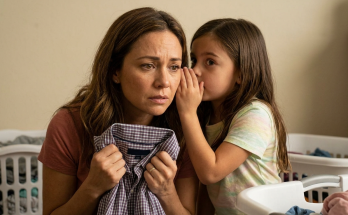
At a kitchen counter, while pasta boiled and Rebecca was distracted by work, Chloe said something that sounded cruel.
Rebecca corrected her.
Chloe tried again.
Eventually Rebecca stopped correcting and started asking.
That small change came late.
But not too late.
On the anniversary of the rescue, Sophie still sent Rebecca a message.
The messages became shorter over the years.
No long reflections.
No solemn declarations.
Sometimes only a photograph.
One year it was Sophie and Chloe eating terrible airport food.
Another year it was Rebecca and Emily arguing over a recipe.
Another showed Sophie standing outside her apartment beside the black door.
The most recent contained no people.
Only sunlight crossing a kitchen floor.
Beneath it Sophie had written:
Mom, I was singing while I made breakfast and suddenly thought of you.
Rebecca read the message twice.
Then she called.
Sophie answered while still cooking.
Rebecca could hear music in the background.
“You’re checking that I’m okay, aren’t you?”
“Maybe.”
“I’m okay.”
“I know.”
“You sure?”
Rebecca smiled.
“Yes.”
“How?”
Because Sophie was laughing.
Because she was cooking.
Because the door behind her was one she had chosen.
Because nobody was telling her what she was allowed to remember.
Because fear no longer organized the room.
Rebecca did not say all of that.
She simply answered, “I’m listening.”
There was a pause.
Then Sophie laughed again.
“Good.”
Rebecca stood beside her own kitchen window after the call ended.
For decades, the people in their story had treated truth as something dangerous enough to lock away.
In basements.
In ledgers.
In walls.
In recipe books.
In dresses.
In legal archives.
In frightened children.
But truth had never been the thing that destroyed them.
The destruction came from what people did to prevent others from speaking it.
Rebecca finally understood why Chloe’s first strange observation remained more important than all the secrets uncovered afterward.
It was imperfect.
Embarrassing.
Easy to dismiss.
Exactly the kind of thing an adult might correct and forget.
And beneath those clumsy words was a child trying to tell another child’s truth.
Sophie’s mother had not left.
Sophie had not been imagining her fear.
The smell on her clothes had come from the place where Rebecca was still alive.
Chloe had noticed before she understood.
Then she spoke before she had the right words.
Someone eventually listened.
And that was enough to begin bringing them home.
The End
Read more original stories on Feel Every Story.
My Daughter’s Cruel-Sounding Comment Embarrassed Me Until I Realized She Had Been Trying to Warn Me for Days
Part 20 of 20