
Nine months after Danielle warned me about the tea, Rachel pleaded guilty.
Her attorneys had discussed trial.
She refused.
Donald told me she had said she would not make me sit in court while strangers argued that poisoning me had been reasonable.
That did not undo anything.
But I was grateful.
She pleaded guilty to charges related to administering the compound, conspiracy, evidence concealment and child endangerment.
Her cooperation helped prosecutors establish Mercer’s role.
She provided dates.
Instructions.
Payments.
Locations.
She identified people in Victor’s network who had contacted her.
Most importantly, she stopped describing herself as someone who had no choice.
At sentencing, I gave a statement.
I did not ask for the maximum punishment.
I did not ask for mercy.
I described what happened.
The mornings.
The cup.
The symptoms.
The years of believing my body was failing for reasons nobody could explain.
The appointments where Mercer dismissed me.
The moment Danielle told me about the white powder.
The knowledge that someone I trusted had watched me swallow it.
Then I sat down.
Rachel received a prison sentence.
She cried.
Donald cried.
I did not.
Outside the courthouse, reporters waited.
By then the case had become national news.
The headlines preferred the spectacular pieces.
Secret trials.
Fake deaths.
Corporate conspiracy.
Hidden laboratories.
A ninety-one-year-old financier arrested beside a ledger.
I understood why.
But none of those details felt as frightening to me as the ordinary kitchen where the story had first become visible.
Arthur died in custody before his trial.
A stroke.
This time there were independent doctors.
Fingerprints.
DNA.
Witnesses.
No fake funeral.
His death did not end the case.
That was the thing he had never understood.
Truth had finally been copied too many times.
Victor survived his gunshot wound and eventually pleaded guilty to multiple conspiracy and obstruction charges after prosecutors confronted him with the recordings from my father’s meeting.
His cooperation exposed additional financial structures.
Donald visited him once.
Only once.
He came home afterward and sat in the car for twenty minutes.
I joined him.
“What did he say?”
“He said he was sorry.”
“Did you believe him?”
“Yes.”
“Did it help?”
“No.”
I understood.
Agustin testified publicly.
His admissions about transporting bodies were among the most difficult evidence presented.
Families learned what had happened to relatives whose deaths had been misreported decades earlier.
Agustin accepted a reduced sentence because of his cooperation, but he did not walk away free.
Before reporting to custody, he met Donald at the beach.
I did not go.
Some conversations did not belong to me.
Donald returned carrying an old photograph.
Two boys.
Agustin about seven.
Donald about three.
Elena between them.
“First picture I’ve ever seen of all three of us.”
I touched the edge.
“She looks happy.”
“She probably was that day.”
That was another thing we had learned.
A life did not become entirely false because terrible things happened inside it.
Mercer went to trial.
He tried to portray himself as a physician trapped by powerful financiers.
The prosecution played recordings.
Showed altered medical files.
Presented Charlene’s toxicology findings.
Presented the tracer compound.
Presented my blood results.
Presented his authorization of increased dosing.
His own records defeated him.
The medical board revoked his license before the criminal case ended.
He was convicted.
Thomas Vale cooperated extensively and later pleaded guilty to charges related to obstruction and conspiracy.
Marianne became one of the government’s most valuable financial witnesses.
Helen Price admitted her role in failing to report the early pediatric irregularities.
She also surrendered every surviving record she possessed.
Her professional failures became public.
She told investigators she preferred shame to another decade of silence.
My mother testified too.
Seeing Evelyn on the witness stand was strange.
For eleven years, she had been dead.
Now she had to explain under oath how she became a ghost.
The false diagnosis.
The staged funeral.
The trust property.
Vale.
The photographs.
Her decision to watch me without approaching.
When the defense asked why she had not simply gone to police, she answered:
“Because fear made me believe secrecy was the same thing as safety.”
I wrote the sentence down.
Not because it excused her.
Because it described almost everyone.
The master ledger led investigators to dozens of cases.
Some could no longer be prosecuted.
Statutes had expired.
Witnesses had died.
Records had vanished.
But civil claims survived in places criminal charges did not.
Medical licenses were reviewed.
Companies settled.
Families received corrected records.
Some deaths were officially reclassified.
My father’s death was among them.
His original record had described cardiac failure associated with natural causes.
The amended finding recognized drug exposure and deliberate delay in obtaining medical assistance as contributing factors.
I received the corrected certificate in the mail.
I sat alone with it for a long time.
Samuel Carter.
My father.
Not perfect.
Not innocent of every decision.
But no longer officially reduced to the lie his killers had created.
His name was also included in investigative findings as an early investor who later became a whistleblower.
Both facts remained.
That mattered to me.
The restitution trust survived.
Arthur never obtained my seal.
The courts recognized Evelyn and me as lawful authorities.
We did not control the investigation.
We did control what happened to portions of the recovered assets.
My mother wanted me to decide.
“No.”
She looked surprised.
“You’re the one Samuel intended—”
“Not alone.”
“What do you want?”
“Independent trustees.”
Victim representatives.
Medical ethicists.
Attorneys without ties to our families.
People who had no emotional need to protect the Carter name or the Wickham name.
My mother smiled faintly.
“Your father would—”
She stopped herself.
I noticed.
“Thank you.”
“For what?”
“For not telling me what Dad would want.”
She nodded.
“I’m learning.”
So was I.
Donald and I started therapy.
At first, he hated it.
Not because he opposed therapy.
Because he was accustomed to solving problems through action.
A broken window could be replaced.
A company could be resigned from.
A lawyer could be hired.
A marriage damaged by years of avoidance required sitting in a room and saying things that did not produce immediate solutions.
I told him how lonely I had felt when he defended Rachel.
He told me he had spent his childhood managing tension between his parents and learned that peace meant keeping everyone from becoming angry.
“That isn’t peace,” I said.
“I know now.”
I told him I still sometimes wondered how he missed what was happening.
He said he wondered too.
He never asked me to stop asking.
That helped.
One evening, almost a year after the arrest, he made chamomile tea without thinking.
The smell reached the hallway.
My body reacted before my mind did.
I stopped.
He saw me.
Then saw the box.
“Oh God.”
He poured it away immediately.
“I’m sorry.”
“It’s okay.”
“No.”
He opened the window.
“I wasn’t thinking.”
I sat down.
Danielle entered.
“What happened?”
“Dad made the bad tea.”
Donald winced.
“It wasn’t bad tea.”
She looked at me.
“It smelled bad to Mom.”
“That’s different.”
Danielle climbed onto the chair beside me.
“Can we throw it away?”
Donald held up the box.
“Yes.”
She carried it to the trash herself.
Then she looked at me.
“Hot chocolate?”
I laughed.
“Hot chocolate.”
That became our new morning drink for a while.
Danielle saw a counselor too.
We had assumed she was resilient because she returned to school, laughed with friends and slept normally most nights.
Her counselor taught us not to confuse functioning with being unaffected.
Danielle worried that adults might disappear.
She checked drinks.
She disliked closed doors.
For several months she asked exactly who would pick her up from school every morning.
We answered every time.
No annoyance.
No “you know this.”
Just the truth.
“Dad will be there at three.”
Or:
“Mom will be there.”
And we were.
My relationship with Evelyn moved slowly.
She rented an apartment twenty minutes away.
She did not become my mother again by declaration.
She became someone I met every Thursday.
Then someone who occasionally came for dinner.
Then someone Danielle asked to see.
The first time Danielle called her Grandma Evelyn without prompting, my mother went into the bathroom and cried.
I pretended not to notice.
Two years after the arrests, the first compensation payments went to surviving trial participants and families.
Some money came from recovered illegal assets.
Some from company settlements.
Some from the sale of holdings connected to my father.
I refused personal profit from assets directly traceable to the illegal research.
Donald agreed.
Wickham Holdings was dismantled and sold in pieces.
Donald started working for a small logistics firm.
His office was plain.
He loved it.
“No secret basements?” I asked after visiting.
“None.”
“No experimental drug programs?”
“Mostly shipping containers.”
“Sounds suspicious.”
He smiled.
Normal humor returned gradually.
So did normal arguments.
Laundry.
Schedules.
Money.
Whether Danielle could have a phone.
I treasured some of them.
Not because conflict was pleasant.
Because ordinary problems were evidence that our life no longer revolved around survival.
Near the second anniversary of the tea, I received a letter from Rachel.
I had not visited her since sentencing.
The letter was short.
She did not ask for forgiveness.
She did not ask to see Danielle.
She wrote that prison counseling had forced her to recognize something she had resisted.
She had always believed love meant preventing bad outcomes.
That belief had allowed her to justify controlling everyone around her.
She ended with:
I should have trusted you with your own life.
I read the sentence several times.
Then I put the letter away.
Months later, I visited.
Rachel sat across from me.
“You came.”
“Yes.”
“How is Danielle?”
“Thirteen questions before breakfast most mornings.”
Rachel smiled.
“She always liked questions.”
“Yes.”
Then she stopped smiling.
“And that saved you.”
“It did.”
Rachel looked down.
“Do you hate me?”
“No.”
“Have you forgiven me?”
I thought about Danielle asking the same thing.
“I don’t know if forgiveness is one decision.”
Rachel nodded.
“I don’t expect it.”
“I can understand why you were afraid.”
She looked at me.
“That isn’t forgiveness.”
“No.”
“I can understand that you loved us.”
Her eyes filled.
“That isn’t forgiveness either.”
“No.”
“I can also know that what you did was wrong.”
“Yes.”
For once, neither of us tried to force the truths into one simple conclusion.
When I left, Rachel said, “Tell Danielle I’m proud she spoke.”
I stopped.
“I’ll tell her when I think she’s ready to hear it.”
Rachel nodded.
My choice.
Not hers.
Outside, Donald waited.
This time I had asked him to.
We drove home.
Danielle was thirteen now.
She was taller, sharper, more independent, and deeply offended by any suggestion that she had once been small enough to hide beneath our dining table.
That evening she asked about the wooden music box.
It had been stored in an evidence facility for almost two years before being returned.
The velvet lining had been repaired, though the hidden compartment remained visible if you knew where to press.
“Can I have it someday?”
I looked at the box.
The object that had held my father’s memory card.
A hiding place.
A secret.
Then I looked at my daughter.
“Yes.”
“When?”
“When it means something other than evidence.”
She considered that.
“What should it mean?”
I smiled.
“That’s up to you.”
For the first time in generations, that answer was enough.
Click here to continue reading: PART 20: Three Years After Danielle’s Warning, I Gave Her My Father’s Music Box and Finally Understood Why the Smallest Voice Had Saved Us All
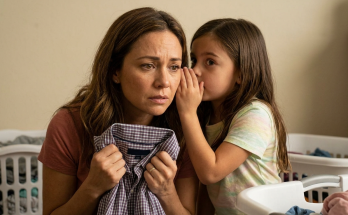
My Daughter’s Quiet Warning Turned a Familiar Morning Ritual Into the First Evidence That Someone Inside Our Home Wanted Me Sick
Part 19 of 20

One Comment on “PART 19 – The Trials Ended in Court, but Rebuilding My Marriage and Facing Rachel’s Sentence Forced Me to Decide Which Family Bonds Could Survive the Truth”