Thirty years after Seattle Children’s first called me about Sophie, the hospital invited our family to a survivorship event.
Sophie almost declined.
“I don’t want to be inspirational.”
“You don’t have to be.”
“They always want cancer survivors to stand under a banner and say things like every day is a gift.”
“Some days are parking tickets.”
“Exactly.”
The invitation was different.
Dr. Whitman, now fully retired, was being honored for her work in pediatric oncology.
Former patients were invited to attend.
That changed Sophie’s mind.
“She’s old now.”
“So are you.”
“I’m forty.”
“Ancient.”
“You’re hilarious.”
Ruby flew home for the weekend.
Emily and Marcus came with Daniel.
Anna, now almost thirteen, demanded to attend because she considered anything involving family history her personal business.
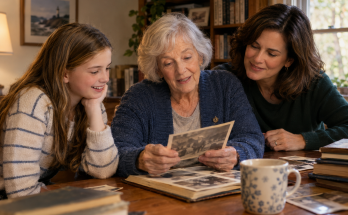
Noah took photographs before we left the house.
Graham joined us at the hospital.
He stood near the entrance when I arrived.
For one moment the years collapsed.
I saw him as he had been that first day.
Tailored suit.
Controlled face.
Fear hidden as anger.
Now he wore comfortable shoes and a jacket Anna once told him made him look like a geography teacher.
“Ready?” he asked.
“No.”
“Good. Me neither.”
We entered together.
The pediatric wing had been renovated.
Room numbers had changed.
The consultation room where Graham once objected to testing no longer existed.
The wall had been removed to create a larger family lounge.
I stood there longer than necessary.
Sophie noticed.
“This is where?”
“Approximately.”
She looked around.
Children colored at a low table.
A father slept in a chair with his head against the wall.
A coffee machine hummed.
Nothing marked the place where our family began unraveling.
I liked that.
Buildings did not owe our memories permanent architecture.
The event took place in an auditorium.
Former patients spoke.
Doctors received awards.
A teenager played violin badly but enthusiastically.
Then Dr. Whitman came onto the stage.
Her hair was silver.
Her posture slightly stooped.
The moment she saw Sophie in the front row, she stopped.
“Oh.”
Sophie stood.
Dr. Whitman abandoned whatever protocol existed and walked down from the stage.
They hugged.
The room applauded because people assumed it was part of the event.
Neither cared.
“You have hair,” Dr. Whitman said.
Sophie laughed.
“You’ve seen me since.”
“Not enough.”
Then Dr. Whitman looked at Anna.
“This cannot be yours.”
“It is.”
“No.”
Anna offered a hand.
“Hi.”
Dr. Whitman ignored the hand and hugged her.
Anna looked alarmed but tolerated it.
“You exist because your mother was stubborn.”
Sophie said, “That sounds medically inaccurate.”
“It’s close enough.”
After the ceremony, Dr. Whitman joined us for coffee.
She remembered more than I expected.
The genetic discrepancy.
The archived files.
Graham’s refusal.
My arrival.
Sophie’s fever.
“I thought your family was going to destroy my career,” she said.
Graham nearly choked on his coffee.
“Fair.”
She looked at him.
“You were unbearable.”
“I’ve heard.”
“No, you were exceptionally unbearable.”
Ruby smiled.
“I like her.”
Dr. Whitman turned to me.
“And you.”
“What?”
“You asked approximately forty questions per minute.”
“That sounds low.”
“It is not.”
Sophie leaned back.
“I inherited that.”
“No,” Noah said. “You refined it.”
The conversation moved toward ordinary things.
Retirement.
Grandchildren.
Sophie’s work.
Ruby’s legal practice.
Emily’s family.
Then Anna asked Dr. Whitman a question.
“When did you know Sophie was going to live?”
The adults went quiet.
Dr. Whitman considered.
“I didn’t.”
Anna frowned.
“Ever?”
“I hoped. I had evidence treatment was working. But medicine rarely gives certainty when families want it most.”
“What did you tell Grandma?”
Dr. Whitman looked at me.
“The truth, usually.”
“Was she annoying?”
“Yes.”
Everyone laughed.
Anna did not.
“What did you do when you were scared?”
Dr. Whitman smiled gently.
“My job.”
The answer echoed something I once told Sophie.
Fear wanted a job.
Useful fear could collect information.
Watch symptoms.
Ask questions.
Make plans.
Destructive fear tried to control people because uncertainty was intolerable.
I wondered whether Dr. Whitman knew she had taught us that.
Probably not.
After coffee, Sophie wanted to visit the old transplant floor.
We rode the elevator.
A nurse let us walk part of the hallway.
Patients’ rooms remained private.
We stopped near where Room 417 had once been.
Sophie touched the wall.
“I remember this.”
“What?”
“The smell.”
Hospitals did have a smell.
Disinfectant.
Plastic.
Coffee.
Warm blankets.
Fear.
Anna looked at her mother.
“Were you scared?”
“Yes.”
“Did you think you’d die?”
“Sometimes.”
Anna absorbed that.
“Did Grandma stay?”
Sophie looked at me.
“Yes.”
Two words.
Thirty years.
Yes.
Anna took my hand.
Not dramatically.
She simply reached for it.
Her fingers were almost as long as mine now.
We continued walking.
At the end of the corridor was a window overlooking the city.
Rain had started.
Of course.
Ruby stood beside me.
“Do you realize we’re all here because Sophie got sick?”
I looked at her.
“That is a terrible sentence.”
“I mean Emily. The records. You coming back. Everything.”
Sophie joined us.
“So leukemia saved the family?”
“No,” I said immediately.
She smiled.
“Good answer.”
Cancer did not deserve credit.
Sophie’s illness nearly killed her.
It did not become good because truths emerged around it.
Pain did not have to be reinterpreted as destiny to become survivable.
Ruby nodded.
“Right.”
“The illness exposed things,” I said. “People made choices after.”
“That sounds more accurate.”
We left the hospital in late afternoon.
Nobody wanted to go home yet.
Sophie suggested the zoo.
Ruby groaned.
“We are forty years old.”
“And?”
“The penguins don’t remember us.”
“That’s rude.”
We went.
The enclosure had changed.
New glass.
New signage.
Different rocks.
Anna counted first.
“Thirty-one.”
Ruby immediately said, “Wrong.”
“You didn’t count.”
“I know.”
Sophie laughed.
Daniel joined Anna.
Emily held coffee.
Marcus complained about the temperature.
Noah took another photograph.
Graham stood near the railing.
We gathered without planning to.
No one arranged positions according to history.
Noah set the camera timer and ran into frame.
The first picture caught Graham looking away.
The second caught Ruby talking.
The third was usable.
Sophie inspected it.
“Fine.”
“Only fine?” Noah asked.
“Mom taught me always take two.”
“You took three.”
“Trauma creates overachievers.”
Anna rolled her eyes.
Teenagers were useful for keeping adults from becoming sentimental.
We walked toward the exit.
Graham slowed beside me.
“Do you ever think about that first day?”
“Yes.”
“What would you tell yourself?”
I considered.
The woman driving through rain from Portland believed her daughter might die.
Believed her daughters thought she abandoned them.
Believed Graham had taken the only future that mattered.
She did not know about Emily.
Marianne.
Daniel.
Anna Mercer.
Robert’s files.
Ruby’s career.
Sophie’s wedding.
Anna Isabelle.
She did not know how many times life would reopen the past.
Or how eventually the past would stop feeling like an ambush.
“I wouldn’t tell her anything.”
Graham looked surprised.
“Why?”
“She had enough to carry.”
He nodded.
“What would you tell yourself?”
He gave a tired smile.
“Tell the truth.”
“Would you have listened?”
“No.”
“Then maybe silence is best.”
We walked several steps.
“I spent years wishing I could change what I did.”
“I know.”
“I don’t anymore.”
I looked at him.
“That sounds dangerous.”
“I mean I still regret it.”
“Then what?”
“I stopped treating regret like a time machine.”
That was better.
“You can’t undo it.”
“No.”
“You can only decide what happens next.”
“Yes.”
We reached the parking lot.
Anna and Daniel were arguing about the penguin count.
Ruby inserted herself as judge.
Sophie accused Ruby of corruption.
Emily began recording.
Noah threatened to leave all of us there.
The noise surrounded us.
I thought of the nursery thirty years earlier.
Adults moving children.
Changing labels.
Removing records.
Deciding who was allowed to know what.
That history once seemed enormous enough to determine every generation after it.
It had not.
Not completely.
History influenced us.
It did not own us.
At home that night, I opened the cabinet where we kept the family archive.
The boxes had multiplied.
Marianne’s letters.
My custody letters.
Anna Mercer’s note.
Copies of legal records.
Photographs.
The old family rulebook.
Daniel’s school timeline.
A photograph from Sophie’s wedding.
Another of newborn Anna.
I took out the rulebook.
The pages had yellowed.
Ruby’s handwriting filled the beginning.
Later additions appeared in Sophie’s.
Emily’s.
Mine.
I turned to a blank page.
For several minutes I held the pen.
Then I wrote:
RULE SIX: THE PAST MAY EXPLAIN YOU. IT DOES NOT GET TO DECIDE YOU.
I stared at the sentence.
Too long.
Ruby would complain.
I crossed out several words.
THE PAST EXPLAINS. WE CHOOSE WHAT CONTINUES.
Better.
The next morning Sophie came by.
She found the notebook open on the table.
“New rule?”
“Yes.”
She read it.
“I like it.”
“Ruby will edit.”
“Obviously.”
She made coffee.
Anna came in behind her carrying a schoolbag.
“Grandma, can I interview you?”
My body reacted before my mind did.
“For what?”
“Family history.”
Sophie burst out laughing.
I pointed at her.
“This is your fault.”
Anna opened a notebook.
“I need a story about something important that happened before I was born.”
There were too many.
Courtrooms.
Hospitals.
Hidden children.
Genetic tests.
Confessions.
Loss.
Survival.
I looked at Anna.
“What kind of story?”
“One where somebody had to make a choice.”
That narrowed nothing.
Then I thought of the first real choice that mattered.
Not Graham’s lies.
Not Robert’s fear.
Not Daniel’s secrecy.
Mine.
The hospital call.
The drive north.
The moment Dr. Whitman told me something was wrong and every instinct I had screamed that I might lose Sophie before I got the chance to become her mother again.
“I have one.”
Anna sat.
Sophie leaned against the counter.
I began.
“Years before you were born, your mother got very sick.”
Anna nodded.
“I know that part.”
“What you may not know is that we had been apart for a long time.”
Her expression changed.
“Why?”
“That’s part of the story.”
I told it carefully.
Not as evidence.
Not as accusation.
A story.
A mother.
Two daughters.
A hospital.
A choice to stay when leaving would have been easier.
When I finished, Anna was quiet.
“What happened after?”
I smiled.
“A lot.”
“That’s not an ending.”
“No.”
“Then what’s the ending?”
I looked at Sophie.
She was watching me with tears in her eyes.
I looked back at Anna.
“The ending is that we stopped letting fear make our choices for us.”
Anna wrote it down.
I almost corrected her.
Endings were never that neat.
Then I decided not to.
For a school assignment, it was close enough.
For our family, it was something better than perfectly true.
It was true enough to live by.
Click here to continue reading: PART 21: Anna’s School Project Opened a Door I Thought We Had Closed, but This Time She Was the One Asking Who Controlled the Story
The Blood Test That Brought Me Back to the Daughters I Had Been Forced to Leave Behind
Part 20 of 35