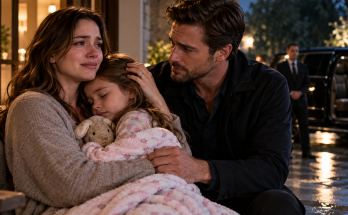
Natalie Price refused to leave the warehouse until officers showed her every corridor between the room where she had been held and the waiting ambulance.
Detective Susan Carter did not rush her.
For eleven years, Natalie had survived by assuming every unlocked door might lead back to captivity and every unfamiliar voice might belong to someone working for Evelyn Marsh. Telling her that the police were safe would not erase a decade of evidence teaching her otherwise.
Carter walked beside her.
“No one from this building is going with you except police and medical staff.”
Natalie glanced toward the paramedics.
“How do I know them?”
“You don't.”
The answer surprised her.
Carter continued, “So you can ask their names. You can ask me to verify them. You can refuse anything that isn't medically necessary until somebody explains it.”
Natalie studied her.
“You’re not going to tell me to trust you?”
“No.”
Something in Natalie’s expression loosened.
“Good.”
At the ambulance, she stopped again.
“My daughter.”
“Katherine is under protection.”
“You called her Katie?”
“She uses Katherine now.”
Natalie closed her eyes.
“She always hated Katherine.”
Despite everything, a tiny smile appeared.
“She used to say it sounded like I was angry with her.”
Carter remembered the survivor who had sat across from her carrying eleven years of guilt because she had escaped without the others.
“Would you like her told you're alive?”
Natalie’s eyes opened immediately.
“Yes.”
“Would you like to speak with her tonight?”
Natalie’s certainty vanished.
Her hands began trembling.
“I look…”
She stopped.
Carter waited.
Natalie touched the gray streak in her hair.
“She remembers me young.”
“She remembers you as her mother.”
Natalie began crying.
“I don't know if I remember how to be that.”
“You don't have to decide tonight.”
The ambulance doors closed.
Carter watched it leave before turning back toward the warehouse.
Natalie’s final words inside the room had changed the hierarchy of the case.
Hale isn’t the one in charge.
The woman.
Evelyn.
Until then, investigators had understood Evelyn Marsh as a facilitator: someone with access to vulnerable children, records, false identities, placements, and bureaucratic systems.
Natalie described something different.
Evelyn had designed the structure.
Richard Hale controlled locations.
Gregory Grant controlled money.
Patrick Lewis handled medical problems.
Thomas Miller confined children and women when required.
Robert Dean obstructed police attention.
But Evelyn decided who became visible and who disappeared.
Carter entered the warehouse office.
Brooks was already examining recovered records.
“What did Natalie mean?” she asked.
“We’ll interview her when doctors clear it.”
“You believe her?”
“I believe she survived eleven years inside a system we’re still discovering.”
That was enough to take the claim seriously.
The warehouse itself supported Natalie’s account.
The rooms at the rear had been renovated repeatedly. Different locks had been installed over different generations. Plumbing had been rerouted. Ventilation ducts connected the rooms without allowing occupants to reach the warehouse.
This was not temporary improvisation.
Someone had invested years in maintaining it.
Technicians found fingerprints belonging to Grant and Hale.
Thomas’s prints appeared on an interior door.
Evelyn’s were everywhere.
Not old traces from the building’s New Horizons days.
Recent prints.
One appeared on a water bottle delivered to Natalie’s room less than forty-eight hours earlier.
Evelyn had visited after Hale’s arrest.
Possibly after investigators began closing in.
Yet she had left Natalie alive.
Carter wanted to know why.
At the hospital, Natalie underwent examination while a victim advocate remained nearby.
She was dehydrated but not critically malnourished. Unlike Lily and Maya, she had received regular food.
Doctors discovered old fractures.
Some had healed badly.
There were scars around both ankles.
But the strangest finding was medication in her blood.
A long-term sedative.
Low dose.
Enough to affect concentration without keeping her unconscious.
Patrick Lewis had prescribed the same drug repeatedly under fictitious patient names.
Carter arrived after midnight.
Natalie agreed to a limited interview.
Mary Davis joined them at Natalie’s request after Carter explained Mary had been helping Katherine, Emily, and Lily.
Natalie sat beneath a hospital blanket with both hands wrapped around a paper cup.
“Where’s Evelyn?”
“In custody.”
Natalie looked sharply at Carter.
“Alive?”
“Yes.”
“You’re sure?”
“Yes.”
“Richard?”
“Custody.”
“Grant?”
“Custody.”
“Patrick Lewis?”
“Custody.”
“Thomas?”
“Custody.”
Natalie’s shoulders slowly lowered.
“Dean?”
“Missing.”
The fear returned instantly.
“Find him.”
“We’re trying.”
“No.” Natalie leaned forward. “Find him before Evelyn talks.”
Carter watched her.
“Why?”
“Because Dean kept copies.”
“Copies of what?”
“Everything he could steal.”
Carter remembered the old-case files in Dean’s house.
“He was protecting himself?”
“Dean protected Dean.”
Natalie drank water.
“Richard hated him. Grant thought he was useful. Evelyn never trusted him.”
“Why was he involved?”
“Money at first.”
“And later?”
“He knew too much.”
Natalie looked toward the closed door.
“They all knew too much about each other. That was how Evelyn kept them together.”
“Mutual blackmail?”
Natalie nodded.
“Files. Pictures. recordings. Accounts.”
Carter thought of Hale’s ledger, Patrick’s tapes, Dean’s copied cases.
Each participant had retained evidence.
Not carelessly.
Defensively.
“What did Evelyn have on you?”
Natalie stared into her cup.
“My daughter.”
Carter stayed silent.
“When Thomas took Katie, I went to police. Nobody believed the story the way I told it because Thomas had already prepared another one. He told people I was unstable. Said I threatened to disappear with Katie.”
“Dean handled the report.”
“Yes.”
“What happened afterward?”
“Evelyn found me.”
“Where?”
“Parking lot outside my work.”
Natalie’s voice flattened.
“She said she knew where Katie was.”
“What did she want?”
“For me to stop talking.”
“Did she show you proof Katie was alive?”
“A photograph.”
Carter thought of the archive.
“What happened next?”
“I got in her car.”
Mary’s expression tightened.
Natalie noticed.
“I know.”
“You were trying to reach your daughter.”
“Yes.”
“Where did Evelyn take you?”
“Hale’s farm.”
Carter leaned forward.
“Did you see Katie?”
“For about two minutes.”
Natalie’s mouth trembled.
“She was behind glass.”
Mary whispered, “Glass?”
“A room in the house. Evelyn wouldn't let me touch her.”
“Could Katie see you?”
“I don't know.”
Natalie closed her eyes.
“She was asleep.”
“Drugged?”
“Probably.”
“What did Evelyn say?”
“That if I cooperated, Katie would live.”
Carter felt anger rise.
“And if you didn't?”
“She showed me the well.”
No one spoke.
“She said children had accidents when mothers became difficult.”
Hannah and David would eventually die there.
But Natalie had been threatened with the place earlier.
“Why keep you alive for eleven years?” Carter asked.
Natalie opened her eyes.
“Because I worked for a records company.”
Carter frowned.
“What kind?”
“Medical and government archiving. Mostly digitization.”
“Evelyn used you?”
“She made me create identities.”
Carter went still.
“For the children?”
“Sometimes.”
“For who else?”
“Adults.”
“Members of the network?”
“People they moved.”
Carter’s mind accelerated.
False names.
False ages.
Altered histories.
The reason investigators struggled to find children was not simply because they vanished.
Their records had been deliberately reconstructed.
“Could you access government databases?”
“Not directly. But I knew document structures. What looked real. What numbers had to match.”
“Who entered them?”
Natalie swallowed.
“Evelyn had people.”
“Names?”
“I never knew most.”
“Dean?”
“He helped with police records.”
“Patrick?”
“Medical.”
“Grant?”
“Money and tax identities.”
“Hale?”
“Transportation.”
“And Thomas?”
Natalie’s expression hardened.
“Thomas liked control. He wasn’t smart enough to build anything.”
Mary looked at Carter.
That description matched what they had seen.
Thomas’s house was a prison.
Evelyn’s network was a system.
“Why did Rachel die?” Carter asked.
Natalie became very still.
“You found Rachel?”
“Yes.”
“Where?”
“Inside Thomas’s basement wall.”
Natalie closed her eyes.
“I told Evelyn Rachel would find out.”
“You knew her?”
“Not personally.”
“How did you know?”
“Thomas talked about her.”
“When?”
“At the warehouse.”
“He visited you?”
“Sometimes.”
“What did he say?”
“That Rachel asked questions.”
Natalie looked at Carter.
“Rachel noticed Emily’s records were wrong.”
Carter stopped.
“What was wrong?”
“Her birth certificate.”
“Emily’s?”
Natalie nodded.
“Rachel discovered the certificate in their home wasn't the original.”
Mary stared.
“But Rachel was Emily’s mother.”
“Yes.”
“Why would Thomas replace their own daughter’s birth certificate?”
Natalie hesitated.
“Because Emily wasn't their daughter.”
The room seemed to lose sound.
Mary spoke first.
“What?”
Natalie’s eyes filled with pity.
“Rachel thought she gave birth to a girl who died.”
Carter’s pulse pounded.
“Explain.”
“I don't know everything. Evelyn only told me what I needed for the records.”
“Tell us what you know.”
“Rachel had a baby.”
“Yes.”
“The hospital told her the baby died shortly after delivery.”
Mary covered her mouth.
“Thomas brought Emily home later?”
“Not immediately.”
“How much later?”
“About eight months.”
“As what?”
“An emergency foster placement at first.”
Carter thought through everything Emily had said.
Mommy.
Daddy.
The family photographs.
Rachel had raised Emily and believed herself her mother emotionally, even if not biologically.
“Did Rachel know Emily wasn't biologically hers?”
“She knew Emily was supposedly a foster child. Thomas convinced her they could adopt.”
“Then why alter the birth certificate?”
“Years later, Thomas wanted it to look like Emily had always been theirs.”
“Why?”
Natalie stared at Carter.
“Because Evelyn wanted the real parents erased.”
Carter felt the case shift again.
“Who were Emily’s real parents?”
“I don’t know.”
“But Rachel discovered the falsification?”
“Yes.”
“When she investigated it, she found the other children?”
Natalie nodded.
“That’s what Thomas said.”
Rachel’s search for the truth about her daughter had opened the basement.
And the basement had killed her.
Carter asked, “What happened to Rachel’s biological baby?”
Natalie shook her head.
“I don't know.”
“Could she have survived?”
“I don't know.”
Mary looked stricken.
If Evelyn controlled infant records, a reported neonatal death could hide another transfer.
Rachel might have spent years raising an abducted child while her own child lived somewhere else.
Or died exactly as the hospital reported.
They needed proof.
Natalie continued.
“There’s a master archive.”
Carter focused immediately.
“Where?”
“I never knew.”
“Who had access?”
“Evelyn.”
“Anyone else?”
“Grant, maybe.”
“What’s in it?”
“Original identities. New identities. Payments. Where people went.”
Carter stared.
“That could identify surviving children.”
“Yes.”
“And victims.”
“Yes.”
“And everyone involved.”
Natalie nodded.
“That’s why Dean ran.”
Carter frowned.
“Why?”
“He wanted the archive.”
“How do you know?”
“He asked me where Evelyn kept it.”
“When?”
“Three weeks ago.”
Carter’s thoughts stopped.
“Dean visited you three weeks ago?”
“Yes.”
“What did he say?”
“That the group was falling apart.”
“Why?”
“Richard wanted out.”
“Hale?”
Natalie nodded.
“He was afraid of Maya.”
“Why Maya?”
“She saw Evelyn kill someone.”
Carter went rigid.
“Who?”
“A man named Howard.”
“Howard who?”
“I don't know.”
“What happened?”
“Howard came to the farm. He argued with Evelyn. Maya was supposed to be locked downstairs, but she saw through the tunnel door.”
“Did Maya tell you?”
“No. Victor did.”
Carter remembered Maya’s terror, her four months underground, her attempted removal scheduled for Grant.
Maya had not merely been awaiting transfer.
She was a witness.
“Was Grant coming to take her somewhere?”
Natalie’s expression answered before she spoke.
“To make sure she couldn't talk.”
Carter stood.
They needed Maya protected more heavily immediately.
Natalie caught her wrist.
“There’s more.”
Carter stopped.
“Evelyn knows you found me.”
“She was arrested before we entered the warehouse.”
Natalie shook her head.
“You don't understand.”
“What?”
“She planned for this.”
“How?”
“Evelyn always said if the police ever found one place, they would find the others.”
Natalie’s fingers tightened.
“She built a way to destroy the archive.”
Carter leaned closer.
“What way?”
“I don't know.”
“Remote deletion?”
“Maybe.”
“Fire?”
Natalie whispered, “She called it the last door.”
Carter sat again.
“What does that mean?”
“I never knew.”
At headquarters, digital teams immediately began isolating Evelyn’s devices.
Her phones had already been placed in shielded evidence containers.
Her computers were offline.
But if the archive existed elsewhere, arresting Evelyn may have triggered a timer or alert.
Carter called Brooks.
“Search everything for ‘last door.’ Files, emails, notes, devices.”
Twenty minutes later, Brooks called back.
“We found the phrase.”
“Where?”
“Grant’s laptop.”
Carter stood in the hospital corridor.
“What does it say?”
“Single encrypted calendar entry.”
“Date?”
“Today.”
Carter’s stomach tightened.
“Time?”
“Four a.m.”
She looked at the clock.
3:41.
“Nineteen minutes.”
“What happens at four?”
“We don't know.”
“Find out.”
Carter hurried toward the elevator.
Behind her, Natalie called from the room.
“Detective.”
Carter turned.
“If you find the archive…”
“Yes?”
“Don't just look for missing children.”
Natalie’s face had gone pale.
“Look for babies listed as dead.”
Click here to continue reading: PART 14: A Four A.M. Countdown Led Investigators to a Hidden Archive Containing Children Whose Families Had Been Told They Were Dead
The Dispatcher Heard a Child Whisper About a Snake, Then Realized the Call Was Not About an Animal
Part 13 of 35