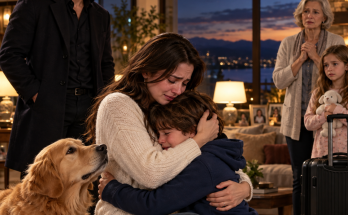
Alyssa and I turned toward Grandma at the same time.
She had gone pale.
Not frightened exactly.
Caught by a memory she had hoped would remain irrelevant.
“You know?” I asked.
Grandma nodded.
“What did Mom mean when she told Dad there was something about my birth he didn’t know?”
Grandma sat down.
For a moment, she seemed unsure where to begin.
Then she said, “It had nothing to do with whether William was your father.”
I almost laughed from relief.
The DNA had already proved that.
Still, some instinctive part of me had tightened at Dad’s email.
Old wounds did not always respect evidence.
“What was it?”
Grandma folded her hands.
“Elaine almost gave you up.”
I stared.
“What?”
Alyssa became very still.
Grandma continued carefully.
“Not permanently. Not exactly.”
“That makes no sense.”
“I know.”
She looked toward the window.
“Your mother was twenty-one when she became pregnant with you. William had just started the company. They had no money. Their marriage was already under strain.”
I knew pieces of that.
Mom working nights.
Dad building Harper Development.
Arguments about bills.
I had never known the rest.
“Elaine became depressed during the pregnancy.”
My chest tightened.
“Did she tell Dad?”
“Not how badly.”
Grandma said Mom had been terrified she would not be a good mother.
She considered temporarily placing me with relatives after birth while she recovered.
“Which relatives?”
Grandma looked at me.
“Us.”
“You and Grandpa?”
“Yes.”
I tried to imagine being born into one household and immediately moving into another.
“Did that happen?”
“For eleven weeks.”
I stopped breathing.
“What?”
Grandma’s eyes filled.
“You lived with us for eleven weeks after you were born.”
I stared at her.
“Dad never told me.”
“He knew.”
“Mom never told me.”
“No.”
“Why?”
“Because when Elaine recovered enough to bring you home, she asked that it never become part of how anyone defined her as a mother.”
Another secret rooted in shame.
Of course.
“What did she tell Dad during the divorce?”
Grandma sighed.
“They were fighting about custody.”
That made sense.
I had known the divorce was ugly before it became quiet.
“William accused Elaine of being unstable.”
My stomach tightened.
“Because of the prescription medication?”
“Partly.”
“Then?”
“She told him, ‘There are things about Candace’s beginning you never understood because you were too busy building your company to see them.’”
I closed my eyes.
That was the statement.
Not “you may not be her father.”
Not anything about another man.
Dad had interpreted it through insecurity.
Or maybe Vivian later weaponized it.
Grandma continued.
“Elaine meant that William had not understood how sick she became after your birth.”
“Postpartum depression.”
“Yes.”
“She thought he didn’t know?”
“He knew she struggled. He didn’t understand the severity.”
I sat quietly.
The entire paternity rumor had perhaps grown around a sentence that never involved paternity at all.
Alyssa whispered, “How did Vivian hear about it?”
Grandma looked toward me.
“Marianne.”
I almost laughed.
“Of course.”
Grandma nodded sadly.
“Marianne knew some of the divorce history. Years later she mentioned that Elaine had once told William there were things about Candace’s birth he didn’t know.”
“And Vivian turned that into doubt about whether he was my father.”
“Yes.”
“Did Marianne correct her?”
“Not strongly enough.”
That sounded familiar.
I thought of Vivian deliberately planting uncertainty.
The rumor had not begun from nothing.
It began from a fragment.
A sentence severed from context.
Vivian found it useful.
Marianne found correcting it inconvenient.
Dad found confronting it painful.
Then a family mythology formed.
“Did Dad ever ask Mom what she meant?”
Grandma shook her head.
“Not directly.”
I laughed bitterly.
Alyssa muttered, “Apparently direct questions were Dad’s natural predator.”
Grandma almost smiled.
“Your mother later tried to explain during one argument.”
“What happened?”
“William said he didn’t want to discuss the past.”
I looked down.
That was the entire family in one sentence.
The past was never discussed directly.
So it grew.
Changed shape.
Moved through other people.
Eventually a woman married into the family and realized the ambiguity could hide her own secret.
The rest followed.
“Did Vivian know about the postpartum depression?”
“Eventually.”
“When?”
“I don’t know.”
I believed Grandma.
Not every missing fact needed a hidden culprit.
Some people simply did not know things.
That was almost comforting.
Alyssa asked, “Why didn’t Mom just tell Dad what Marianne’s comment actually meant?”
Grandma’s face tightened.
“She may have.”
I looked at her.
“What?”
“I remember one Thanksgiving, long before you left, Vivian asked me privately whether Elaine had ever admitted William might not be your father.”
My hands went cold.
“What did you say?”
“That William was absolutely your father and that she should never say such a thing again.”
“Did you explain Mom’s statement?”
“Yes.”
I stared.
“So Vivian knew.”
Grandma nodded.
“She knew the actual context.”
The deliberate nature of what she did became even clearer.
Vivian had not merely misunderstood.
She had been corrected.
By Grandma.
And continued anyway.
Alyssa whispered, “She knew there was no real doubt.”
“Yes.”
Grandma’s voice hardened.
“She always knew.”
I thought of Part 1 of my life, not the story.
A teenager listening to adults whisper.
A child examining her own face in the mirror looking for evidence.
A young woman leaving home uncertain whether she belonged genetically to the man who raised her.
All manufactured.
Not from confusion.
From strategy.
My phone felt heavy in my hand.
“I want Vivian here.”
Alyssa looked at me.
“Now?”
“Yes.”
“She’s in Chicago.”
“She can answer by phone.”
I called.
Vivian answered quickly.
“How is Marianne?”
The question surprised me.
“You know?”
“Richard told me some of it.”
“Grandma told us what Mom meant about my birth.”
Silence.
Vivian knew immediately.
“I see.”
“You knew.”
“Yes.”
No denial.
No delay.
“You knew Mom’s statement had nothing to do with paternity.”
“Yes.”
“Grandma told you.”
“Yes.”
“Then every time you implied Dad might not be my father, you knew it was false.”
Vivian inhaled slowly.
“Yes.”
Alyssa closed her eyes.
I had already known in principle.
Hearing Vivian say it directly changed something.
“Why use that particular lie?”
“Because it already existed as ambiguity.”
“No. It existed as a sentence you deliberately misrepresented.”
“Yes.”
“You knew Dad had insecurities from the divorce.”
“Yes.”
“You knew relatives had heard fragments.”
“Yes.”
“You knew if you encouraged the rumor, people would believe there had always been a question.”
“Yes.”
“Did Dad know Grandma corrected you?”
“No.”
“Did Mom?”
“No.”
“So only you and Grandma knew you had been explicitly told the truth.”
“Yes.”
Grandma’s face hardened.
“I should have told William.”
Vivian said softly, “Yes.”
Grandma looked furious.
“Do not agree with me as though we made equivalent choices.”
“No.”
Vivian’s voice was quiet.
“You told me the truth. I chose not to use it.”
Grandma leaned back.
That was accurate.
I asked the question that had been sitting underneath everything.
“Did you want Dad to doubt me?”
Vivian took a long time.
“Yes.”
The answer hurt even now.
Not because I believed Dad had doubted.
Because she had wanted that wound.
“How much?”
“I wanted him uncertain enough that if Thomas ever surfaced, the idea of uncertain paternity would already be attached to someone else.”
“So he might think this family problem started with Mom.”
“Yes.”
“You were setting up a defense years before you needed it.”
“Yes.”
Alyssa’s face twisted.
“Mom, that’s monstrous.”
Vivian’s voice cracked.
“I know.”
“No. Stop saying you know.”
Alyssa took the phone.
“You keep saying you know now. Did you know then?”
Vivian was silent.
“That’s what I want to understand.”
“I knew it was cruel.”
“Did you know it was wrong?”
“Yes.”
“Then why do it?”
“Because I thought being exposed would cost me everything.”
Alyssa laughed bitterly.
“And Candace was acceptable collateral.”
Vivian began crying.
“Yes.”
No defense.
Alyssa handed the phone back.
I looked at Grandma.
“You said Dad’s email asked Bennett to verify whether Mom ever supported the paternity allegation.”
“Yes.”
“So now we know she didn’t.”
“Yes.”
The original paternity mystery was over.
Completely.
Dad was my biological father.
Mom never claimed otherwise.
Vivian knowingly distorted a statement about postpartum depression.
Marianne helped preserve ambiguity.
Dad failed to ask the direct question.
The rumor had no legitimate foundation.
For the first time, I felt the question die.
Not answered.
Dead.
It no longer deserved space inside me.
I told Vivian, “I don’t want to discuss my paternity again.”
She whispered, “I understand.”
“No. I mean ever.”
“Yes.”
“If anyone asks, you tell them exactly what happened.”
“Yes.”
“You say you knew Dad was my father.”
“Yes.”
“You say you spread the doubt anyway.”
“Yes.”
Alyssa looked at me.
That was the consequence I wanted.
Not a public humiliation campaign.
Accuracy.
Vivian would no longer hide behind implication.
I ended the call.
Grandma looked exhausted.
“You okay?”
“No.”
“Same.”
Alyssa poured water for all of us.
We sat in silence.
Then I asked Grandma about those eleven weeks after my birth.
Not because they changed who my parents were.
Because I wanted the story that had been hidden.
She smiled through tears.
“You cried every evening between six and eight.”
“Still reasonable behavior.”
Alyssa laughed.
Grandma continued.
Dad came every night.
Even when working late.
Sometimes at midnight.
“He came here?”
“Yes.”
“To see me?”
“To hold you.”
Something inside me shifted.
Dad had been overwhelmed.
Young.
Distracted by his company.
Imperfect.
But he had not abandoned me at birth.
The hidden story was not another betrayal.
It was a difficult beginning.
Mom had been ill.
Dad had been frightened.
Grandma and Grandpa helped.
Then Mom recovered enough to bring me home.
“Was she good with me afterward?”
Grandma looked almost offended.
“She adored you.”
My eyes filled.
“Why hide it?”
“Shame.”
Of course.
“Elaine thought people would say she had failed before she even began.”
I looked toward Mom’s invisible presence.
She had carried that shame for years.
Then during divorce, anger made her reference it cryptically.
Dad heard accusation.
Vivian later heard opportunity.
One untreated wound became material for another person’s lie.
I understood something then.
Truth did not become dangerous because it was inherently destructive.
It became dangerous when withheld long enough to accumulate interpretations.
“Grandma.”
“Yes?”
“Do you have any pictures from those eleven weeks?”
Her face softened.
“Hundreds.”
For the first time that day, I laughed.
“Of course you do.”
She brought out an old album.
Dad holding me in this kitchen.
Mom sitting on the couch weeks after giving birth, pale but smiling.
Grandpa asleep with me on his chest.
Dad feeding me a bottle badly enough that milk covered my chin.
I stared at one photograph.
Dad looked exhausted.
Young.
Terrified.
Happy.
A handwritten note beneath it said:
William, 2 a.m. again.
I touched the page.
Alyssa sat beside me.
“You look like him.”
“I know.”
This time, the observation did not feel like evidence.
It was simply true.
My phone rang.
Bennett again.
I answered.
“Tell me nothing catastrophic happened in the last hour.”
“I can try.”
“That sounds ominous.”
“It’s procedural.”
“Good.”
He explained that after the new evidence from Marianne and Grandma, he had enough information to revise the estate accounting.
Vivian’s boutique property would be valued.
The insurance dispute would likely restore the designated benefit to Alyssa and me, though the insurer’s review remained ongoing.
Marianne’s debt would be treated separately.
EHC Holdings would pass through Mom’s trust to me.
The old share-restoration issue appeared financially resolved.
For the first time, the mess sounded finite.
Then Bennett said, “There is a personal item.”
I sighed.
“Of course.”
“William left instructions concerning the family house.”
I looked at Alyssa.
“The house Vivian lives in?”
“Yes.”
“What about it?”
“The deed changed before his death.”
“To whom?”
“A trust.”
My stomach tightened.
“Which one?”
“A new one.”
“For who?”
Bennett paused.
“Both daughters.”
Alyssa stared.
“What?”
“The house is owned jointly for the benefit of Candace and Alyssa.”
I almost laughed.
“Dad gave us the house?”
“Not exactly.”
“What does that mean?”
“The trust requires a decision.”
“What decision?”
“You must jointly choose whether to sell it, retain it together, transfer it to one sister with an equalizing payment, or allow Vivian to remain under specified terms.”
Alyssa covered her face.
“Dad made us cooperate.”
“Yes.”
“That man really believed legal documents could force emotional growth.”
Grandma laughed.
I did too.
Then Bennett continued.
“There is a deadline.”
“Of course there is.”
“Thirty days after the will reading.”
My laughter stopped.
We had already used several.
“What happens if we don’t agree?”
“The trustee sells the property.”
I looked at Alyssa.
The Harper house.
The place where I had grown up.
The place I had left.
The place where Alyssa had stayed.
The center of nearly every lie we had uncovered.
Now neither of us could decide its future alone.
Alyssa lowered her hands.
“What do you want?”
I looked at her.
For once, I did not know.
And for once, I did not feel pressured to manufacture certainty.
“I want to see it again.”
She nodded.
“Me too.”
Grandma closed the photo album.
“When?”
I looked at the late afternoon light outside.
“Tomorrow.”
Alyssa nodded.
Tomorrow we would walk into the house together.
Not as the legitimate daughter and the questionable one.
Not as the chosen child and the abandoned child.
Not as competitors.
Just two women inheriting a building full of memories, some good, some cruel, all finally stripped of the lie that one of us had to belong less for the other to belong at all.
Click here to continue reading: PART 21: Returning to the Harper House Together Forced Alyssa and Me to Decide Whether Our Childhood Home Deserved Another Future
Eighteen Years After Leaving Home, My Father’s Funeral Forced Me Back Into the Family That Had Erased Me
Part 20 of 35