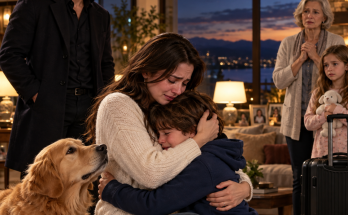
Patricia’s call ended, but none of us moved.
September 3, 2026.
Three weeks before Carol died.
By then she knew the cancer was advancing. She knew Rebecca had begun asking questions. She had already visited Anna, spoken with Samuel Reed, and assembled most of Box 214.
Yet somehow she had also gone to the county archive and filed a notarized statement.
Rebecca stared at my phone.
“When did Mom go anywhere alone in September?”
I thought back.
Appointments had blurred together by then.
On September third, I remembered taking Carol to oncology in the morning. We came home before lunch.
Then she insisted I pick up a prescription.
“I left her alone for maybe an hour.”
Rebecca frowned.
“She couldn’t drive.”
“No.”
Anna asked, “Taxi?”
“Possibly.”
Rebecca shook her head.
“She could barely walk to the mailbox.”
Daniel said, “Someone helped her.”
We all looked at one another.
A week ago, that sentence would have launched another round of theories.
Rebecca caught herself first.
“No guessing.”
“Good,” I said.
She looked at me.
“When are we going?”
“Monday.”
The archive was closed Sunday.
Rebecca made a face.
“Civilization should provide emergency weekend hours for forty-year family conspiracies.”
Daniel laughed.
“I think that department lost funding.”
He left for Pennsylvania that afternoon.
Before going, he hugged Anna, then hesitated in front of Rebecca.
She solved it by hugging him first.
“Text me when you get home.”
Daniel looked surprised.
“Yes, ma’am.”
“And send me the picture of Mom with the terrible haircut.”
Anna objected.
“No.”
Daniel grinned.
“Already sent.”
Rebecca checked her phone.
“Oh, wow.”
“Delete that.”
“Never.”
Daniel escaped before Anna could confiscate his phone.
I stood on the porch watching his car disappear.
Rebecca remained beside me.
“You like him.”
“Yes.”
“He likes you.”
“He has questionable judgment.”
She smiled.
Then her expression softened.
“I like him too.”
“That seems useful.”
“I have a brother.”
“Yes.”
“I’ve technically had one for thirty-seven years.”
“Yes.”
“But now I have his number.”
I looked at her.
“That makes a difference.”
She nodded.
“It does.”
Inside, Anna was still complaining about the photograph.
For a few minutes, the house sounded like a family instead of an investigation.
Sunday passed without revelations.
That itself felt miraculous.
Rebecca returned to Columbus for several hours to see her husband, Mark, and their children.
She had told Mark the broad truth by phone earlier, but now she wanted to explain it in person.
Before leaving, she stood at the front door with her keys.
“Dad.”
“Yes?”
“I’m telling the kids.”
“All of it?”
“The simple version.”
I nodded.
“Good.”
She looked at Anna.
“Can I show them your picture?”
Anna’s face softened.
“Of course.”
“And Daniel’s?”
“He’ll be offended if you don’t.”
Rebecca smiled.
Then she looked toward Carol’s photograph on the mantel.
“I’m telling them Grandma Carol knew.”
I waited.
“I’m not going to make her the villain.”
“No.”
“But I’m not going to lie either.”
“That sounds right.”
Rebecca left.
Anna and I were alone in the house.
That had happened several times now, but something about Sunday felt different.
Perhaps because the most urgent questions had finally slowed.
Anna made tea.
I washed dishes.
Neither of us seemed interested in excavating the past.
Eventually she said, “I should probably go home after tomorrow.”
I dried a plate.
“Yes.”
“You sound relieved.”
“I’m relieved you have a home to go to.”
She understood.
Daniel.
Her life.
The routines that existed before Carol’s final request pulled her into mine.
“I miss it.”
“You should.”
“I miss Michael too.”
I looked at her.
She rarely mentioned him without being asked.
“How long has it been?”
“Six years.”
“Does it still feel recent?”
“Sometimes.”
She smiled sadly.
“Other days it feels like I imagined being married.”
“I understand that.”
“Yes.”
We stood quietly.
Then Anna said, “Walter, I need you to know something before I leave.”
I set down the towel.
“I am not waiting for you.”
I blinked.
“That was direct.”
“It needed to be.”
“Yes.”
“I loved you.”
“Past tense?”
She considered.
“I love the person you were. I care about the person you are.”
“That is probably healthier.”
She smiled.
“I am not here because I think Carol’s death means we get some second chance.”
“I know.”
“Do you?”
“Yes.”
She studied me.
“Good.”
I leaned against the counter.
“I’m not waiting for you either.”
“Excellent.”
“Your tea is terrible.”
“There he is.”
We both laughed.
The relief was enormous.
For decades, other people had treated Anna and me as though our unfinished young love were a force capable of destroying every later relationship.
Maybe it had been powerful once.
But we were no longer twenty.
What remained was affection, history, grief, and Rebecca.
That was enough.
Rebecca returned after dark.
Her face looked tired but peaceful.
“How did it go?” I asked.
“My youngest thinks having an extra grandmother means she gets an extra birthday present.”
Anna laughed.
“Practical child.”
“Mark asked whether I’m okay.”
“What did you say?”
“That I don’t know yet.”
“Good answer.”
Rebecca sat beside Anna.
“The kids want to meet you.”
Anna’s eyes widened.
“Already?”
“They know you’re my birth mother.”
Anna swallowed.
“What did they ask?”
“My son asked whether you look like me.”
“And?”
“I showed him a picture.”
“What did he say?”
Rebecca smiled.
“He said you have my eyebrows.”
Anna laughed through tears.
“Do I?”
“You do.”
Rebecca’s expression became serious.
“They also asked whether Grandma Carol knew you.”
Anna looked toward Carol’s photograph.
“What did you say?”
“Yes.”
“And?”
“That she was scared to tell us.”
Anna nodded.
Rebecca continued.
“I told them adults sometimes make bad decisions because they think avoiding pain will prevent it.”
I looked at her.
“That is a good explanation.”
“My daughter asked whether Grandma was bad.”
The room quieted.
“What did you say?”
“No.”
Rebecca rubbed her palms together.
“I said Grandma did something wrong for a very long time.”
Anna’s eyes filled.
“That’s fair.”
“I said people aren’t one thing.”
I smiled faintly.
“Also fair.”
Rebecca looked toward me.
“Then my son asked whether Grandpa Walter is my real dad.”
I waited.
“I said yes.”
My throat tightened.
“Then he asked whether I meant real or biological.”
I laughed.
“What did you say?”
“Both.”
Simple.
One word.
Forty years of confusion reduced to an answer a child could understand.
The next morning, the three of us drove to the county archive.
Patricia met us in a secure reading room.
She was younger than I expected.
She checked Rebecca’s identification and court authorization before bringing out a gray archival box.
“Photography is permitted,” she said. “Original documents remain here.”
Rebecca nodded.
Patricia removed a sealed folder.
The exterior carried June Talbot’s handwriting.
DUPLICATE — DALE / MERCER / HAYES.
Inside were many documents we had already seen through Peter.
The altered forms.
Franklin’s notes.
Copies of Ruth’s affidavit.
Thomas and Evelyn’s statements.
Then several documents we had not seen.
June’s own memorandum describing irregularities she noticed while processing records.
A copy of Carol’s handwritten request that I be notified.
And at the back, a white envelope.
Not old.
CAROL HAYES — FILED 9/3/26.
Rebecca touched it.
Patricia said, “That is the statement mentioned on the phone.”
“Can I open it?”
“Yes.”
Rebecca looked at me.
I nodded.
She broke the seal.
The first page was notarized.
Carol had typed it.
My wife hated typing.
That detail alone made the document feel strange.
The title matched Patricia’s description.
STATEMENT REGARDING MY INTENTIONS AFTER WALTER HAYES LEARNS THE TRUTH.
My chest tightened.
Rebecca began reading silently.
Then stopped.
“Dad.”
“What?”
“You should read this.”
She handed it to me.
The first paragraph established identity.
Carol Hayes.
Wife of Walter Hayes.
Adoptive mother of Rebecca Hayes Bennett.
Then:
I am filing this statement because I have spent too much of my life making decisions for other people and calling those decisions protection.
I closed my eyes briefly.
Sam’s influence was unmistakable.
But the voice was Carol’s.
I continued.
If Walter learns the truth before I die, I intend to tell him myself everything I can remember and to answer questions without asking him to comfort me.
My throat tightened.
She had planned to confess.
Not simply leave clues.
If I die first, I ask that this statement be preserved with the adoption record so neither Walter nor Rebecca must rely solely on materials I selected.
Rebecca whispered, “That’s why she filed it.”
“Yes.”
She had deliberately placed evidence outside her control.
A version she could not later destroy.
I continued.
I do not request forgiveness from Walter, Rebecca, or Anna Mercer. I have no right to make my death another pressure on them.
Anna covered her mouth.
The next paragraph addressed the house.
If Walter decides that remaining in our home is painful, I want him to sell it.
I looked up.
Rebecca looked surprised.
Carol loved the Maple Street house.
She spent twenty-nine years improving it.
Choosing paint.
Planting the maple.
Arguing about kitchen cabinets.
I read on.
He once promised me he would never sell Maple Street because I told him I wanted to grow old there. I release him from that promise.
My vision blurred.
I remembered.
Our twentieth anniversary.
Sitting on the back steps.
Carol had made me promise.
We’ll die in this house, Walt.
I had laughed.
Then promised.
She remembered.
If he wants to remain, he should remain. If he wants to leave, he should leave. The house is not me.
I stopped reading.
For weeks after her death, I had avoided even considering selling because it felt like betrayal.
Carol knew.
Of course she knew.
Rebecca touched my arm.
“There’s more.”
I continued.
The contents of Box 214 belong morally to Rebecca, regardless of their legal ownership. Walter may keep personal letters addressed to him, but Rebecca should decide what happens to records concerning her birth and adoption.
Rebecca exhaled.
Carol had reached the same conclusion we had.
Her history belonged to her.
Then came Anna.
If Anna is willing to know Rebecca, no request or statement of mine should be used to limit that relationship.
Anna cried quietly.
I do not ask Anna to forgive me. I ask only that no one mistake my fear of her for evidence that she ever intended to destroy my family.
I looked toward Anna.
She whispered, “Thank you.”
Again, to Carol.
Again, too late to be heard.
The next paragraph concerned me.
Walter may feel obligated to repair what was taken from Anna and him by creating a relationship they no longer want. He should not.
I almost laughed.
Carol had anticipated that too.
The past is not a contract requiring them to perform the life they might have lived.
Anna looked at me.
“Well.”
“She knew us.”
“Yes.”
I continued.
If they become friends, I am glad. If they become family through Rebecca, I am glad. If they need distance, that is theirs to choose.
No jealousy.
Not at the end.
Or perhaps jealousy conquered by honesty.
Then came a paragraph I did not expect.
I have revised my will.
Rebecca looked up.
“What?”
Carol wrote that her attorney, Elaine Foster, held the updated documents.
I frowned.
“I didn’t know.”
Rebecca said, “Neither did I.”
The statement continued.
My personal inheritance to Rebecca is unchanged except for one item.
My chest tightened.
Which item?
The Maple Street house, if Walter predeceases me, was previously designated entirely to Rebecca. Because I expect Walter to survive me, this provision likely has no immediate effect.
Very Carol.
Precise even while dying.
Then:
I have established a separate trust from funds inherited from Ruth Hayes.
I stopped.
Ruth’s money.
I knew Carol inherited some when Ruth died.
I had never asked how much.
Rebecca frowned.
“What trust?”
I continued.
The trust is for Rebecca and her descendants. I do not want money originating with Ruth to remain under my discretionary control after my death.
Anna’s face changed.
Carol was separating Ruth’s money from herself.
Then the sentence that mattered:
I cannot undo what Ruth used money and influence to accomplish. I can refuse to let those resources remain part of the secrecy.
Rebecca sat back.
“How much?”
Patricia politely looked away.
The document did not say.
Elaine would know.
Then Carol addressed one final item.
I possess a key to a safe-deposit box held jointly with Walter.
I frowned.
“We don’t have a safe-deposit box.”
Rebecca looked at me.
“You sure?”
“Yes.”
Carol continued.
Walter does not know about it.
Of course.
I nearly laughed from exhaustion.
Anna covered her face.
“Carol.”
The box contained no new evidence about Rebecca’s birth.
She made that explicit.
Thank God.
Instead:
The box contains objects I could not bear to keep at home and could not bear to destroy.
My pulse shifted.
The key had been placed with Elaine Foster.
I looked at Rebecca.
“Her lawyer.”
“Yes.”
Carol wrote:
Nothing in that box changes who Rebecca’s parents are or what happened in 1986. It changes only what Walter may believe about our marriage afterward.
My throat tightened.
Afterward.
Not the beginning.
Our marriage.
Rebecca stared at me.
“What does that mean?”
“I don’t know.”
For once, I meant it without immediately needing an answer.
I finished the statement.
The final paragraph was short.
Walter, if you are reading this, I am finally doing what I should have done long ago. I am leaving the next decision with you.
No apology after it.
No request.
No instructions.
Just her name.
Carol Hayes.
Signed.
September 3.
Notarized.
I sat back.
Rebecca looked at me.
“Do you want the box?”
I thought about it.
The old answer would have been immediate.
Yes.
Every hidden thing.
Every clue.
Every missing piece.
Now I hesitated.
“Eventually.”
Anna nodded.
Rebecca seemed surprised.
“You don’t want to call Elaine right now?”
“No.”
“Why?”
I looked at Carol’s signature.
“Because whatever is inside is not going anywhere.”
The truth no longer felt like a fire spreading ahead of us.
It could wait an hour.
A day.
Maybe longer.
Patricia helped Rebecca photograph the documents.
Before we left, Rebecca asked whether the original file would remain sealed.
Patricia explained that the court order granted her access but did not automatically make the documents public.
Rebecca seemed relieved.
“This doesn’t need to become everybody’s story.”
“No,” I said.
It belonged to her.
Outside, Anna stopped on the courthouse steps.
“I’m going home today.”
Rebecca’s face fell slightly.
“You don’t have to.”
“I know.”
“Then why?”
Anna smiled.
“Because I have a life.”
Rebecca nodded.
That was healthy too.
“And because you have one.”
“Yes.”
Anna touched her cheek.
“We do not need to spend every day together to prove what we are.”
Rebecca swallowed.
“What are we?”
Anna smiled.
“You tell me.”
Rebecca considered.
“Family.”
Anna’s eyes filled.
“Yes.”
No qualifier.
No demand.
Family.
At the parking lot, Rebecca hugged her for a long time.
Then Anna hugged me.
“Take care of yourself, Walt.”
“You too.”
“I’ll call.”
“Good.”
“And you can call me.”
“I know.”
She pulled back.
“Do you?”
I smiled.
“I’m learning.”
She left in the rental car.
Rebecca and I watched until she disappeared.
Then my daughter turned toward me.
“So.”
“So.”
“Safe-deposit box.”
“Yes.”
“You’re really not calling today?”
“No.”
She studied me.
Then smiled.
“I’m proud of you.”
“Don’t be.”
“Why?”
“I might call tomorrow.”
“That still counts.”
We drove home.
When I unlocked the front door, I looked around differently.
The house.
Carol had released me from it.
Which meant staying would become my decision too.
I walked into the living room.
Touched the back of her chair.
For the first time, I did not feel trapped by the promise I had made to a dying marriage.
I could leave.
I could stay.
Neither choice would resurrect Carol.
Neither would betray her.
Rebecca stood in the doorway.
“What are you thinking?”
I looked at the room where we had raised her.
“I’m thinking I’m not selling.”
She smiled.
“Because Mom wanted you to stay?”
“No.”
“Why?”
“Because I want breakfast here tomorrow.”
Rebecca laughed.
“That’s not a lifetime plan.”
“No.”
I looked around again.
“It’s enough for today.”
And for the first time since Carol died, today felt like a unit of time I could actually live inside.
Click here to continue reading: PART 30: The Safe-Deposit Box Held No New Family Secret, Only Thirty-Six Years of Proof That Carol Had Been Preparing to Lose Me
On the Last Night Carol Could Speak Clearly, She Asked Me to Find the Woman I Had Spent Forty Years Forgetting
Part 29 of 35