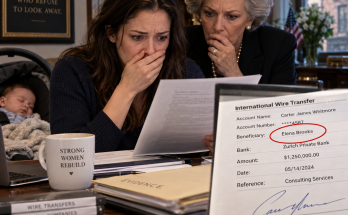
The hospital note was four sentences long.
I read it until I knew every word.
Patient intermittently responsive.
Requests daughter Claire repeatedly.
Spouse notified.
Spouse states Claire cannot travel and should not be contacted.
That was all.
No dramatic final speech.
No proof Dad would have remained conscious if I had been called.
No guarantee I could have reached Ohio in time.
Just an opportunity withheld.
That hurt differently from every account.
Money created anger.
The cabin created disbelief.
The forged signatures created violation.
This created grief.
I called Ruth.
She cried before I finished reading.
“I thought he never woke up.”
“So did I.”
“Patricia told everyone.”
“I know.”
Dad had asked for me.
Mom decided I didn’t need to know.
The same mechanism again.
She decided what information I could handle.
What choices I should have.
What belonged to me.
This time the stolen thing was the chance to try.
I might have said no.
I might have been physically unable to travel after surgery.
A doctor might have forbidden it.
Flights might have failed.
Dad might have lost consciousness before I arrived.
But those possibilities were mine to face.
Mom had taken the decision.
I did not call her.
Not that day.
I took the children to school.
Then I came home and cried.
No documents.
No phone calls.
No lawyers.
Just grief.
At noon, I listened to Dad’s final recording again.
Not the whole thing.
The part about Lily.
He hoped to meet her.
He never did.
I had always believed there was no chance.
Now I knew there might have been a narrow one.
That uncertainty could become torture if I let it.
So I stayed with what was known.
Dad asked for me.
Mom knew.
Mom withheld it.
That was enough.
At school pickup, Noah saw my face.
“You cried.”
“Yes.”
“Grandpa?”
“Yes.”
He climbed into the front seat while Lily buckled herself behind us.
“What happened?”
I chose the truth appropriate for nine.
“Grandpa woke up a little before he died and asked for me. I didn’t know until today.”
Noah’s eyes widened.
“Grandma didn’t tell you?”
“No.”
“Why?”
“I don’t know yet.”
He looked angry.
“That’s worse than money.”
“Yes.”
He understood immediately.
Then Lily leaned forward.
“Did Grandpa know me?”
I turned.
“He saw pictures of you.”
“Did he like me?”
My throat tightened.
“He loved you.”
“How?”
The question was so five-year-old that it nearly broke me.
“How could he love me if he didn’t meet me?”
I thought about Dad’s recording.
“He knew you were mine.”
Lily considered that.
Apparently sufficient.
“Okay.”
Then she asked for a snack.
That night, after the children slept, I emailed Mom’s attorney.
I want one direct conversation with Patricia concerning Thomas’s final hospital morning. Counsel may attend. No financial matters.
The call happened the next afternoon.
Mom appeared on screen.
She knew why.
Her face told me.
I did not begin with accusation.
“Dad asked for me.”
Mom closed her eyes.
“Yes.”
“You knew.”
“Yes.”
“Why didn’t you call?”
She looked down.
“I thought you couldn’t come.”
“That isn’t what I asked.”
“You had just had surgery.”
“That isn’t what I asked.”
“Lily was newborn.”
“Mom.”
Her face crumpled.
“I was afraid.”
“Of what?”
“If you came, he would tell you.”
The answer was so direct I almost missed its meaning.
“Tell me about the money?”
“Yes.”
There it was.
Mom did not withhold Dad’s request because she wanted to protect my health.
That may have been part of what she told herself.
But beneath it was fear.
Dad had begun exposing everything.
If I reached his bedside while he was lucid, he might tell me.
“So you kept me away.”
“Yes.”
My hands shook.
I placed them flat on the table.
“Did Dad ask you to call me?”
“Yes.”
The room became very quiet.
Mom’s attorney looked down.
Hale remained still beside my camera.
“How many times?”
“I don’t know.”
“Did you tell him I couldn’t come?”
“Yes.”
“Did you know whether I could?”
“No.”
“Did you call my doctor?”
“No.”
“Did you call me?”
“No.”
“Did you ask?”
“No.”
Each answer removed another excuse.
I could hear my own breathing.
“Did he believe you?”
Mom started crying.
“I think so.”
That hurt worst.
Dad may have died believing I knew he wanted me and chose not to come.
I stood from the table.
For a moment, I couldn’t continue.
Hale asked whether I wanted to stop.
“No.”
I sat again.
“Did Dad say anything else?”
Mom wiped her face.
“He asked whether you were angry.”
“Why?”
“He thought you knew.”
“Knew what?”
“The inheritance. Some of it.”
“How would I know?”
“He thought Pike had contacted you.”
Pike had not.
Again, silence intersecting with silence.
Dad believed information had reached me.
Mom knew it hadn’t.
“Did you correct him?”
“No.”
I looked away.
For years, I had wondered whether Dad died disappointed that I wasn’t there.
Mom had allowed that possibility to exist because it protected her.
“Did he ask about Lily?”
“Yes.”
“What did you say?”
“That she was healthy.”
True.
At least that.
“Did he ask about Noah?”
“Yes.”
“What did you say?”
“That Noah missed him.”
Also true.
I breathed.
“Did he say anything for them?”
Mom nodded.
“What?”
“He said to tell Noah the toolbox was his.”
I remembered Dad’s red tool chest.
The missing drawer.
The false bottom.
Noah had loved counting its drawers.
“And Lily?”
Mom began crying harder.
“He said…”
She stopped.
“Say it.”
“He said to tell Lily he was sorry he didn’t get to hold her.”
I covered my mouth.
The room blurred.
Mom waited.
Eventually, I asked, “Why didn’t you tell me that?”
“I couldn’t tell you what he said without admitting he woke up.”
There it was.
One lie required another.
Then another.
The toolbox remained in Mom’s workshop for five years.
Dad’s message to Lily disappeared into silence.
All because truth threatened the first concealment.
“Anything else?”
Mom shook her head.
Then stopped.
“Yes.”
I waited.
“He told me I still had time.”
“To do what?”
“Fix it.”
“What did you say?”
“I told him he didn’t understand.”
Dad had been dying.
Mom was still arguing.
“What did he say?”
“He said, ‘Then understand later.’”
I closed my eyes.
That sounded like him.
Not polished.
Not prophetic.
Just Dad.
Then understand later.
Mom whispered, “I think I am.”
I looked at her.
Part of me wanted to accept that.
Another part wanted to reject it because acceptance felt too close to forgiveness.
Neither reaction needed to become a decision.
“You understanding now does not restore that morning.”
“I know.”
“It doesn’t give me a chance to answer him.”
“I know.”
“It doesn’t let him meet Lily.”
“I know.”
“It doesn’t let Noah hear Grandpa tell him about the toolbox.”
“I know.”
For once, Mom did not say but.
No explanation followed.
Just:
“I know.”
I cried.
She cried.
I did not comfort her.
She did not ask me to.
Eventually, I asked about the hospital trip to Lakeview.
“Was Dad aware you were taking him to the credit union?”
“No.”
“Did he regain awareness there?”
“I don’t think so.”
“Why bring him?”
“The manager knew him.”
“You thought seeing him would make the transaction easier.”
“Yes.”
“Did you believe the trip might harm him?”
“No.”
“Did anyone warn you?”
“The nurse said he shouldn’t leave.”
“Why did you take him anyway?”
Mom looked directly at me.
“Because I was afraid he had changed everything.”
Money.
Again.
Fear of losing control.
Again.
“Would you do it now?”
“No.”
That question was almost unfair.
People always knew the correct answer after consequences.
So I asked a better one.
“What would stop you now?”
Mom thought.
Then said, “I would understand that wanting something doesn’t give me the right to decide for everybody.”
That was closer.
Not remorse.
Principle.
Maybe learned late.
Still learned.
I ended the call after forty minutes.
No reconciliation.
No promise of contact.
No forgiveness ceremony.
Just truth.
Afterward, Hale asked whether I was all right.
“No.”
He nodded.
“Fair.”
“I think I will be.”
“That’s different.”
“Yes.”
That evening, I told Noah about the toolbox.
His eyes widened.
“Grandpa said it’s mine?”
“Yes.”
“The red one?”
“Yes.”
“The whole thing?”
“Apparently.”
He became excited.
Then cautious.
“Do we have to go to Grandma’s to get it?”
“No.”
Hale arranged for a neutral property transfer.
Mom agreed.
Two days later, Dad’s red tool chest arrived in my garage.
Six drawers.
The missing bottom drawer had been recovered during the workshop search.
It had been stored in Mom’s basement.
Noah counted.
“One, two, three, four, five, six.”
Then he opened every drawer.
Sockets.
Wrenches.
Screwdrivers.
A measuring tape with Dad’s initials.
He held it like treasure.
Lily climbed onto a stool.
“What did Grandpa give me?”
The question caught me.
Dad had no object for her.
Only words.
“He said he was sorry he never got to hold you.”
She looked puzzled.
“That’s not a present.”
“No.”
“Did he give me anything?”
I thought.
Then remembered the photograph from the cabin.
Dad had written about her.
The trust included her.
He had protected something for both children.
But she was asking for something tangible.
I opened the small top compartment of the tool chest.
Inside was Dad’s carpenter pencil.
Yellow.
Worn nearly flat.
“Grandpa used this.”
Lily took it carefully.
“Can I have it?”
I looked at Noah.
Technically the toolbox was his.
He nodded.
“She can.”
Lily smiled.
“Now Grandpa gave me a pencil.”
That was enough.
The following week, Hale reported that Mom had signed corrective documents for the cabin, subject to court approval.
My ownership interest would be restored.
Amanda’s house remained under negotiated resolution.
Her attorney proposed that she refinance or sell eventually to satisfy traceable claims.
I did not demand she become homeless.
I did demand that property bought with stolen money not be treated as unquestionably hers.
Those were different things.
The repayment account would transfer to a controlled restitution account.
Elaine’s payment joined it.
Mom began transferring verified amounts from Heritage as forensic accounting identified them.
Uncle Steven’s claim proceeded separately.
No miracle.
No single check.
Repair happened line by line.
Then something unexpected happened.
Mom voluntarily gave investigators the location of another storage box.
Nobody had found it.
Nobody knew it existed.
Inside were original documents she had hidden after Dad died.
Among them was the hospital bracelet from his final admission.
His wedding ring.
Letters.
And the original note the nurse gave Mom after Dad briefly woke.
Call Claire if he becomes responsive again.
Mom had kept it.
For five years.
I stared at the photograph Ortiz sent.
“Why preserve something that proves what she did?”
Ortiz said, “You’d have to ask her.”
I didn’t.
Not immediately.
People kept evidence for strange reasons.
Fear.
Insurance.
Guilt.
Hope of confession.
Maybe Mom could never bring herself to destroy the physical proof of the moment she knew she should call me.
Among the papers was another note.
Dad’s handwriting.
Only six words.
Claire should know. No more secrets.
He had apparently written it during an earlier period of lucidity.
Mom kept that too.
I sat in my office holding the scan.
No more secrets.
Simple.
Impossible for them then.
Necessary now.
That evening, I received a final message from Mom.
Not a letter.
Not an argument.
A text.
I found another note from your father. I gave it to the investigator. I won’t contact you again unless you ask or there is something legally necessary. I understand that silence used to be something I imposed on you. This time I will let distance be your choice.
I read it twice.
Then put the phone down.
No answer.
Not because I wanted to punish her.
Because she had finally offered something I had been denied for years.
The right not to respond.
I went upstairs.
Noah was reading in bed.
Lily had fallen asleep sideways across hers.
I moved her gently beneath the blankets.
Her rabbit rested near the pillow.
Warm room.
Closed door.
Real bed.
I stood there longer than necessary.
The entire unraveling had begun because I refused to let these children sleep on a freezing floor.
But the floor had never been the deepest problem.
The problem was the family rule beneath it.
Claire will make it work.
Claire will pay.
Claire will understand.
Claire won’t ask.
Claire won’t fight.
Claire will come back.
For fourteen years, other people had built plans around those assumptions.
Now the assumptions were gone.
The legal consequences were still unfolding.
The money was not fully recovered.
The family was not healed.
Mom had not earned trust.
Amanda had not repaired everything.
Dad’s failures had not disappeared because his final intentions were better.
But the rule had changed.
Nobody got to decide for me because they were confident I would survive their decision.
I turned off Lily’s light.
At the doorway, she stirred.
“Mommy?”
“I’m here.”
“Are we staying home tomorrow?”
“Yes.”
“Good.”
Her eyes closed.
I pulled the door nearly shut.
Then I stood in the hallway between my children’s rooms and understood something Dad had tried, too late, to write into trusts and codicils.
Protection was not only money kept beyond someone’s reach.
Sometimes protection was much simpler.
A door.
A bed.
A truthful answer.
And a mother willing to say no before her children learned that love required sleeping on the floor.
Click here to continue reading: PART 21: The First Court Order Returned Claire’s Name to the Cabin, but Restoring Property Proved Easier Than Restoring a Family
Two Sleeping Bags on a Frozen Den Floor Forced Claire to Decide What Her Children Would Learn About Family
Part 20 of 24