The hidden repayment account contained ninety-three transactions.
I asked Hale for all of them.
He warned that the records would take time to verify.
“I still want them.”
The first deposits began four years earlier.
Five hundred dollars from Mom.
Eight hundred.
One thousand.
Then fifteen hundred from Amanda.
The pattern was irregular.
Almost furtive.
Money appearing after family events.
After birthdays.
After Christmas.
After moments I could now reinterpret.
A $2,000 transfer from Mom arrived three days after she forgot Noah’s school concert but drove six hours to help Amanda move.
A $1,500 transfer from Amanda appeared after she borrowed my car for two weeks and returned it damaged.
Neither told me.
They had converted guilt into deposits inside an account I did not know existed.
It was almost impressive.
An entire parallel morality.
They could continue mistreating me because somewhere unseen, they were balancing an internal ledger.
I called Hale.
“Did they think this made things even?”
“We can’t know.”
“I think they did.”
Maybe not mathematically.
Emotionally.
Deposit money.
Reduce guilt.
Preserve behavior.
The account explained why Mom occasionally seemed oddly generous after hurting me.
She wasn’t actually giving me anything I could use.
She was paying an invisible debt to herself.
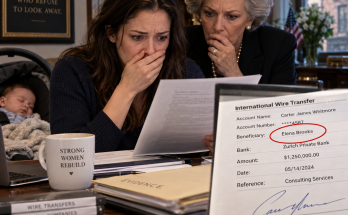
One transaction stood apart.
$8,000.
Sender: Elaine Mercer.
I stared at it.
“Why did Elaine contribute?”
“That is unclear.”
“Ask her.”
Elaine’s attorney arranged a call.
She sounded tired.
Not frightened anymore.
Just tired.
“I wondered when you’d find that.”
“Why eight thousand?”
“Because that’s what Patricia paid me.”
“For helping with the fraud?”
“Yes.”
The admission was direct.
Mom paid Elaine over the years.
Not large bribes.
Occasional cash.
Gifts.
Then one $8,000 payment after the estate waiver and false Franklin account.
“You returned it?”
“Eventually.”
“To an account opened fraudulently in my name.”
“I didn’t know how else.”
“You could have called me.”
“I was ashamed.”
“That protected you.”
“Yes.”
No excuses.
That was becoming the dividing line I noticed most.
People who could say yes when confronted with what they had protected.
Elaine explained that Mom created the repayment account after finding Dad’s letter about returning money without expecting gratitude.
Elaine helped open it.
Again illegally.
This time, Mom insisted no money ever leave.
“She called it restitution.”
“Restitution without telling the person?”
“I told her it was ridiculous.”
“But you helped.”
“Yes.”
“And contributed.”
“Yes.”
“Why?”
“Because some of the money was mine to return.”
I asked whether Amanda knew from the beginning.
Not initially.
She discovered the account two years later.
Instead of exposing it, she started adding deposits.
“How did she justify that?”
Elaine gave a bitter laugh.
“Same way Patricia did. She said Claire would never accept it directly.”
That might have been true.
But they never gave me the choice.
There was always a reason my consent could be bypassed.
To help Amanda.
To protect Mom.
To repair the theft.
Even their restitution preserved the assumption that they knew better than I did.
“Did Dad know about the account?”
“No. He was dead by then.”
That mattered.
The repayment scheme was entirely theirs.
Not Dad orchestrating from beyond the grave.
Not fear of him.
Some level of guilt survived without him.
I did not know yet what to do with that information.
After the call, I drove Noah and Lily to school.
Their teachers knew we had experienced a family emergency.
Nothing more.
Lily hugged me twice before entering her classroom.
Noah walked three steps away, returned, and said, “You’re picking us up, right?”
“Yes.”
“You?”
“Me.”
He nodded.
Only then did he leave.
The disruption had unsettled him more than he admitted.
That bothered me more than any financial total.
Money could be traced.
Childhood security required repetition.
I was there.
I came back.
Dinner happened.
Doors locked.
Beds remained.
Ordinary reliability.
That would be our repair.
At noon, my employer called.
I had been using emergency leave.
My supervisor asked whether I needed more.
“I think I can return Monday.”
“Are you sure?”
“I think routine will help.”
Then she surprised me.
“Claire, you don’t need to prove anything by coming back early.”
The sentence landed strangely.
You don’t need to prove anything.
How much of my adulthood had been built around proving that I could absorb disruptions without needing accommodation?
“I’ll take the rest of the week.”
“Good.”
Not approval.
Not praise.
Permission I hadn’t realized I was waiting for.
I spent the afternoon organizing documents.
Not investigating.
Organizing.
I created folders.
Estate.
Trust.
Cabin.
Insurance.
Franklin.
Heritage.
Repayment.
Recent lodge fraud.
Each label turned chaos into something bounded.
Then I created one final folder.
Children.
Inside it, I saved nothing financial.
I wrote notes.
Noah heard Amanda and Mom before we left.
Lily asked whether she caused the argument.
Noah said he noticed favoritism long ago.
Both expressed concern about having beds.
I wanted a record of consequences that no financial accounting could show.
At three, Ortiz called.
“There’s movement on the recent break-in.”
Marjorie Reynolds had begun cooperating.
She admitted Mom asked her to retrieve the safe-deposit key from my house.
Mom paid her five thousand dollars.
Amanda knew Marjorie was going.
“Did they expect me to stay through Sunday?”
“Yes.”
“What if I came home?”
“Marjorie says Patricia told her that wouldn’t happen.”
The certainty no longer surprised me.
“What exactly did Mom say?”
Ortiz read from the interview notes.
Claire never changes plans once people depend on her.
I closed my eyes.
That sentence might have been the purest description of the trap.
Dependence was the lock.
My reliability was the key.
They did not have to physically stop me from leaving.
They only had to make leaving feel like hurting someone.
“What made Marjorie cooperate?”
“Her attorney.”
“That’s not what I mean.”
Ortiz hesitated.
“Marjorie learned Amanda had given investigators the mortgage documents she used to control her.”
Amanda had surrendered her leverage.
That was new.
“Voluntarily?”
“Yes.”
“Why?”
“She said she was done holding people hostage.”
I sat down.
That sounded like Dad’s influence again.
Or consequence.
Or exhaustion.
Probably all three.
People rarely changed for one clean reason.
Then Ortiz added, “Amanda provided something else.”
“What?”
“Access to a cloud drive.”
The drive contained scans from Dad’s original blue file.
More importantly, it contained Amanda’s own notes.
Years of them.
Not as systematic as Mom’s ledger.
But revealing.
Amanda recorded what she borrowed.
What Mom covered.
What came from my accounts.
At several points she wrote:
Need to repay Claire.
Later:
Can’t tell Claire now.
Then:
After Dad died, too late to admit.
I read excerpts slowly.
Amanda knew.
Not merely in an abstract way.
She understood debt.
She understood ownership.
She simply prioritized avoiding confession.
One entry came after the house purchase.
I hate this house because I know where the money came from.
I did not expect that.
Another:
Mom says it’s done and Claire is fine. I don’t feel fine.
Then, six months later:
Asked Mom if we should tell her. Mom said truth would only hurt Claire now.
That old lie.
Truth hurts, therefore keep the lie.
No acknowledgment that discovery later would hurt worse.
No acknowledgment that withholding truth also preserved stolen benefits.
Amanda’s guilt had not been enough to make her leave the house.
That mattered.
Feeling bad while keeping the benefit was not accountability.
Still, her notes destroyed another false certainty I had built.
She had not spent fourteen years without conscience.
She had spent fourteen years repeatedly silencing it.
That distinction did not change what she owed.
It changed what recovery might mean.
At five, Hale called.
The forensic accountant had traced the $62,400 repayment account.
All funds were unspent.
But there was a problem.
“Of course.”
“The account earned interest.”
“That’s not a problem.”
“The tax reporting used your Social Security number.”
I rubbed my forehead.
“So I may have tax issues?”
“Potentially amended filings, though the amounts are manageable.”
Mom’s attempt to repay me had created another identity problem.
Perfect.
Hale laughed despite himself.
“I’m sorry.”
“No. At this point it’s funny.”
For the first time, it actually was.
Not because fraud was amusing.
Because the absurdity had finally exceeded my capacity for shock.
“They stole money, opened accounts in my name, then opened another fraudulent account to pay back the fraudulent money.”
“That is an accurate summary.”
“And now I may owe taxes on interest from money I didn’t know I had.”
“Potentially.”
I laughed until tears appeared.
Hale waited.
Then said, “You needed that.”
“Yes.”
I picked up the children.
We bought groceries.
At home, Noah asked whether we could make tacos.
Lily wanted pancakes.
We compromised badly and made both.
Around eight, the doorbell rang.
I froze.
Noah saw it.
“Who is it?”
I checked the camera.
A courier.
Not family.
I exhaled.
The package came from Elaine’s attorney.
Inside was a sealed envelope addressed to me in Elaine’s handwriting.
I opened it at the table.
There was a cashier’s check.
$31,600.
A letter explained that Elaine had calculated every direct payment, gift and benefit she received from Mom in connection with dishonest transactions.
The total was $31,600.
Eight thousand had already gone into the repayment account.
The check covered the rest.
I called her attorney.
“Why now?”
Elaine answered through him.
“Because returning money secretly was another way of hiding.”
That sentence stayed with me.
She wasn’t asking me to forgive her.
She wasn’t asking investigators for anything through me.
She was separating repayment from absolution.
“I don’t know whether I should accept it.”
Her attorney said I could hold it through counsel until ownership and restitution issues were sorted.
That felt appropriate.
I sent it to Hale.
Then another envelope appeared beneath Elaine’s letter.
A photocopy.
A page from Dad’s blue file.
I had already seen most of it.
But the reverse contained writing no one had noticed because another document had been stuck against it.
Dad’s handwriting.
A list of amounts.
Beside one line:
E.M. returned $10,000 directly. Patricia intercepted.
I stared.
Elaine had tried to return money before.
While Dad was alive.
I called her.
This time she answered with her attorney present.
“What happened to the ten thousand?”
“I gave Thomas a cashier’s check.”
“For me?”
“Yes.”
“What did Mom do?”
“She found it.”
“How?”
“I don’t know.”
“Where did the money go?”
Elaine thought Mom deposited it.
Not into her account.
Into Amanda’s.
I called Hale.
He traced the old transaction.
Elaine was right.
The ten thousand entered Amanda’s checking account thirteen years earlier.
Then something unexpected happened.
Amanda returned it.
Three days later.
To Dad.
I stared at the records.
“Where did Dad put it?”
Hale followed the transfer.
The money became the first deposit into the Lakeview Federal account he later built for me.
For once, a stolen amount had actually made its way back.
Amanda had returned it voluntarily.
Thirteen years ago.
Before the house.
Before the insurance.
Before so many later choices.
I called her.
“Why did you send Dad the ten thousand?”
A long silence.
“Because it wasn’t mine.”
Simple.
“Then why take more later?”
“I don’t know.”
“Yes, you do.”
She began crying.
“Because Mom told me returning it had humiliated her.”
“What?”
“She said Dad looked at her like a thief.”
“She was stealing.”
“I know.”
“So Mom convinced you that returning my money was disloyal to her?”
“Yes.”
The machinery became clearer.
Mom did not merely rescue Amanda.
She required Amanda to accept the rescue.
Dependency bound them together.
Amanda returning money threatened that bond.
If Amanda became accountable, Mom became less necessary.
“What happened after you sent it back?”
“Mom didn’t speak to me for three weeks.”
That punishment taught Amanda something.
Taking from me preserved closeness with Mom.
Returning to me threatened it.
Again, explanation was not excuse.
But the pattern mattered.
Amanda whispered, “I think that was when I decided it was easier to believe you didn’t care.”
I looked at the old transaction.
Ten thousand dollars returned.
One small fork in the road.
She had once chosen differently.
Then reversed course.
“Did Dad know why?”
“Yes.”
“What did he say?”
“He told me Mom’s love shouldn’t require me to be dishonest.”
“And?”
“I told him he didn’t understand her.”
I almost smiled sadly.
Dad understood more than Amanda knew.
Maybe not soon enough.
But eventually.
After the call, I sat alone for a long time.
People wanted simple stories.
Good mother.
Bad mother.
Generous sister.
Selfish sister.
Victim.
Thief.
Reality was harder.
Mom loved us.
Mom stole from me.
Amanda felt guilty.
Amanda kept taking.
Dad protected me.
Dad failed me.
Elaine regretted helping.
Elaine kept helping.
Contradictions did not cancel facts.
They were facts.
Then Hale called one last time.
“We’ve traced another transaction from the repayment account.”
“What now?”
“This one wasn’t from Patricia, Amanda or Elaine.”
“Who?”
He named the sender.
Samuel Pike.
Dad’s retired attorney.
Amount: twelve thousand dollars.
I sat upright.
“Why would Pike owe me money?”
“I asked him.”
“And?”
“He wants to explain directly.”
A video call began twenty minutes later.
Pike looked older than he had during our first conversation.
“I should have told you sooner,” he said.
That phrase had become unbearable.
“Told me what?”
“Your father came to me fourteen years ago because he knew Patricia was forging documents.”
“I know.”
“What you don’t know is that I represented Patricia too.”
I became still.
“At the same time?”
“For family property matters.”
Conflict of interest.
He admitted it.
Dad told him about Mom’s plan for the power of attorney.
Pike advised Dad privately.
But he did not notify me.
He did not withdraw immediately.
He did not report what he suspected.
“Why?”
“I was afraid of destroying a long-standing client relationship.”
Another professional protecting peace.
Another person who knew enough.
“Where does the twelve thousand come from?”
“Fees Patricia paid my firm over the years.”
“You’re returning fees?”
“Partly.”
“Why exactly twelve?”
“That is the amount I personally received from matters where I now believe I should have recognized the conflict and refused representation.”
He had deposited it into the repayment account after Mom contacted him four years ago.
She told him she was trying to restore money quietly.
Pike contributed.
Then he continued protecting his own silence.
“Did Dad know?”
“He knew I was conflicted. He stopped trusting me.”
That explained why Dad later took documents elsewhere.
“Why did you mail me the safe-deposit key?”
Pike looked directly at the camera.
“Because I found a letter Thomas wrote to me.”
“What did it say?”
Pike swallowed.
“He wrote that if I ever wanted to correct my mistake, I should stop deciding when you were ready for the truth.”
That was Dad.
Again.
Learning too late.
Still learning.
Pike mailed the key.
That act triggered Mom’s panic.
The cabin sale.
The Thanksgiving plan.
Marjorie’s break-in.
Everything.
One person finally stopped deciding that truth should wait.
And the entire structure began collapsing.
Click here to continue reading: PART 16: Samuel Pike’s Delayed Truth Explained Patricia’s Thanksgiving Panic, but Claire’s Return Home Forced the Hardest Boundary She Had Ever Set
Two Sleeping Bags on a Frozen Den Floor Forced Claire to Decide What Her Children Would Learn About Family
Part 15 of 24