My mother had been dead for eleven years.
That was the first thought that came to me after Mercer said it.
Not anger. Not confusion. Just the simple fact that made his statement impossible.
My mother was dead.
I had stood beside her hospital bed during the last three days of pancreatic cancer. I had held her hand when she stopped responding. I had chosen the blue dress she was buried in because it was the one my father used to tell her made her look younger.
So when Mercer, bleeding and restrained on the laboratory floor, told me she was the final surviving participant in my father’s trust, I almost laughed.
Instead, I stared at him.
“She’s dead.”
Mercer gave me a tired look.
“No.”
An officer pulled him upright.
“Save it.”
Mercer ignored him.
“Madison, ask who signed the death certificate.”
The question slid into me like cold metal.
I knew the answer.
Dr. Richard Mercer.
He had been my mother’s physician during the last year of her life.
I had never once considered that unusual.
The officer led him away.
I started after them.
“Mercer.”
He turned.
“If my mother is alive, where is she?”
His expression changed almost imperceptibly.
Not fear.
Satisfaction.
He had wanted me to ask.
“That,” he said, “is the question Victor never managed to answer.”
Then they took him out.
For several seconds, I could hear only the continuing commands of police officers sweeping the building.
Donald appeared in the doorway carrying Danielle.
The sight of her broke through the paralysis.
I crossed the room and pulled her into me.
“Mom.”
“I have you.”
Her arms tightened around my neck.
Donald touched my back.
“She’s okay.”
I nodded.
I was not.
Rachel sat against the wall several feet away, both hands visible while an officer stood over her.
Victor lay on a stretcher.
The bullet had struck high in his shoulder.
He was alive.
That mattered more than I wanted it to.
Dead men could not answer questions.
Agustin had been separated from us and was speaking to detectives near the far corridor.
Elaine was somewhere upstairs.
The original archive, copied drives, my father’s ring and the recovered memory card were being catalogued as evidence.
Everything that had once existed inside our family’s private nightmare had become somebody else’s chain of custody.
An officer approached me.
“Mrs. Wickham?”
I hated hearing the name.
“Yes.”
“I’m Detective Mara Ruiz.”
She was in her forties, with rain-darkened hair and a voice that seemed deliberately calm.
“We need to get you and your daughter to a safe location.”
“Hospital first.”
“For you?”
“For Danielle. And for me.”
Donald looked at me.
“You feel sick?”
“I’ve been poisoned for years.”
Ruiz’s expression sharpened.
“We’ve been told.”
“I want blood work before anything changes.”
“Understood.”
Danielle pulled back.
“Do I have to get blood taken?”
“No.”
Rachel spoke from the wall.
“Test her.”
Everyone looked at her.
Donald’s face hardened instantly.
“Why?”
Rachel closed her eyes.
“I don’t know whether she was ever exposed.”
The room changed.
I stood.
“What did you say?”
“I never gave Danielle anything.”
“That isn’t what I asked.”
Rachel looked at me.
“There were times Mercer brought prepared supplements for the house.”
My skin went cold.
“What supplements?”
“Vitamins. Powder packets. Things he said were for you.”
“And Danielle?”
“I don’t know.”
I moved toward her before I realized I was moving.
Donald caught my arm.
“How could you not know?”
Rachel started crying.
“Because I stopped asking enough questions.”
The answer was too close to what Donald had already admitted about signing documents.
That family had lived for decades by turning away at exactly the moment they should have looked closer.
I pointed at her.
“If anything happened to my daughter—”
“I know.”
“No, you don’t.”
Ruiz stepped between us.
“Hospital. Now.”
The medical center placed Danielle and me in separate examination rooms.
Donald remained with her while I underwent blood tests, liver imaging and a toxicology panel ordered under emergency circumstances.
Charlene arrived before the first results.
She entered my room and hugged me without saying anything.
For several seconds I let myself lean against her.
Then I pulled back.
“You sent the files?”
“To three places.”
“Which?”
“Two secure storage services and an attorney I trust.”
I nodded.
“Good.”
“You look awful.”
“Apparently that’s because people have been poisoning me for a decade.”
Her eyes softened.
“Too soon?”
“Probably.”
She sat.
“What happened at the laboratory?”
I told her as much as I could without getting lost inside the telling.
When I reached Mercer’s statement about my mother, she stopped me.
“He said your mother is alive?”
“Yes.”
“Could she be?”
“No.”
“That wasn’t what I asked.”
I looked toward the window.
Could she?
Until twenty-four hours earlier, Victor had been dead too.
Agustin had never existed.
My father had died from a heart attack.
Rachel loved me.
Dr. Mercer was a trusted physician.
My life had contained an alarming number of facts that were not facts at all.
“I don’t know.”
Charlene leaned back.
“What did your mother die from?”
“Pancreatic cancer.”
“Biopsy?”
“I assume.”
“You assume?”
“I was twenty-nine. Mercer handled everything.”
“Did you ever see pathology?”
“No.”
“Scans?”
“Some.”
“Could they have been falsified?”
“Anything can apparently be falsified.”
She didn’t disagree.
The first toxicology results returned an hour later.
The compound had declined in my bloodstream since I stopped drinking Rachel’s tea.
That was the good news.
The bad news was evidence of chronic liver injury consistent with prolonged exposure.
My doctor explained that some damage could improve, but nobody would know how much until several months had passed.
I listened carefully.
I asked questions.
I wrote things down.
It felt strange to be in a medical room where nobody was minimizing me.
When Danielle’s pediatrician arrived, I went to her room.
She sat on the bed eating crackers.
Donald looked up.
“She’s fine so far.”
“So far?”
“Routine blood work looks normal.”
I exhaled.
The pediatrician explained that they had found no obvious signs of the compound in Danielle’s system.
Rachel’s vague warning had not become another disaster.
At least not yet.
Danielle held out a cracker.
“For you.”
I took it.
“Thank you.”
She watched me eat half.
Then she whispered, “Can we go home?”
I looked at Donald.
Neither of us answered quickly enough.
Danielle understood.
“We can’t.”
“Not tonight.”
“Because of the broken windows?”
“And other things.”
She nodded with the grave patience children use when adults keep giving incomplete answers.
Donald touched her hair.
“We’ll find somewhere safe.”
A knock sounded.
Detective Ruiz entered.
“I need to speak with both of you.”
Danielle looked worried.
Donald said, “Here?”
“Not about anything she needs to hear.”
We stepped into the hallway.
Ruiz opened a folder.
“Victor is stable. Rachel has been arrested pending charges. Mercer is in custody. Agustin and Elaine are both being questioned.”
Donald’s jaw tightened at the mention of Rachel.
“What charges?”
“Attempted murder is on the table. So are poisoning, conspiracy and child endangerment.”
He closed his eyes.
I felt nothing I could name.
Ruiz looked at me.
“There’s another issue.”
“My mother.”
“Yes.”
“You checked.”
“We started.”
“And?”
“The state death record exists.”
“That proves nothing.”
“No. Especially because Mercer signed it.”
She handed me a copy.
My mother’s name.
Evelyn Carter.
Date of death.
Hospital.
Cause.
Pancreatic adenocarcinoma.
Mercer’s signature.
Everything looked official.
Ruiz continued.
“But there’s no matching cremation authorization.”
“She was buried.”
Ruiz shook her head.
“The cemetery file lists an urn interment.”
I stared at her.
“No.”
“I confirmed twice.”
“We buried a coffin.”
“According to cemetery records, no coffin was interred in that plot.”
My legs weakened.
Donald caught my elbow.
“That’s impossible.”
Ruiz turned another page.
“The funeral home handling your mother’s service closed eight years ago after fraud allegations.”
I remembered the chapel.
The closed casket.
Mercer recommending we not view her after death because cancer had changed her appearance.
I had accepted it.
I had accepted everything.
“What was buried?”
“We don’t know yet.”
“Open it.”
Ruiz studied me.
“The plot?”
“Yes.”
“That requires legal process.”
“Then get it.”
“We’re working on it.”
I looked at Donald.
“My mother could be alive.”
He didn’t say anything reckless like yes.
He just squeezed my hand.
Ruiz continued.
“Mercer also made one phone call after arrest.”
“To whom?”
“An attorney.”
“That’s normal.”
“Not exactly.”
The attorney was named Thomas Vale.
The name meant nothing to me.
Donald reacted.
“I know him.”
Ruiz turned.
“How?”
“He handled my father’s estate.”
My stomach tightened.
“The fake death?”
Donald nodded slowly.
“And some of the restructuring documents Mom brought me.”
The chain was getting shorter.
Ruiz showed us a photograph.
Thomas Vale was in his sixties, silver-haired, clean-shaven.
I had seen him before.
Not recently.
At my mother’s funeral.
He had stood near the rear of the chapel beside Mercer.
I remembered because he wore a gray scarf indoors.
“That’s him.”
Ruiz looked at me.
“You know Vale?”
“No. But he was at my mother’s funeral.”
Donald stared at the photo.
“He was at Dad’s too.”
Two false deaths.
One attorney.
I felt something shift from confusion toward direction.
“Find Vale.”
“We are.”
Ruiz hesitated.
“There’s one more thing.”
Of course there was.
“When officers searched Mercer’s house, they found a storage room containing medical files.”
“Mine?”
“Yours, your mother’s, Rachel’s, Victor’s and dozens of others.”
“What was in my mother’s?”
“We haven’t finished review.”
“But?”
“There were records dated after her official death.”
The hallway seemed to narrow.
“How long after?”
Ruiz answered carefully.
“Seven years.”
Donald whispered something under his breath.
I stared at the detective.
“My mother died eleven years ago.”
“Yes.”
“Then somebody treated her four years ago.”
“Yes.”
“Where?”
“Most entries use codes instead of locations.”
“Any names?”
“One recurring notation.”
Ruiz opened the folder and showed me.
E.C. — maintained under protective identity.
Protective identity.
The phrase hurt in a way I hadn’t expected.
If my mother had survived, had she left willingly?
Had she been hidden?
Imprisoned?
Protected?
From whom?
I thought of my father’s video.
The real inheritance is the legal authority to release every patient record.
Mercer had called her the final surviving participant in my father’s trust.
Not beneficiary.
Participant.
“What did my mother know?”
Ruiz shook her head.
“That’s what we need to find out.”
Charlene approached from the far end of the hallway carrying her laptop.
“Madison.”
Something in her voice made me turn immediately.
“What?”
“I was reviewing the files you sent.”
“And?”
“Your father’s video has embedded metadata.”
I stared.
“Location?”
“Yes.”
She opened the screen.
The video had not been recorded in my childhood home.
It had been recorded at an address outside San Diego.
Ruiz leaned closer.
“Whose property?”
Charlene searched the parcel record.
A trust owned it.
Samuel-Evelyn Medical Restitution Trust.
My parents’ names.
Together.
The trust still paid property taxes.
Current mailing contact:
Thomas Vale.
Ruiz was already reaching for her phone.
I looked at Donald.
“If Vale handled both fake deaths—”
“He may know where your mother is.”
Or he may have built the place where she disappeared.
Two hours later, police located Vale’s office.
Empty.
His home was empty too.
His vehicle had left the city shortly after Mercer’s arrest.
Traffic cameras tracked it north.
The last confirmed image showed him entering a rural road leading toward the trust property.
Ruiz advised me to remain at the hospital.
I refused.
She refused harder.
Eventually we compromised.
Donald and I would be moved to a secured police facility with Danielle.
Officers would search the property first.
I hated it.
But I was done taking my daughter into rooms where armed men waited.
Near midnight, Ruiz called.
I answered immediately.
“You found something.”
Her silence told me enough.
“We found the house.”
“And?”
“No Vale.”
“My mother?”
“We found evidence someone had been living there recently.”
“What kind of evidence?”
“Medication. Clothing. Food. A bedroom.”
“Was it hers?”
“We don’t know.”
Then Ruiz said the sentence I had been waiting for without knowing it.
“There’s a photograph on the wall.”
“Of what?”
“You.”
I gripped the phone.
“Recent?”
“No.”
“You as a child.”
My throat closed.
Ruiz continued.
“There are dozens.”
Birthdays.
School pictures.
Family photographs.
Someone had built a room around my childhood.
My mother had either been living there.
Or someone wanted me to believe she had.
Then Ruiz’s voice changed.
“Madison, there’s another photograph.”
“What?”
“It was taken last month.”
My hand tightened around the phone.
“Of me?”
“Yes.”
“Where?”
“Outside your house.”
I turned toward the secured room where Danielle slept beside Donald.
My supposedly dead mother had been connected to a property filled with photographs of me.
Someone from that property had watched my home.
And just one month earlier, they had been close enough to take my picture.
Click here to continue reading: PART 10: The House Filled With My Childhood Photographs Revealed That My Mother Had Been Watching Me, But Her Reason for Staying Hidden Was Worse Than Abandonment
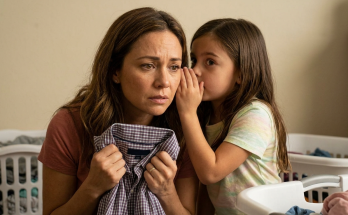
My Daughter’s Quiet Warning Turned a Familiar Morning Ritual Into the First Evidence That Someone Inside Our Home Wanted Me Sick
Part 9 of 20