
The first time Gabriel asked me whether we should sell Mom’s house, I didn’t answer.
We were sitting at her kitchen table on a Sunday afternoon.
The chicken-and-rice dishes were still in the sink.
The blue recipe notebook lay between us.
Outside, the leaves had begun turning yellow.
Gabriel had been unusually quiet during dinner.
I noticed him looking around the kitchen several times.
At Mom’s empty chair.
At her reading glasses beside the window.
At the little calendar she used to hang near the refrigerator.
Finally, he put down his coffee.
“Emily, can I ask you something?”
I looked up.
“Of course.”
“What are we going to do with this house?”
I stared at him.
“What do you mean?”
He glanced toward the hallway.
“We’ve been keeping it exactly as Mom left it.”
I nodded.
“I know.”
“It’s been more than a year.”
His words made my chest tighten.
I looked toward her blue sweater.
It was still hanging over the chair.
Every time I entered the house, I told myself I would put it away.
And every time, I couldn’t.
Gabriel leaned forward.
“I’m not saying we have to change anything today.”
I looked at him.
“Then what are you saying?”
He took a breath.
“The house needs repairs. The back porch is getting worse, and the plumbing upstairs has started leaking.”
I glanced toward the ceiling.
He was right.
I’d noticed a stain near the hallway light the week before.
But I had pretended it wasn’t there.
“Maybe we could hire somebody,” I said.
“We can.”
He paused.
“But I think we should decide what this place is going to be.”
I looked around the kitchen.
What was it going to be?
For most of my life, it had simply been home.
The place where Dad taught me to tie my shoes.
Where Mom baked apple pies.
Where I celebrated birthdays and cried over school problems.
Where a hungry teenager once stood outside the back gate, waiting for the woman who had given birth to him.
The house had held every misunderstanding that separated Gabriel and me.
And it had also held the evening when he finally told me the truth.
I touched the edge of Mom’s recipe notebook.
“I don’t want to sell it.”
Gabriel nodded.
“Okay.”
I looked surprised.
“That’s it?”
He smiled faintly.
“What else should I say?”
“I thought you were going to convince me.”
“Emily, I asked what you wanted. I wasn’t announcing a decision.”
I looked down.
He continued.
“I don’t want to sell it either.”
My eyes filled.
“Really?”
He nodded.
“This was the first place I ever felt close to my birth mother.”
I stared at him.
“Even though you were sleeping behind it?”
He smiled sadly.
“Even then.”
He looked toward the back window.
“When I came here at eighteen, I had nowhere to belong.”
His voice softened.
“But I knew she was inside.”
I reached for his hand.
He squeezed my fingers.
“So no,” he said. “I don’t want to lose this place.”
For a moment, neither of us spoke.
Then I asked, “What should we do with it?”
Gabriel looked around.
“I was hoping we could figure that out together.”
That was the beginning.
Not of another secret.
Not of another painful revelation.
But of something neither of us had expected.
A project that would change how we remembered our mother.
And how we understood the meaning of home.
The following Saturday, Gabriel arrived with a notebook, measuring tape, and a list of repairs.
I stood on the front porch watching him unload his car.
“Are we renovating a house or building a shopping mall?”
He laughed.
“You said you wanted to keep it.”
“I didn’t say I wanted you to measure every inch.”
He held up the tape.
“Then it’s a good thing one of us is organized.”
I rolled my eyes.
“You’re impossible.”
He grinned.
“You’re welcome.”
We spent the morning walking through the house.
The kitchen cabinets needed painting.
The upstairs bathroom had a leaking pipe.
The back porch needed new boards.
Several windows were difficult to open.
And the old storage shed behind the garden was beginning to collapse.
Gabriel stopped when we reached it.
I watched his expression change.
The shed stood near the same place where he had once built his little shelter.
Most of the old boards were gone.
The dump behind the property had been cleared years earlier.
But one corner still looked almost exactly as it had when we were children.
Gabriel stood silently.
I stepped beside him.
“You okay?”
He nodded.
“Just remembering.”
I looked toward the ground.
“Was this where you slept?”
He pointed toward a narrow space near the fence.
“Over there.”
I stared.
It seemed impossibly small.
The ground was uneven.
Even on a dry day, the corner remained damp.
I imagined Gabriel at eighteen.
Lying on a discarded mattress.
Listening to rain striking a plastic tarp.
Wondering whether his birth mother would still be there in the morning.
I felt tears gathering.
“I’m sorry.”
He looked at me.
“For what?”
“For everything.”
He shook his head.
“Emily.”
“I know you keep telling me I was only eight.”
“Because you were.”
I looked toward the fence.
“But I wish somebody had explained.”
“So do I.”
He put his arm around my shoulders.
Then he looked back at the old shed.
“Mom used to hate this place.”
I smiled sadly.
“I know.”
He continued.
“She offered to pay for a room somewhere. I wouldn’t let her.”
“Why?”
“Pride.”
He gave a small laugh.
“And fear.”
I nodded.
He turned toward me.
“I’m not eighteen anymore.”
“I know.”
“And you’re not eight.”
I smiled.
“No.”
He squeezed my shoulder.
“So maybe we should stop standing here wishing we could change something that’s already happened.”
I looked at him.
“What should we do instead?”
He considered the question.
Then he smiled.
“Make something better.”
A week later, we invited Denise over for dinner.
Gabriel had an idea.
He wanted to repair the house and use part of it for people participating in the job-training programs at Eleanor’s Table.
Not as an emergency shelter.
The house wasn’t equipped for that.
But perhaps as a place for small workshops.
A quiet office where people could complete applications.
A room for employment coaching.
And a garden where volunteers could grow vegetables for community meals.
Denise listened carefully.
Then she smiled.
“I think Eleanor would have loved that.”
My throat tightened.
Gabriel glanced toward me.
“What do you think?”
I looked around the kitchen.
I imagined Mom standing at the stove.
Her hands covered in flour.
Her voice telling me to set another place at the table.
I thought about the gate.
The shed.
The lonely boy who had once believed he didn’t deserve to come inside.
Then I looked at Gabriel.
“I think we should do it.”
His face brightened.
“Really?”
I nodded.
“But I have one condition.”
He raised an eyebrow.
“What’s that?”
“The kitchen stays.”
Denise laughed.
Gabriel smiled.
“Obviously.”
“And the big table.”
“Of course.”
I glanced toward Mom’s empty chair.
“And we keep some of her things.”
Gabriel nodded.
“We’ll keep what matters.”
For the next three months, we worked on the house.
Gabriel hired licensed contractors for the plumbing, wiring, and structural repairs.
Denise helped us understand what would be necessary before using the building for community activities.
We checked the local requirements and arranged the appropriate inspections.
I spent weekends sorting through closets.
Some days were easy.
Others were unbearable.
I could fold Mom’s old towels without crying.
But the first time I opened her bedroom dresser and found the little bottle of perfume she wore every Sunday, I had to sit on the floor.
I held the bottle in my hands.
The scent was faint.
Lavender and something sweet.
For a moment, I was eight years old again.
Sitting on her bed while she brushed my hair.
Asking why she had spent so much time with the boy behind our house.
I remembered her face.
The fear that crossed it.
The way she changed the subject.
I closed my eyes.
“Oh, Mom.”
I didn’t hear Gabriel enter.
He knelt beside me.
“Emily?”
I looked up.
He saw the perfume bottle.
Then he understood.
He sat on the floor.
For a while, neither of us spoke.
Finally, I said, “Sometimes I still get angry with her.”
Gabriel nodded.
“Me too.”
I looked at him.
“You do?”
“Of course.”
He leaned against the dresser.
“I love her. But I wish she’d told you.”
I swallowed.
“I wish she’d told me sooner.”
He nodded.
“And I wish she’d let herself believe we could handle the truth.”
I looked down.
“I feel guilty being angry.”
“Don’t.”
His voice was gentle.
“Loving somebody doesn’t mean every choice they made was right.”
I wiped my face.
“I know.”
He smiled sadly.
“Mom made mistakes.”
I nodded.
“But she also gave us something good.”
I looked at him.
“What?”
He took my hand.
“Each other.”
I began crying again.
Gabriel wrapped his arms around me.
We sat on the bedroom floor until the sunlight moved across the carpet.
Then we stood.
And together, we continued sorting.
By early spring, the renovations were nearly finished.
The back porch had been repaired.
The old shed was gone.
The kitchen cabinets were painted a soft cream color.
Mom’s wooden table had been cleaned and restored.
Her reading glasses sat in a small display beside a framed photograph.
And her blue sweater was carefully folded in a cedar chest.
I cried when we put it away.
Not because I thought we were forgetting her.
But because, for the first time, I understood that keeping every object exactly where she left it would not bring her back.
We could remember her without leaving the house frozen in grief.
Gabriel stood beside me as I closed the chest.
“You okay?”
I nodded.
“Yeah.”
He smiled.
“You sure?”
I laughed softly.
“Ask me again in five minutes.”
He hugged me.
The following week, Eleanor’s Table held its first small workshop in the house.
Eight adults attended.
Denise led a session on preparing for job interviews.
Gabriel helped two participants complete online applications.
I made coffee and sandwiches.
The living room was filled with quiet conversation.
People asked questions.
Shared stories.
Helped one another.
At one point, I stepped into the kitchen and looked through the doorway.
Gabriel was sitting at Mom’s old table.
Beside him was a young man wearing a faded work jacket.
The young man looked nervous.
Gabriel was showing him how to organize his work history on a résumé.
I watched them for several minutes.
Then the young man smiled.
Gabriel smiled back.
Something inside me shifted.
Twenty years earlier, Gabriel had been the frightened young man standing outside this house.
Now he was sitting inside, helping someone else believe he might have a future.
I leaned against the kitchen counter.
And I cried.
Not from sadness.
Not entirely.
But because I finally understood what we had created.
The house had once been a place where our family was divided by a secret.
Now it was becoming a place where other people could find help without having to stand outside.
That evening, after everyone left, Gabriel and I cleaned the kitchen.
He stacked the cups.
I wiped the table.
Then he stopped.
“Emily?”
I looked up.
“Yeah?”
“Come outside.”
I frowned.
“Why?”
“Just come.”
He led me through the back door.
The repaired porch smelled faintly of new wood.
Beyond it, the garden had been cleared and replanted.
Raised beds stood along the fence.
Small signs identified herbs and vegetables.
And near the place where Gabriel had once slept, there was a wooden bench.
I hadn’t noticed it before.
Gabriel walked toward it.
I followed.
A small brass plaque was attached to the back.
I leaned closer.
It read:
Eleanor Bennett’s Garden
Everyone deserves a place at the table.
My eyes filled.
I touched the words.
Gabriel stood beside me.
“I thought we should put something here.”
I swallowed.
“It’s beautiful.”
He nodded.
“Mom used to look through the kitchen window every evening when I lived out here.”
I turned toward him.
“Really?”
“Yeah.”
He smiled sadly.
“She’d make sure I was still there.”
My chest tightened.
“Did you know she was watching?”
“Of course.”
He laughed quietly.
“I used to pretend I didn’t notice.”
I looked toward the house.
Through the window, I could see Mom’s old kitchen.
The warm overhead light.
The table.
The chairs.
For years, that window had separated two children who didn’t understand their connection.
Now the gate stood open.
The yard was clean.
And there was no lonely teenager waiting outside for dinner.
Gabriel sat on the bench.
I sat beside him.
For a while, we watched the evening light settle over the garden.
Then he said, “I think we did something good.”
I smiled.
“I think so too.”
He looked toward the house.
“Do you think Mom would approve?”
I laughed softly.
“She’d probably tell us we planted the tomatoes too close together.”
Gabriel burst out laughing.
“She absolutely would.”
“And she’d complain that the kitchen cabinets were the wrong color.”
“Definitely.”
We laughed until tears filled our eyes.
Then Gabriel grew quiet.
“I miss her.”
I leaned my head against his shoulder.
“Me too.”
He took my hand.
“But I don’t feel like she’s gone from this place anymore.”
I looked toward the glowing kitchen window.
Neither did I.
Not because her sweater was still on the chair.
Not because her glasses were still on the table.
But because people were beginning to fill the house with the same warmth she had once tried to share.
I squeezed his hand.
“We kept her promise.”
Gabriel looked at me.
“Which one?”
I smiled.
“The one she wrote in the recipe book.”
He nodded slowly.
“Always make enough for one more.”
I smiled through tears.
“Exactly.”
That evening, before we left, I locked the front door.
Gabriel waited beside his SUV.
I looked back at the house.
For years, I had thought losing Mom meant losing the only home I’d ever known.
Then Gabriel came back into my life.
And together, we had found a way to give that home a different future.
I walked toward him.
He opened his arms.
I hugged him tightly.
“See you Sunday?” he asked.
I smiled.
“Of course.”
“Who’s cooking?”
“You.”
He groaned.
“Emily.”
I laughed.
“Fine. I’ll supervise.”
He shook his head.
“Some things never change.”
I smiled.
“Some things shouldn’t.”
And as we drove away in separate cars, I realized that the house no longer felt like a place we were leaving behind.
It felt like a place we would keep returning to.
END PART 6
PART 7 TITLE: THE LETTER I NEVER EXPECTED TO WRITE
The letter began with three words.
Dear little Emily,
I stared at the page for nearly ten minutes before writing anything else.
It was a Sunday evening.
Rain tapped against my living room window.
The blue recipe notebook lay open on the table beside me.
Gabriel had gone home an hour earlier.
We had spent the afternoon at Mom’s house, helping Denise prepare for another week of community workshops.
Everything had gone well.
The garden was growing.
Eleanor’s Table had welcomed several new volunteers.
Gabriel’s company was finally operating more smoothly.
And for the first time in years, my life felt settled.
But something had been bothering me.
Not a new secret.
Not another family problem.
Something quieter.
I kept thinking about the eight-year-old girl I used to be.
The little girl who watched her mother carry apple pie through the back gate.
The little girl who believed a stranger mattered more than she did.
The little girl who grew into a woman convinced that love could disappear whenever someone else needed it.
I had forgiven Gabriel.
I had begun forgiving Mom.
But I realized I had never been particularly kind to that little girl.
Whenever I remembered my childhood, I felt embarrassed.
Ashamed of the things I said to Gabriel.
Ashamed of how jealous I had been.
Ashamed of the years I spent avoiding Mom because I believed she had chosen someone else over me.
I kept telling myself I should have understood.
That I should have been more compassionate.
That I should have noticed how much pain Mom was carrying.
But I had been eight.
Nobody had told me the truth.
And there was no way I could have understood something I didn’t know.
That afternoon, after Gabriel left, I found the old photograph of us standing in Mom’s garden.
I studied my younger face.
My folded arms.
My angry expression.
The distance between Gabriel and me.
For the first time, I didn’t feel ashamed.
I felt sorry for her.
She looked frightened.
Confused.
And very alone.
So I took out a piece of paper.
And I began writing.
Dear little Emily,
I know you’re angry.
I know you think Mom loves the boy behind the house more than she loves you.
I know how much it hurts when she carries your favorite pie outside and doesn’t explain why.
I stopped.
My eyes were already filling.
I wiped them and continued.
There are things you don’t know yet.
Things nobody has been brave enough to tell you.
The boy you’re afraid of is your brother.
He isn’t trying to steal your mother.
He is trying to find his.
I covered my mouth.
The tears came so suddenly that I had to put down the pen.
I cried for the little girl.
For the frightened teenager behind the house.
For the mother who had loved two children but couldn’t bring herself to tell them the truth.
And for the twenty years we spent misunderstanding one another.
When I finally continued writing, my hand trembled.
You don’t have to compete for love.
You don’t have to be quieter, smarter, prettier, or more obedient to deserve your mother’s attention.
You already deserve it.
And one day, that boy you resent will become someone who knows how to make you laugh when you think you’ll never smile again.
I paused.
Then I wrote:
One day, he’ll call you his little sister.
And you’ll discover how beautiful those words can sound.
I folded the letter carefully.
I didn’t know what to do with it.
I wasn’t planning to send it anywhere.
It was addressed to someone who no longer existed.
Yet writing it felt important.
I placed it inside the blue recipe notebook.
Then I went to bed.
The following Friday, Gabriel came over for dinner.
He arrived carrying a grocery bag and wearing an expression that immediately made me suspicious.
“What did you do?” I asked.
He looked offended.
“Why do you always assume I’ve done something?”
“Because you’re smiling like that.”
He laughed.
“I brought dessert.”
I glanced inside the bag.
“Gabriel.”
“What?”
“That’s a store-bought apple pie.”
He nodded proudly.
“Exactly.”
I folded my arms.
“We own two perfectly good ovens.”
“Three, actually.”
I stared at him.
He grinned.
“Counting Mom’s house.”
I laughed.
“You are impossible.”
He set the pie on the counter.
“I prefer practical.”
We ate dinner at my kitchen table.
Gabriel told me about his week.
A new manager had been hired at one of his distribution centers.
Two employees had received promotions.
And his company had started offering more flexible schedules to staff members dealing with family responsibilities.
I listened.
He looked happier than he had months earlier.
Still busy.
Still occasionally exhausted.
But less frightened.
More willing to trust other people.
After dinner, he noticed the blue recipe notebook.
“Did you add anything?”
I hesitated.
“No new recipes.”
He picked it up.
Then the folded letter slipped out.
I reached for it immediately.
But Gabriel had already noticed.
“What’s this?”
“Nothing.”
He raised an eyebrow.
“Emily.”
I laughed nervously.
“It’s just something I wrote.”
He looked at the folded paper.
“Can I read it?”
I hesitated.
Then I nodded.
“Okay.”
He unfolded the letter.
I watched his face as he read.
At first, he smiled.
Then his expression changed.
His eyes filled.
By the time he reached the final paragraph, he was crying.
He lowered the paper.
“Emily.”
I looked down.
“It’s silly.”
“No.”
His voice was firm.
“It’s not.”
I shrugged.
“I just kept thinking about how angry I was when we were kids.”
Gabriel sat beside me.
“You had every reason to be confused.”
“I know.”
He looked at the letter again.
Then he said quietly, “Can I tell you something?”
I nodded.
“When I first came to Mom’s house, I was jealous of you.”
I stared at him.
“What?”
He smiled sadly.
“I was.”
“Why?”
“Because you had everything I wanted.”
I looked confused.
He continued.
“You had pictures of Mom holding you as a baby.”
I swallowed.
“You had memories of her reading bedtime stories.”
He looked down.
“You had birthdays and Christmas mornings.”
My eyes filled.
“And you knew what it felt like to call her Mom without wondering whether you were allowed to.”
I covered my mouth.
Gabriel took a breath.
“I knew none of that was your fault.”
He looked at me.
“But I was eighteen, and I had just lost my adoptive mother.”
I nodded.
“I was lonely.”
His voice trembled.
“And then I found my birth mother, only to discover she already had another child.”
I reached for his hand.
He squeezed my fingers.
“I didn’t resent you for being loved.”
He paused.
“I just wished I’d been there too.”
Tears slipped down my cheeks.
“Gabriel.”
He smiled sadly.
“I guess we were both standing on opposite sides of the same misunderstanding.”
I nodded.
“Yes.”
He looked toward the window.
“We both thought the other one had something we were missing.”
I laughed through my tears.
“And neither of us knew how to say it.”
He nodded.
“Exactly.”
For a long time, we sat quietly.
Then Gabriel reached for a pen.
“What are you doing?” I asked.
He smiled.
“Writing something.”
“On what?”
He turned over my letter.
I frowned.
“Gabriel.”
“Just a minute.”
He began writing.
I watched his hand move across the paper.
He stopped several times.
Once, he wiped his eyes.
Finally, he folded the letter and handed it back.
“Read that later.”
I looked at him.
“Why?”
“Because I’m your big brother, and I’m allowed to be mysterious.”
I laughed.
“That’s not how being a brother works.”
“It is now.”
He grinned.
Then he changed the subject.
But after he left, I unfolded the letter.
On the back, Gabriel had written:
Dear little Emily,
I’m sorry you thought I was taking something away from you.
I wish I could go back and tell you that I didn’t come to your house to steal your mother.
I came because I had lost mine.
I stopped reading.
My hands shook.
I wish I could tell you that the food she carried outside wasn’t proof she loved you less.
It was proof that she remembered me.
And I wish I could tell you that even when you were angry with me, I never stopped hoping we’d become friends.
I pressed the paper against my chest.
Then I read the final lines.
You didn’t know I was your brother.
But I knew you were my sister.
And even when we weren’t speaking, I was glad you existed.
Love, Gabriel.
I cried for a long time.
Then I folded both letters together.
I placed them in a new envelope.
Across the front, I wrote:
For the children we used to be.
The next morning, I called Gabriel.
He answered immediately.
“Hey, little sister.”
I smiled through tears.
“I read your letter.”
He was quiet.
Then he asked, “Too much?”
I laughed.
“No.”
“Good.”
I swallowed.
“Gabriel?”
“Yeah?”
“I’m glad you existed too.”
His voice broke.
“Me too, Emily.”
That afternoon, we met at Mom’s house.
I brought the envelope.
Gabriel brought the old garden photograph.
We placed the letters inside the family album we had been creating.
On the opposite page, we added the picture of us laughing over apple pies.
Then Gabriel looked at the two photographs.
He smiled.
“You know what’s strange?”
“What?”
“I used to hate looking at that old picture.”
I nodded.
“Me too.”
He touched the younger version of himself.
“I always remembered how awkward I felt.”
I looked at my folded arms.
“And I remembered how angry I was.”
Gabriel pointed toward Mom.
“But look at her.”
I leaned closer.
Mom stood between us with one arm around each child.
Her smile was small.
Tired.
Almost frightened.
But her hands were holding us both.
Gabriel whispered, “She was trying.”
I nodded.
“Yes.”
He looked at me.
“She didn’t always know how.”
“No.”
“But she was trying.”
I wiped my eyes.
I thought about all the years I had spent wishing Mom had done everything differently.
I still wished she’d told me the truth.
I still wished she’d trusted us.
But I also understood that loving someone meant seeing them as a whole person.
Not just the person who made mistakes.
Not just the person who sacrificed.
Both.
Mom had been kind.
And frightened.
Generous.
And secretive.
Strong enough to feed a hungry stranger.
But too afraid to admit that stranger was her son.
She had been imperfect.
And she had been ours.
That evening, Gabriel and I sat on the garden bench.
The vegetables were growing well.
Tomato plants climbed their wooden supports.
Herbs filled the raised beds.
The back gate stood open.
Gabriel leaned back.
“Do you ever think about what life would be like if Mom hadn’t been afraid?”
I considered the question.
“Sometimes.”
He nodded.
“What do you imagine?”
I smiled.
“You teaching me to ride a bicycle.”
He laughed.
“Dad already did that.”
“Then you helping me fix one.”
He grinned.
“That I could have done.”
I looked toward the house.
“I imagine us arguing over the television.”
“We do that now.”
I laughed.
“True.”
“And I imagine Mom telling us both to stop fighting.”
Gabriel smiled.
“She’d definitely do that.”
We sat quietly.
Then I said, “But you know what?”
“What?”
“I don’t think about those missing years as much as I used to.”
He looked at me.
“Really?”
I nodded.
“I still wish we’d had them.”
“Me too.”
“But I’m beginning to enjoy the ones we have.”
Gabriel smiled.
“So am I.”
I leaned my head against his shoulder.
The evening air smelled of fresh soil and rain.
Behind us, the kitchen light glowed through the window.
For so long, that window had reminded me of everything our family failed to say.
Now it reminded me of how much we had finally learned to share.
I looked at Gabriel.
“We should do something next month.”
He raised an eyebrow.
“What?”
“Take a trip.”
He smiled.
“Where?”
“I don’t know.”
“Excellent planning.”
I laughed.
“Somewhere neither of us has been.”
He considered it.
“Just us?”
“Just us.”
His smile widened.
“A brother-and-sister trip?”
I nodded.
“Exactly.”
He looked delighted.
“I’d like that.”
We began talking about possible places.
The mountains.
The coast.
A quiet town with old bookstores.
Somewhere we could eat too much food and argue about which movie to watch in the evening.
Ordinary things.
The kind of memories siblings were supposed to make.
And as Gabriel described a little lakeside town he had once passed through on a business trip, I realized something.
We had spent so much time discussing the past.
The adoption.
The homelessness.
Mom’s secrets.
The years we lost.
But now, for the first time, we were making plans that had nothing to do with repairing old wounds.
We were simply looking forward to being together.
Later that evening, before leaving, I opened the family album one last time.
I touched the envelope containing our letters.
Then I closed it.
I no longer needed the eight-year-old Emily to understand everything.
She had done the best she could with what she knew.
And I no longer needed eighteen-year-old Gabriel to be the perfect, forgiving brother.
He had been frightened too.
We were two children who had grown up carrying different versions of the same sadness.
And now, as adults, we had finally given each other permission to put some of it down.
I turned off the light.
Locked the door.
And walked toward Gabriel’s car.
He opened the passenger door for me.
I laughed.
“Where are we going?”
“Dinner.”
“We just ate.”
He grinned.
“Dessert, then.”
I folded my arms.
“Gabriel.”
He smiled.
“Apple pie?”
I laughed.
“Obviously.”
And as we drove away, I thought about the letter waiting in Mom’s family album.
For the children we used to be.
I hoped that if those two lonely children could somehow see us now, they would finally understand.
Neither of them had been forgotten.
Neither of them had been replaced.
They had simply been waiting a very long time to find each other.
END PART 7
PART 8 TITLE: THE JOURNEY WE SHOULD HAVE TAKEN YEARS AGO
The morning Gabriel and I left for our first trip together, he arrived forty minutes early.
I was still packing.
He stood on my porch holding two cups of coffee and wearing the expression of a man who believed everyone should be ready at sunrise.
I opened the door.
“Gabriel.”
He smiled.
“Good morning.”
“It’s six twenty.”
“I know.”
“We agreed on seven.”
He held out a coffee.
“I brought breakfast.”
I stared at him.
“Coffee isn’t breakfast.”
He grinned.
“Mom used to say that.”
I took the cup.
“Because she was right.”
He followed me inside.
My suitcase was open on the sofa.
Clothes were scattered across the cushions.
Gabriel stopped.
“Emily.”
“What?”
“Have you started packing?”
I looked at him.
“Obviously.”
He stared at the suitcase.
Then at the clothes.
Then back at me.
“You’ve been doing this since yesterday?”
I narrowed my eyes.
“Do you want to survive this trip?”
He laughed.
“I’ll wait in the car.”
“Excellent choice.”
Twenty minutes later, we were on the road.
We had chosen a small lakeside town several hours away.
Gabriel had passed through it years earlier while visiting a customer.
He remembered the quiet streets, old shops, and a little restaurant overlooking the water.
I had never been there.
Neither of us had any business to conduct.
No community meetings.
No family paperwork.
No house repairs.
For once, we were simply taking a trip.
Gabriel drove.
I controlled the music.
That arrangement lasted approximately fifteen minutes.
“Emily, what is this?”
I looked at him.
“Music.”
“I can hear that.”
“Then why are you asking?”
He laughed.
“It’s terrible.”
I stared at him.
“It’s a classic.”
“It sounds like somebody dropped a toolbox down the stairs.”
I burst out laughing.
“Mom liked this song.”
Gabriel shook his head.
“Mom liked everything.”
“Except black licorice.”
He grinned.
“True.”
We spent the next hour arguing about music.
Then we argued about which exit to take.
Then we stopped for breakfast at a roadside diner because Gabriel insisted he knew a place with the best pancakes in the state.
He was wrong.
The pancakes were ordinary.
The coffee was weak.
And the waitress accidentally brought him scrambled eggs instead of toast.
But we laughed through the entire meal.
At one point, Gabriel leaned back in the booth and looked at me.
“What?” I asked.
He smiled.
“Nothing.”
I raised an eyebrow.
“Gabriel.”
He shook his head.
“I’m just happy.”
The simplicity of his answer caught me off guard.
I smiled.
“Me too.”
We reached the lakeside town shortly after noon.
The streets were lined with small shops.
Flower baskets hung from old-fashioned streetlamps.
A narrow road curved toward the water.
And beyond the buildings, the lake stretched beneath a bright blue sky.
Gabriel parked outside a small hotel.
I stepped out and looked around.
“It’s beautiful.”
He smiled.
“Told you.”
I turned toward him.
“Don’t get used to being right.”
He laughed.
We checked into separate rooms.
Then we walked along the waterfront.
Children played near a small playground.
An elderly couple sat on a bench feeding birds.
A woman rode past on a bicycle with a basket full of flowers.
Everything felt peaceful.
Gabriel walked beside me with his hands in his pockets.
For a while, neither of us spoke.
Then he looked toward the water.
“I used to dream about places like this.”
I turned toward him.
“When?”
“When I was homeless.”
My chest tightened.
He smiled faintly.
“I’d see pictures of lakes and mountains in magazines people threw away.”
I listened.
“And I’d imagine what it would feel like to spend an entire day somewhere without worrying about where I was going to sleep.”
I reached for his arm.
He looked at me.
“That’s what I love about places like this.”
“What?”
He smiled.
“Nothing is expected of me.”
I nodded.
“No deliveries.”
“No meetings.”
“No contracts.”
I laughed.
“No phone calls.”
He pulled his phone from his pocket.
Then he switched it to silent.
“There.”
I smiled.
“Good.”
He slipped it away.
“For the next two days, I’m just your annoying big brother.”
I grinned.
“That’s a full-time job.”
We laughed.
That afternoon, we visited a small bookstore.
Gabriel bought an old mystery novel.
I found a cookbook filled with handwritten notes from its previous owner.
We wandered through an antique shop.
Stopped for ice cream.
And took photographs beside the lake.
At one point, Gabriel asked a stranger to take a picture of us.
He stood beside me and wrapped an arm around my shoulders.
I leaned toward him.
We smiled.
When he showed me the photograph, something inside me tightened.
It reminded me of the old picture in Mom’s garden.
But this time, there was no distance between us.
No folded arms.
No frightened teenager.
Just a brother and sister standing beside a lake.
I looked at Gabriel.
“We should put this in the album.”
He smiled.
“Definitely.”
That evening, we ate dinner at the restaurant he remembered.
It stood on a wooden deck overlooking the water.
Small lights hung above the tables.
The lake reflected the orange glow of the setting sun.
Gabriel ordered grilled fish.
I ordered chicken.
And because neither of us could resist, we shared apple pie for dessert.
Gabriel took the first bite.
Then he nodded approvingly.
“Not bad.”
I tasted it.
“Mom’s was better.”
He smiled.
“Always.”
We sat quietly for a while.
Then Gabriel looked at me.
“Can I ask you something?”
I nodded.
“Of course.”
He hesitated.
“Are you happy?”
The question surprised me.
I looked toward the lake.
“Right now?”
“In general.”
I considered it.
For years, I would have answered too quickly.
I would have said yes.
I had a job.
An apartment.
Friends.
A life of my own.
I had believed happiness meant being independent enough not to need anyone.
But losing Mom had changed that.
Finding Gabriel had changed it even more.
I took a breath.
“I think I’m learning how to be.”
He nodded slowly.
“What does that mean?”
I smiled faintly.
“It means I’m not as angry as I used to be.”
He listened.
“I don’t wake up thinking about everything Mom kept from me.”
I looked at him.
“I still miss her.”
“Me too.”
“And I still wish we’d known each other sooner.”
He nodded.
“But I don’t feel like my whole life is defined by what I lost anymore.”
Gabriel smiled.
“That’s good.”
I reached across the table.
“What about you?”
He looked surprised.
“Me?”
“Are you happy?”
He leaned back.
For a moment, he watched the water.
Then he said, “I’m getting there.”
I squeezed his hand.
“Good.”
He smiled sadly.
“I spent a long time believing that if I worked hard enough, I’d finally feel safe.”
I nodded.
“But every time the company grew, I found something else to worry about.”
His voice softened.
“More employees. More responsibilities. More people depending on me.”
I listened.
“And I kept thinking I had to become more successful before I could relax.”
I looked at him.
“What changed?”
He smiled.
“You.”
My eyes filled.
“Gabriel.”
He shook his head.
“I’m serious.”
He took my hand.
“When Mom died, I thought I’d lost the last person who knew where I came from.”
I swallowed.
“But then I told you the truth.”
He smiled.
“And suddenly I had a sister who called to make sure I’d eaten dinner.”
I laughed through tears.
“Somebody has to.”
He nodded.
“Exactly.”
For a moment, we sat holding hands across the table.
Then Gabriel looked toward the lake.
“I think Mom would have liked this place.”
I smiled.
“She would have complained about the price of the pie.”
He burst out laughing.
“She absolutely would.”
After dinner, we walked along the shore.
The air had grown cool.
Lights reflected across the water.
Gabriel stopped near a wooden railing.
I stood beside him.
For several minutes, we watched small waves break against the rocks.
Then he said, “There’s something I’ve never told you.”
My stomach tightened.
I turned toward him.
“Gabriel.”
He looked at me.
I raised an eyebrow.
“We had a rule.”
He smiled faintly.
“No more secrets.”
“Exactly.”
He nodded.
“That’s why I’m telling you.”
I waited.
He looked toward the dark water.
“When I was eighteen, after I found Mom, I almost left.”
I stared at him.
“What?”
He nodded.
“A few weeks after I arrived.”
My heart tightened.
“Why?”
He took a breath.
“Because I could see how much my being there upset you.”
I swallowed.
He continued.
“You were just a little girl. You’d lost your dad. And suddenly this strange teenager was standing behind your house every day.”
My eyes filled.
“I remember.”
“You didn’t understand.”
“No.”
“And Mom was trying so hard to take care of both of us.”
He looked down.
“One night, I packed my backpack.”
I stared at him.
“You were going to leave?”
He nodded.
“I thought maybe everyone would be better off.”
My throat tightened.
“What stopped you?”
He smiled sadly.
“Mom.”
I looked at him.
“She came outside just as I was getting ready to go.”
He paused.
“She asked where I was headed.”
I could imagine her standing near the back gate.
Her hands wrapped around her sweater.
Her eyes frightened.
Gabriel continued.
“I told her I didn’t want to make things harder.”
His voice grew quiet.
“And she started crying.”
I covered my mouth.
“She told me she’d already lost too many years with me.”
He wiped his eyes.
“And she said she couldn’t bear the thought of losing me again.”
I stared at him.
“What did you say?”
He smiled through tears.
“I told her I didn’t want to hurt you.”
My heart broke.
He looked at me.
“And she said something I’ve never forgotten.”
I waited.
“She said, ‘Emily doesn’t understand yet. But one day, I hope she will.’”
Tears slipped down my face.
Gabriel continued.
“She told me you were a good child.”
I shook my head.
“I wasn’t always.”
He smiled.
“You were eight.”
I laughed weakly.
He took my hand.
“She said you had a tender heart.”
My eyes filled.
“And that someday, when you knew the truth, she believed you’d love me.”
I couldn’t speak.
Gabriel looked at me.
“I didn’t believe her.”
I swallowed.
“Why?”
“Because I thought you hated me.”
I began crying.
He squeezed my hand.
“But I stayed.”
I nodded.
“I’m glad.”
He smiled.
“Me too.”
I stepped forward and hugged him.
He wrapped his arms around me.
For a long time, we stood beside the lake.
Two adults holding on to each other.
Remembering a frightened teenager who had almost walked away.
And a little girl who hadn’t known that her anger could cost her the brother she didn’t even know she had.
Finally, I whispered, “Thank you for staying.”
Gabriel’s arms tightened around me.
“Thank Mom.”
I closed my eyes.
“I wish I could.”
He kissed the top of my head.
“I think she knew.”
The next morning, we woke early and walked along the lake.
We found a small bakery and bought breakfast.
Gabriel insisted on carrying everything.
I reminded him I had two perfectly functional hands.
He ignored me.
We sat on a bench beneath a tree.
The morning sunlight shimmered across the water.
I opened the paper bag.
Inside were two pastries.
One cinnamon roll.
And one apple turnover.
I looked at Gabriel.
“Really?”
He grinned.
“What?”
“More apples?”
He shrugged.
“Family tradition.”
I laughed.
We ate slowly.
Then I pulled out my phone.
“I want another picture.”
Gabriel smiled.
“Again?”
“Yes.”
“Emily, we’ve taken about fifty.”
“And?”
He laughed.
“Fine.”
I held up the phone.
He leaned toward me.
We smiled.
This time, I didn’t compare the photograph to the old picture in Mom’s garden.
I didn’t think about the years we lost.
I didn’t wonder what our childhood might have been.
I simply looked at my brother.
And smiled.
The rest of the trip passed quietly.
We visited a small museum.
Walked through a park.
Bought postcards.
And spent an entire afternoon sitting beside the water reading books.
Gabriel fell asleep halfway through his mystery novel.
I took a picture.
He threatened to delete it.
I told him it was going in the family album.
He groaned.
And I laughed until my stomach hurt.
On the drive home, we talked about Eleanor’s Table.
The garden at Mom’s house.
The next family dinner.
The repairs that still needed finishing.
Ordinary things.
Future things.
Not secrets.
Not regrets.
Not the past.
When we reached my driveway, Gabriel helped carry my suitcase to the porch.
I turned toward him.
“Thank you.”
He smiled.
“For what?”
“The trip.”
He shrugged.
“I had fun.”
I nodded.
“Me too.”
He hesitated.
Then he said, “We should make this an annual thing.”
I smiled.
“Every year?”
“Every year.”
I extended my hand.
“Promise?”
He laughed.
“Emily.”
I raised an eyebrow.
He shook his head.
Then he pulled me into a hug.
“Promise.”
After he drove away, I went inside.
I unpacked my suitcase.
Placed the new cookbook on the shelf.
And printed one of the photographs from the lake.
I added it to the family album.
Beside it, I wrote the date.
Then one sentence.
Our first trip as brother and sister.
I stared at the page.
For years, I thought family was something you either had or lost.
Something fixed.
Something decided long before you were old enough to understand it.
But Gabriel had taught me something different.
Family could be discovered.
Rebuilt.
Chosen.
And loved into existence one ordinary day at a time.
I closed the album.
Then I looked at the photograph of Mom on my shelf.
She was smiling.
Her blue apron was tied around her waist.
Her eyes looked tired but kind.
I touched the frame.
“You were right about one thing,” I whispered.
The room was quiet.
I smiled through tears.
“I do love him.”
And for the first time, saying those words brought no sadness with them.
Only gratitude.
END PART 8
PART 9 TITLE: THE FAMILY DINNER THAT CHANGED EVERYTHING
The idea began with an empty chair.
It was the Sunday before Thanksgiving.
Gabriel and I were sitting at Mom’s old kitchen table, discussing our plans for the holiday.
Eleanor’s Table would be serving a community dinner.
Denise had already organized volunteers.
The kitchen staff were preparing menus.
And Gabriel had promised to help with deliveries.
I had volunteered to bake pies.
Naturally.
But something about our conversation bothered me.
I looked around Mom’s kitchen.
The renovated cabinets.
The restored table.
The family photographs on the wall.
Then my eyes stopped on the empty chair beside the window.
Mom’s chair.
For years, we had left it untouched.
At first, because I couldn’t bear to move anything.
Later, because it felt like one small way of remembering her.
But now the house had changed.
People came here for workshops.
Volunteers worked in the garden.
Families received help in rooms where I had once played as a child.
The house was alive again.
And still, that chair remained empty.
Gabriel followed my gaze.
“What are you thinking?”
I hesitated.
“About Thanksgiving.”
He smiled.
“That’s usually a dangerous subject when you’re involved.”
I laughed.
“Why?”
“Because you always decide we need more food.”
I looked at him.
“Mom taught me well.”
He grinned.
“True.”
Then I grew serious.
“What if we did something different this year?”
He leaned back.
“Different how?”
I looked toward the chair again.
“What if we invited somebody to have dinner here?”
Gabriel frowned slightly.
“Who?”
“Someone who doesn’t have anywhere to go.”
He considered it.
“We already have the community dinner at Eleanor’s Table.”
“I know.”
I took a breath.
“But I mean here.”
I gestured around Mom’s kitchen.
“At her table.”
Gabriel was quiet.
I continued.
“For twenty years, you came here and ate outside because you didn’t want to be a burden.”
His expression changed.
“And because Mom was too frightened to tell me who you were.”
I swallowed.
“What if we made sure somebody else never had to feel that way?”
Gabriel looked toward the window.
For a long moment, he said nothing.
Then he smiled.
“I like that.”
I leaned forward.
“Really?”
He nodded.
“A lot.”
We discussed it with Denise the following morning.
She suggested inviting someone already connected with Eleanor’s Table who might appreciate a smaller family meal.
Someone who could choose whether to join us.
Someone who wouldn’t feel obligated simply because they had received help from the program.
I agreed immediately.
I didn’t want to turn anybody’s hardship into a sentimental story.
I wanted to offer an ordinary invitation.
The kind Mom should have been able to offer Gabriel without fear.
A few days later, Denise called.
She had spoken with a woman named Sarah.
Sarah was thirty-four.
She had a nine-year-old son named Daniel.
They had recently moved into a small apartment after a difficult period of unstable housing.
Sarah was working part-time and attending job-training sessions.
Daniel sometimes came with her to Eleanor’s Table after school.
They didn’t have relatives nearby.
And they had no plans for Thanksgiving.
Denise had asked whether they would enjoy dinner with a family.
Sarah had said yes.
I felt strangely nervous when Denise told me.
Not because I didn’t want them to come.
But because I suddenly understood how important it was to make them feel comfortable.
I remembered being eight.
Watching a stranger receive Mom’s attention.
I remembered how quickly I had turned kindness into something to resent.
I wanted this dinner to be different.
Not perfect.
Just welcoming.
Thanksgiving morning arrived cold and bright.
I went to Mom’s house early.
Gabriel arrived shortly afterward carrying grocery bags.
He wore jeans, a dark sweater, and an apron he had apparently purchased specifically for the occasion.
Across the front were the words:
Official Family Taste Tester.
I stared at him.
“Absolutely not.”
He grinned.
“What?”
“You’re cooking.”
He looked horrified.
“Emily.”
“No.”
“I brought everything.”
“And you’re going to help prepare it.”
He sighed dramatically.
“Mom would never have treated me this way.”
I laughed.
“Mom would have handed you a knife and told you to chop onions.”
Gabriel considered that.
“Fair.”
We spent the morning cooking.
The turkey went into the oven.
Potatoes simmered on the stove.
Vegetables filled the counter.
And six apple pies cooled near the window.
Gabriel looked at them.
“Six?”
I nodded.
“Six.”
“How many people are coming?”
“Four.”
He stared.
I smiled.
“Always make enough for one more.”
He laughed.
“Or twelve.”
By late afternoon, the house smelled exactly as I remembered from childhood.
Roasted turkey.
Butter.
Cinnamon.
Fresh bread.
I stood beside the stove and closed my eyes.
For a moment, I could almost hear Mom singing.
Gabriel noticed.
“You okay?”
I nodded.
“Just remembering.”
He stepped beside me.
“Me too.”
At four thirty, the doorbell rang.
I wiped my hands.
Gabriel smiled.
“Ready?”
I took a breath.
“Ready.”
I opened the door.
Sarah stood on the porch wearing a simple dark coat.
Beside her was a boy with short brown hair and a blue sweatshirt.
Daniel held a small paper bag.
Sarah smiled nervously.
“Hi. I’m Sarah.”
I smiled.
“I’m Emily. Please come in.”
Gabriel stepped forward.
“And I’m Gabriel.”
He shook Sarah’s hand.
Then he knelt slightly to greet Daniel.
“Hey, buddy.”
Daniel looked at him.
“Hi.”
Gabriel pointed toward the kitchen.
“Do you like apple pie?”
Daniel’s face brightened.
“Yes.”
Gabriel grinned.
“Good. My sister made enough to feed half the town.”
I laughed.
Sarah smiled.
Daniel held out the paper bag.
“We brought something.”
I looked surprised.
“You didn’t have to.”
He nodded seriously.
“Mom said we shouldn’t come empty-handed.”
Sarah looked embarrassed.
“It’s just some cookies.”
I took the bag.
“Then we’re very lucky.”
Daniel smiled.
I placed the cookies on the counter.
Then I showed them where to leave their coats.
Gabriel offered drinks.
Sarah helped set the table despite my protests.
And within twenty minutes, the awkwardness began to disappear.
Daniel was fascinated by the family photographs.
He stopped in front of the old picture of Gabriel and me standing beside Mom in the garden.
“Who’s that?”
I walked over.
“That’s me.”
He stared.
“You look mad.”
Gabriel burst out laughing.
I folded my arms.
“Thank you, Daniel.”
He looked embarrassed.
“Sorry.”
I smiled.
“It’s okay. I was mad.”
Daniel pointed toward Gabriel.
“Who’s that?”
“My brother.”
He looked from the picture to Gabriel.
“Really?”
Gabriel grinned.
“Really.”
Daniel studied the photograph.
“You don’t look like you liked each other.”
The room grew quiet.
Sarah touched her son’s shoulder.
“Daniel.”
But Gabriel laughed softly.
“Actually, we didn’t know each other very well back then.”
Daniel looked confused.
“How come?”
I glanced at Gabriel.
He nodded gently.
So I told Daniel a simple version of our story.
That Gabriel and I hadn’t grown up together.
That we had met when I was little.
That we didn’t understand we were brother and sister until we were adults.
Daniel listened carefully.
Then he asked, “But you’re friends now?”
Gabriel smiled.
“Best friends.”
I looked at him.
My eyes filled.
Daniel nodded.
“That’s good.”
Then he walked toward the kitchen.
“Can I see the pies?”
We all laughed.
Dinner began shortly after five.
Gabriel carved the turkey.
I served potatoes.
Sarah helped Daniel fill his plate.
We sat around Mom’s old table.
For the first few minutes, everyone was quiet.
Then Daniel asked Gabriel about his job.
Gabriel explained that his company helped move goods between businesses.
Daniel wanted to know whether he drove the trucks.
“Sometimes,” Gabriel said.
“Big ones?”
“Very big ones.”
Daniel’s eyes widened.
“Can you drive one?”
Gabriel laughed.
“Yes.”
“Really?”
“Really.”
Daniel looked impressed.
I smiled.
For once, Gabriel’s business success had been reduced to something wonderfully simple.
A nine-year-old boy thought he was interesting because he could drive a truck.
Not because he owned a company.
Not because he had money.
Just because he could do something Daniel thought was exciting.
Later, Sarah told us about her work.
She had recently completed a training course through Eleanor’s Table and was interviewing for a full-time administrative position.
She hoped the new job would give her more predictable hours.
Daniel wanted to join a school soccer team.
He was saving money for a pair of cleats.
Gabriel listened.
Asked questions.
But he didn’t make promises.
He didn’t offer expensive gifts.
He simply treated them like guests.
Like people whose lives mattered beyond the difficulties they had faced.
I was grateful for that.
Because I remembered how Gabriel had felt when he was eighteen.
He didn’t want to be somebody else’s project.
He wanted to be seen as a person.
After dinner, Daniel helped clear the plates.
Then I brought out the pies.
His eyes widened.
“All of those?”
I laughed.
“Yes.”
He looked at Sarah.
“Can I have a big piece?”
She smiled.
“You can have a normal piece.”
Gabriel leaned closer.
“Define normal.”
I nudged him.
“Don’t encourage him.”
Daniel giggled.
We ate pie and drank coffee.
Then Sarah helped me wash dishes while Gabriel and Daniel played a board game in the living room.
For a while, Sarah was quiet.
Then she looked at me.
“Thank you for inviting us.”
I smiled.
“We’re glad you came.”
She dried a plate.
“Daniel’s had a hard year.”
I nodded.
“You don’t have to explain.”
She looked down.
“I know.”
Her voice trembled.
“But tonight he laughed more than I’ve heard him laugh in months.”
My eyes filled.
Sarah continued.
“He was nervous about coming.”
I glanced toward the living room.
Gabriel was pretending to be outraged over a move Daniel had made.
Daniel was laughing so hard he could barely speak.
Sarah smiled.
“I think he needed this.”
I took her hand.
“I think we did too.”
She looked surprised.
I smiled.
“This house needed people in it.”
She glanced around the kitchen.
“It’s a beautiful home.”
I looked toward Mom’s photograph.
“It belonged to our mother.”
Sarah nodded.
“Denise told me a little about her.”
My throat tightened.
“She was a good woman.”
I smiled sadly.
“She tried to be.”
Sarah looked at me.
Then she said something I would remember for a long time.
“Sometimes trying matters more than people realize.”
I looked toward the living room again.
Gabriel was laughing.
Daniel was celebrating his victory.
And Mom’s old house felt warmer than it had in years.
When Sarah and Daniel left, we sent them home with leftovers.
Turkey.
Potatoes.
Bread.
And two pies.
Gabriel carried the bags to their car.
Daniel hugged him goodbye.
Then he hugged me.
“Thank you.”
I smiled.
“You’re welcome.”
He stepped back.
“Can we come again?”
My heart tightened.
I looked at Sarah.
She smiled.
“If they’re not too busy.”
I shook my head.
“We’d love that.”
Daniel grinned.
“Next time, can we play the game again?”
Gabriel laughed.
“Only if you promise not to beat me so badly.”
Daniel shook his head.
“No promises.”
We waved as they drove away.
Then Gabriel and I returned to the kitchen.
The table was messy.
The sink was full.
The floors needed sweeping.
And I had never been happier to see the house looking so lived in.
Gabriel leaned against the counter.
“Well?”
I smiled.
“Well what?”
“How was our first Thanksgiving here?”
I looked around.
“Perfect.”
He raised an eyebrow.
“Really?”
I laughed.
“Okay. The potatoes were a little overcooked.”
He groaned.
“I told you.”
“And you nearly dropped the turkey.”
“That was one time.”
I smiled.
“But yes.”
I looked toward the doorway.
“It was perfect.”
Gabriel grew quiet.
Then he looked at Mom’s chair.
“Did you notice?”
I frowned.
“What?”
He pointed toward the table.
“Sarah sat there.”
I looked.
He was right.
Mom’s chair.
The one we had left empty for so long.
Sarah had chosen it without knowing its history.
And for the first time, I hadn’t felt hurt seeing someone else sit there.
I had felt happy.
Gabriel stepped beside me.
“Mom would’ve liked her.”
I nodded.
“She would’ve loved Daniel.”
He laughed.
“Especially his appetite.”
I smiled.
Then Gabriel looked at me.
“Emily?”
“Yeah?”
“Thank you for suggesting this.”
I took his hand.
“Thank you for saying yes.”
He smiled.
We stood there for a moment.
Then I reached for the blue recipe notebook.
I opened the section Gabriel had labeled:
Recipes Emily and Gabriel Make Together.
On a blank page, I wrote the date.
Then I added:
Our First Family Thanksgiving.
Underneath, I wrote the names.
Emily.
Gabriel.
Sarah.
Daniel.
I paused.
Then I added one more.
Eleanor.
Gabriel watched me.
His eyes filled.
I smiled.
“She was here in a way.”
He nodded.
“Yes.”
I closed the notebook.
That evening, after Gabriel drove home, I sat at Mom’s table with a cup of tea.
The house was quiet again.
But it no longer felt empty.
I thought about the first Thanksgiving after Dad died.
Mom had tried so hard to make everything normal.
She roasted a turkey.
Baked pies.
Set the table.
And smiled even though I could see she had been crying.
Gabriel had eaten outside that year.
I remembered noticing the extra plate Mom carried through the back door.
I had been angry.
I thought she was giving away something that belonged to us.
Now, years later, I understood what she had been trying to do.
She had been making sure both her children had a Thanksgiving dinner.
She hadn’t known how to bring us together.
But she hadn’t been willing to leave either of us hungry.
I looked toward the open back gate.
The repaired porch.
The garden bench.
The quiet yard.
Then I looked at the table where Sarah and Daniel had sat with us.
This year, no one had eaten outside.
No one had been hidden.
No one had been treated like a secret.
And for the first time, I felt that we had changed something important.
Not the past.
We couldn’t change that.
But the way we welcomed people into our future.
I opened the recipe notebook one last time.
At the bottom of the page, I wrote:
There is always room for one more.
Then I turned off the kitchen light.
And went home.
END PART 9
PART 10 TITLE: THE LAST SLICE OF APPLE PIE
Two years after Mom’s funeral, Gabriel and I stood together outside Eleanor’s Table on a bright spring morning.
The building looked almost exactly as it had the day he first brought me there.
The same brick walls.
The same welcoming entrance.
The same sign beside the walkway.
But so much had changed.
The community meal program had expanded.
More volunteers were helping.
The job-training workshops at Mom’s old house had become a regular part of the organization’s work.
And the garden behind the house was producing vegetables that volunteers used in community meals.
Gabriel had continued supporting the organization while also building a stronger management team at his transportation company.
He was still busy.
Still hardworking.
Still occasionally stubborn.
But he no longer carried every responsibility as though asking for help meant failure.
And I had changed too.
I still worked.
Still lived in my own home.
Still had days when grief arrived without warning.
But my life no longer revolved around the question that had haunted me since childhood.
Why wasn’t I enough for Mom?
I finally knew the answer.
I had always been enough.
Gabriel had been enough too.
The problem was never that Mom had too little love.
It was that she had been too frightened to tell us the truth.
That morning, we were preparing for Eleanor’s Table’s annual community celebration.
Volunteers were carrying chairs into the dining room.
Denise stood near the entrance greeting guests.
Sarah was helping organize the food tables.
And Daniel, now eleven, was attempting to convince Gabriel that he should be allowed to help carry the decorations.
Gabriel looked down at him.
“Those boxes are heavy.”
Daniel folded his arms.
“I’m strong.”
I laughed.
“Gabriel, that sounds familiar.”
He turned toward me.
“What?”
“You used to say the same thing.”
He grinned.
“I still do.”
Daniel picked up a small box.
“See?”
Gabriel laughed.
“All right, buddy. You win.”
We watched Daniel carry the decorations inside.
Sarah approached us.
“He’s been talking about today all week.”
I smiled.
“Really?”
She nodded.
“He loves coming here.”
Gabriel looked toward the entrance.
“We love having him.”
Sarah smiled.
Her life had changed over the previous year.
She had accepted a full-time administrative job.
Daniel had joined his school soccer team.
And they had begun building the kind of ordinary routine Sarah once feared they might never have again.
She was proud of what she had accomplished.
So were we.
But the relationship between our families was no longer centered on helping.
It had become something simpler.
Friendship.
Shared meals.
Birthday celebrations.
Occasional Sunday afternoons in Mom’s garden.
Sometimes Sarah brought food.
Sometimes I cooked.
Sometimes Gabriel tried.
We had all learned to keep a takeout menu nearby on those evenings.
That morning, as the building filled with guests, Denise approached me.
“Emily, can I ask you something?”
“Of course.”
She handed me a folded piece of paper.
“Would you say a few words about your mother today?”
I looked at her.
“Me?”
She nodded.
“People know Gabriel helped establish this place.”
I glanced toward my brother.
He was speaking with one of the volunteers.
Denise continued.
“But Eleanor’s story deserves to be remembered too.”
My throat tightened.
I looked at the paper.
It contained a short outline for the celebration.
Near the middle was a section marked:
Remembering Eleanor Bennett.
I swallowed.
“I don’t know what to say.”
Denise smiled gently.
“Just tell them what she meant to you.”
I nodded.
But the truth was complicated.
Mom had meant so many things to me.
She was the woman who held me when I cried.
The woman who taught me how to cook chicken and rice.
The woman who stayed awake beside my bed when I was sick.
She was also the woman who allowed me to believe, for twenty years, that she loved a homeless boy more than her own daughter.
She had carried a secret that changed my entire understanding of our family.
And yet, without her, Gabriel and I might never have found one another.
I looked at Denise.
“I’ll try.”
She squeezed my hand.
“That’s all anyone can ask.”
The celebration began at noon.
Families filled the dining room.
Volunteers served lunch.
Children laughed near the windows.
And photographs of the organization’s work were displayed along the walls.
One picture showed Mom wearing her blue apron.
Another showed Gabriel at eighteen.
Thin.
Tired.
Standing beside his battered backpack.
A third showed him years later, smiling beside his first delivery van.
Then came pictures of Eleanor’s Table.
The ribbon-cutting ceremony.
The first community dinners.
The job-training workshops.
The garden.
And finally, a photograph of Gabriel and me standing together outside Mom’s renovated house.
I stopped in front of that last picture.
We were smiling.
Not because everything had been easy.
But because we had finally learned how to be together.
Gabriel stepped beside me.
“Ready?”
I looked at him.
“For what?”
He smiled.
“Your speech.”
I laughed nervously.
“Absolutely not.”
He raised an eyebrow.
“Emily.”
“I might cry.”
He shrugged.
“Then you’ll cry.”
I looked at him.
“In front of everyone?”
He smiled.
“It’s never stopped me.”
I laughed.
He took my hand.
“You’ll be fine.”
I nodded.
Then he leaned closer.
“And if you forget what to say, just tell them about the pie.”
I smiled through tears.
“Of course.”
A few minutes later, Denise introduced me.
I walked toward the microphone.
The room grew quiet.
I looked out at the people gathered around the tables.
Families.
Volunteers.
Staff members.
People whose lives had crossed with Mom’s kindness in ways she could never have imagined.
Then I saw Gabriel.
He stood near the front.
His hands were folded.
His eyes were already shining.
I took a breath.
“My mother was a woman who believed nobody should go hungry.”
I paused.
“She didn’t have much money when I was growing up.”
Several people nodded.
“But somehow, she always found enough food for one more person.”
I looked toward her photograph.
“When I was eight years old, I watched her carry meals to a homeless teenager who lived behind our house.”
My voice trembled.
“I didn’t understand why she cared so much about him.”
I glanced at Gabriel.
He smiled gently.
“For years, I believed she loved him more than she loved me.”
The room remained silent.
I continued.
“After she died, I learned the truth.”
I took a breath.
“That boy was her son.”
Gabriel lowered his head.
“My brother.”
I swallowed.
“She had been forced to give him up for adoption when she was seventeen.”
I looked toward Mom’s photograph again.
“And when he finally found her, she was too frightened to tell me who he was.”
My eyes filled.
“She made mistakes.”
I paused.
“Big ones.”
Several people looked down.
“She allowed fear to keep her children apart.”
I took a trembling breath.
“And for a long time, I was angry about that.”
I looked toward Gabriel.
“Sometimes I still wish she’d been brave enough to tell us the truth.”
He nodded.
“But I also know something now that I didn’t understand when I was little.”
I smiled through tears.
“Her love wasn’t something Gabriel and I had to compete for.”
I paused.
“It was something she had been trying to give us both.”
A tear slipped down my cheek.
I wiped it away.
“Mom used to write a sentence at the bottom of her recipe cards.”
I looked across the room.
“Always make enough for one more.”
Several people smiled.
“For most of my childhood, I thought she was talking about food.”
I looked toward the kitchen.
“But she was teaching something much bigger.”
I took a breath.
“That kindness should never depend on whether someone can repay you.”
“That family isn’t always simple.”
“And that sometimes the smallest act of compassion can change a life.”
I looked at Gabriel.
“My mother gave a hungry young man a meal.”
My voice broke.
“That young man became someone who helped create this place.”
I gestured toward the room.
“And because of that, so many other people have found meals, support, and opportunities here.”
Gabriel wiped his eyes.
I smiled through tears.
“But the most important thing her kindness gave me wasn’t a building.”
I paused.
“It was my brother.”
For a moment, I couldn’t speak.
Then I whispered, “And I am so grateful I finally got to know him.”
The room erupted in applause.
I stepped away from the microphone.
Gabriel walked toward me.
He didn’t say anything.
He simply opened his arms.
I hugged him.
And for a moment, the crowded room disappeared.
There was only my brother.
The boy I once resented.
The man I now loved.
When we finally stepped apart, Gabriel wiped his face.
“You did good, little sister.”
I laughed through tears.
“You’re crying.”
“So are you.”
“That’s different.”
He grinned.
“Of course it is.”
We laughed.
Later that afternoon, the celebration moved into the dining room.
Tables were filled with food.
Volunteers served coffee.
Children carried plates of dessert.
And on one long table near the windows stood an enormous collection of apple pies.
Gabriel stopped when he saw them.
“Emily.”
I smiled innocently.
“What?”
“How many did you make?”
I looked at the table.
“Eight.”
He stared.
“Eight?”
I nodded.
“And Sarah made two.”
He shook his head.
“Ten pies.”
I smiled.
“Always make enough for one more.”
Gabriel burst out laughing.
“Mom would have loved this.”
I nodded.
“She would.”
We spent the afternoon talking with guests.
People shared memories of Mom.
One woman remembered how Eleanor always insisted on sending leftovers home with volunteers.
An older man remembered her asking about his family every Tuesday morning.
A former program participant described the first time she had come to Eleanor’s Table, frightened and embarrassed.
Mom had sat beside her.
Not asking questions she wasn’t ready to answer.
Not treating her like a problem.
Just sharing lunch.
As I listened, I realized how many versions of Mom existed in other people’s memories.
To me, she had been a mother who kept secrets.
To Gabriel, she had been the woman who welcomed him back after losing him.
To the people at Eleanor’s Table, she had been someone who remembered their names and made them feel welcome.
All those versions were true.
None erased the others.
By late afternoon, the crowd began thinning.
Volunteers stacked chairs.
Denise organized leftover food.
Sarah helped Daniel gather his belongings.
Gabriel and I carried plates into the kitchen.
When we finished, there was one small slice of apple pie remaining.
I looked at it.
Then at Gabriel.
He smiled.
“Go ahead.”
I shook my head.
“It’s yours.”
“Emily.”
“Gabriel.”
He laughed.
“You made the pies.”
“And it’s your favorite.”
He stared at the plate.
Then he picked up a fork.
I smiled.
But instead of eating, he cut the slice in half.
He pushed one piece toward me.
I looked at him.
“Gabriel.”
He smiled.
“What?”
“You don’t have to share.”
He raised an eyebrow.
“Of course I do.”
“Why?”
He looked at me.
“Because you’re my little sister.”
My eyes filled.
I sat down beside him.
We ate the last slice together.
For a moment, neither of us spoke.
Then Gabriel looked toward Mom’s photograph hanging near the entrance.
“Do you think she’d be happy?”
I followed his gaze.
The woman in the picture was smiling.
Her blue apron was tied around her waist.
Her hands rested on the shoulders of two volunteers.
I thought about her letters.
Her fear.
Her regrets.
Her love.
Then I looked around Eleanor’s Table.
At the warm kitchen.
The empty plates.
The people preparing to go home.
The place that had grown from one hungry teenager’s dream.
I smiled.
“Yes.”
Gabriel looked at me.
“You’re sure?”
I nodded.
“I think she’d be very happy.”
He smiled.
We finished the pie.
Then we helped Denise lock the building.
Outside, the sun was beginning to set.
The sky glowed orange above the trees.
Gabriel walked beside me toward the parking lot.
“Dinner Sunday?”
I laughed.
“Didn’t we just spend the entire day eating?”
He grinned.
“So?”
I shook my head.
“Fine.”
“At Mom’s house?”
I nodded.
“Of course.”
He smiled.
“I’ll bring something.”
I raised an eyebrow.
“Something you cooked?”
He looked offended.
“Emily.”
I laughed.
“Just checking.”
We reached our cars.
Gabriel stopped.
Then he turned toward me.
“Can I tell you something?”
I smiled.
“Always.”
He looked back at the building.
“When I was eighteen, I never imagined I’d have any of this.”
I followed his gaze.
He continued.
“I thought finding Mom would be enough.”
His voice softened.
“I never thought I’d have a sister who wanted to know me.”
My throat tightened.
He looked at me.
“And I never imagined we’d become this close.”
I smiled through tears.
“Neither did I.”
He nodded.
“I’m glad we did.”
I stepped forward and hugged him.
“Me too.”
He held me tightly.
And for a long moment, we stood there beneath the evening sky.
No more secrets between us.
No more trying to prove which child Mom loved most.
No more pretending that the years we lost hadn’t mattered.
They had mattered.
The pain had been real.
The misunderstandings had shaped our lives.
But they were no longer the only things that defined us.
We had new memories now.
Sunday dinners.
Birthday celebrations.
Long phone calls.
A trip to the lake.
A garden planted beside the place where Gabriel once slept.
And a family album filled with photographs of two people who had finally learned how to smile together.
When Gabriel stepped back, he kissed my forehead.
“Drive safely, little sister.”
I smiled.
“You too, big brother.”
He walked toward his SUV.
I opened my car door.
Then I stopped.
“Gabriel!”
He turned.
“Yeah?”
I smiled.
“I love you.”
His expression softened.
For a second, he looked like the eighteen-year-old boy in the photograph.
The one who had arrived with a torn backpack.
The one who had been too frightened to believe he belonged.
Then he smiled.
“I love you too, Emily.”
I watched him get into his car.
And I thought about the day Mom first carried a plate of food through our back gate.
I had been eight years old.
Standing in the kitchen.
Watching her give my favorite pie to a boy I didn’t know.
I believed she was giving away something that should have belonged to me.
For twenty years, that memory had hurt.
But now, when I remembered that day, I no longer saw a mother choosing one child over another.
I saw a woman trying to celebrate her lost son’s birthday.
I saw a hungry boy who had finally found his mother.
And I saw a little girl who deserved to know the truth.
All three had needed kindness.
All three had needed understanding.
And all three had lost something because fear kept them silent.
I couldn’t return to that kitchen and tell the little girl what was happening.
I couldn’t give Gabriel the childhood he missed.
I couldn’t bring Mom back and ask her to explain why she waited so long.
But I could live differently.
I could tell the people I loved how much they mattered.
I could ask difficult questions.
I could listen without judgment.
I could make room for someone who needed a place to belong.
And I could stop believing that another person’s happiness meant there was less happiness available for me.
I started my car.
Before driving away, I looked once more at Eleanor’s Table.
The lights glowed warmly through the windows.
Inside, volunteers were finishing their work.
The doors would open again the next morning.
More meals would be served.
More people would be welcomed.
More lives would cross paths.
And somewhere, perhaps, another lonely person would discover that being offered a seat at the table could be the beginning of something important.
I smiled through tears.
Then I drove home.
That night, I opened the family album.
I turned past the old photographs.
Mom at seventeen, holding Gabriel.
Dad smiling beside her on their wedding day.
Me as a baby.
Gabriel at eighteen.
The three of us standing awkwardly in the garden.
Then came the newer pictures.
Gabriel and me baking apple pies.
Our first trip to the lake.
The Thanksgiving dinner with Sarah and Daniel.
The garden bench.
And the photograph taken earlier that afternoon.
Gabriel and I standing beneath the Eleanor’s Table sign.
His arm around my shoulders.
My head leaning toward him.
Both of us smiling.
I placed the photograph on the final page.
Then I picked up a pen.
For a long moment, I considered what to write.
Finally, beneath the picture, I wrote:
We cannot change the years we lost.
But we can love each other through the years we still have.
I closed the album.
Placed it beside Mom’s photograph.
And turned off the lamp.
As I walked toward my bedroom, my phone buzzed.
A message from Gabriel.
Made it home. Don’t forget Sunday dinner.
I smiled.
Then another message appeared.
And Emily?
I waited.
I’m glad Mom never stopped making enough for one more.
My eyes filled.
I typed my reply.
Me too, big brother.
Then I added:
But from now on, nobody eats outside.
A moment later, his answer appeared.
Deal.
I laughed through my tears.
And that was how our story ended.
Not with a fortune.
Not with another shocking secret.
Not with the discovery that our family had been perfect all along.
It hadn’t.
Our mother had made painful mistakes.
My brother and I had lost years we could never recover.
But we had finally learned something that changed the way we understood love.
A family isn’t measured by how little pain it has experienced. Sometimes it is measured by what its members choose to do after the truth is finally spoken.
Mom had spent twenty years carrying food to the son she had lost.
She had been too afraid to bring her children together.
But the kindness she showed him had changed his life.
And after her death, it changed mine.
Because the boy I once thought was stealing my mother’s love became the man who taught me that love was never something we needed to fight over.
It was something we could share.
Like a meal.
Like a memory.
Like the last slice of apple pie.
And this time, there was enough for both of us.
THE END.
END PART 10
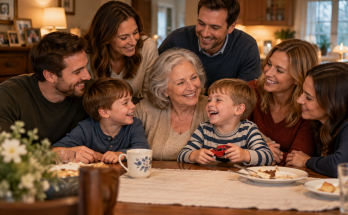

One Comment on “PART 6 TITLE: THE HOME WE THOUGHT WE HAD LOST”