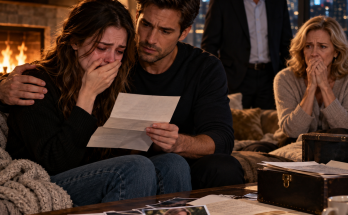
Claire kept the page inside the transparent sleeve as she drove home.
She had read it so many times that the words no longer seemed to form sentences. Her father's signature, Daniel's witness line, the $42,000 amount, and the date had become separate facts that refused to fit into a coherent story.
Daniel had admitted seeing the declaration after her father's death. He had admitted knowing that she was named as a beneficiary. He had even admitted that he recognized her surname when they met.
But he'd never explained the payment authorization.
The simplest explanation was that Daniel had been involved in an ordinary administrative transaction. He had witnessed a signature, perhaps as part of his work for Hartwell Advisory, and later forgotten the details.
Yet the rest of the documents made that explanation difficult to accept. The missing declaration, the attempted offset against her inheritance, and the debt that had followed him for years all suggested that the transaction had mattered far more than he'd admitted.
When Claire arrived home, Daniel was waiting in the study.
He stood as soon as she entered, his eyes moving toward the sleeve in her hand.
“You found it,” he said.
“You knew it existed.”
“I knew there was an authorization. I didn't know Michael had a copy.”
Claire placed the page on the desk.
“Your signature is beneath my father's.”
Daniel looked at it.
For several seconds, he didn't speak. Then he pulled out a chair and sat down, pressing his palms against his knees.
“I was asked to witness the transfer,” he said.
“By whom?”
“Arthur Hartwell.”
“Why?”
“Your father wanted the payment documented. It was supposed to cover administrative expenses connected to the estate.”
“What expenses?”
“I don't remember the exact details.”
Claire felt anger rising again. “You don't remember witnessing a payment of $42,000?”
“It was eleven years ago. I handled dozens of documents.”
“Then why did you recognize my father's name when you saw the declaration?”
Daniel rubbed his forehead.
“Because I remembered the payment. Not the circumstances, but the name.”
“Did you know he was my father?”
“Not until we were already dating.”
“Did you ever tell him you knew me?”
“No. I never spoke to your father.”
Claire studied his face.
“You expect me to believe that you witnessed a payment to my father, forgot the details, then discovered his name in the estate records and still didn't tell me?”
“I understand how it sounds.”
“Then explain how it actually happened.”
Daniel stood and walked toward the bookcase. He removed a thin folder from the lower shelf and brought it to the desk.
“I kept copies of some of the documents from the original transaction. I should have shown them to you before now.”
He opened the folder.
Inside were photocopies of the property financing agreement, a series of bank statements, and several letters exchanged between Daniel and Arthur Hartwell. The pages were yellowed at the edges, but the text remained legible.
Claire examined the first letter.
Arthur had written that the estate's reserve fund could not be released until the property transaction was settled. The letter referred to an administrative payment made to the original trustee and instructed Daniel to retain the signed authorization.
“Why did you keep this?” she asked.
“Because I was told to preserve the records.”
“By Arthur?”
“Yes.”
“Then why did you tell Evelyn the records were missing?”
“Because the original declaration was missing. I thought the other documents were insufficient to establish the beneficiary's rights.”
Claire turned to the next page.
It was a letter from Daniel to Arthur, dated several weeks after her father's death. Daniel had written that he was concerned the missing declaration could delay the estate indefinitely. He asked whether the reserve fund could be released without it.
Arthur's response was handwritten.
No. The declaration must be recovered. Do not approach the beneficiary until the matter is settled.
Claire looked up.
“You were instructed not to contact me.”
“Yes.”
“By a man who wasn't my father.”
“Arthur was the senior trustee.”
“And you followed his instruction.”
“I believed he was acting in the estate's interests.”
“Did you ever question why my father had been paid?”
Daniel looked away.
“I assumed it was legitimate.”
“Why?”
“Because Arthur said it was.”
Claire shook her head.
“You trusted Arthur's word, but you couldn't trust me with the truth.”
Daniel sat down.
“I was afraid the information would damage our relationship before we had a chance to build one.”
“You mean before I had a chance to decide whether I wanted one.”
He looked at her, unable to answer.
Claire turned back to the documents.
One letter contained a reference to a second payment, smaller than the first. It had been made to a company called Northbridge Holdings, the same name that appeared on the transfer she had made the previous evening.
The amount was $18,600.
The date was nine years earlier.
She placed the letter beside the bank confirmation from her laptop.
“Is Northbridge connected to the estate?”
Daniel examined the page.
“Yes.”
“Then why did my $150,000 go there?”
“Because Northbridge was appointed to administer the outstanding settlement.”
“Who appointed them?”
“Arthur Hartwell.”
“Why?”
“After the property dispute, Hartwell Advisory transferred its remaining claims to Northbridge. The company handled collections and negotiated repayment agreements.”
Claire read the letter again. Northbridge had not been a random recipient. It was the company that had taken over the debt, the same company that had accepted her money without resolving the estate dispute.
“Did you know the payment wouldn't end the matter?”
“I thought it would settle the financial claim.”
“Evelyn told me the agreement required the original records.”
“I know.”
“Then why did you let me believe the debt was the only problem?”
Daniel lowered his head.
“Because I thought if I could pay Northbridge, I could negotiate for more time to recover the declaration.”
“You used my inheritance to buy time.”
“I didn't know the estate had a reserve fund available.”
“You knew there was an estate.”
“Yes.”
“You knew I was named as beneficiary.”
“Yes.”
“You tried to offset your debt against that fund.”
Daniel's eyes closed.
“Yes.”
The admission left Claire feeling strangely empty. She had expected him to argue, to insist that she was misunderstanding the documents, or to blame Evelyn for manipulating the facts. Instead, he was finally acknowledging the decisions she'd been uncovering one by one.
It did not make them easier to forgive.
“Why didn't you tell me before I paid the debt?” she asked.
“Because I was ashamed.”
“Of what?”
“Of how long I'd allowed the situation to continue. Of the fact that I'd made promises I couldn't keep. Of knowing that the money might have been recoverable if I'd acted sooner.”
“Recoverable for whom?”
He looked at her.
“For you.”
Claire stepped away from the desk.
“You keep making me the reason for your decisions. You say you wanted to protect me, but every choice you made removed my ability to protect myself.”
Daniel stood, then stopped when she raised her hand.
“I know.”
“Do you? You had years to tell me. You had eleven weeks of watching me worry about you. You had an entire evening to explain the debt before I transferred the money. And when I did it, you told me I shouldn't have.”
His face crumpled slightly.
“I never wanted you to lose your savings.”
“Then you should have told me what I was paying for.”
He looked down at the papers.
Claire returned to the table and began sorting the documents. She placed the authorization beside the letters, then arranged the bank statements by date. The sequence was becoming clearer.
Her father had signed a payment authorization. Daniel had witnessed it. Arthur had ordered the records preserved. After her father's death, the declaration disappeared. Daniel was told not to contact the beneficiary, and he complied.
Years later, when the debt came due, he attempted to use the estate's reserve fund to settle it. That request was rejected because the beneficiary's consent was required.
The beneficiary was Claire.
The question was no longer whether Daniel had known about the estate. He had.
The question was why the declaration had been removed and what it contained that made everyone so determined to keep it from her.
“Who had access to the box after my father died?” she asked.
Daniel shook his head. “I don't know.”
“Evelyn's name was on the authorization.”
“She was a trustee.”
“Did she open it?”
“I don't know.”
“Did you?”
Daniel hesitated.
Claire stared at him.
“Did you open the box?”
He looked at the floor.
“Yes.”
The answer landed with quiet finality.
“When?”
“Several months after your father's death.”
“What did you find?”
“The declaration was already missing.”
“Was anything else gone?”
“I don't know. I didn't have an inventory.”
“Why were you there?”
“Arthur asked me to check whether the declaration had been returned.”
“Did you report that it was missing?”
“I told Arthur.”
“And then?”
“He instructed me not to take further action until he could speak to Evelyn.”
Claire felt her hands begin to tremble.
“You opened my father's safe deposit box, found that the most important document was missing, and did nothing.”
“I followed the instruction of the senior trustee.”
“You could have told me.”
“I didn't know you were the beneficiary then.”
“You said you saw the declaration after my father's death.”
“I saw a copy of the beneficiary list. I didn't know the name referred to you until we met.”
Claire looked at him for a long time.
“Did you ever ask Arthur whether he knew who I was?”
“No.”
“Did you ever ask Evelyn?”
“No.”
“Did you ever try to find out?”
Daniel's silence answered her.
Claire turned away. The study window reflected the two of them in pale afternoon light: Daniel standing beside the desk, surrounded by the records he'd kept hidden, and Claire near the doorway, holding the papers that had begun to dismantle the life she'd thought she understood.
Her phone rang.
Evelyn.
Claire answered and put the call on speaker.
“Mrs. Morgan,” Evelyn said, “I need to tell you something before you make any decisions about the estate.”
“I've just found the payment authorization.”
A pause followed.
“Then you've seen Daniel's signature.”
“Yes.”
“Did he explain why it was there?”
“He says he was asked to witness the transfer.”
“That's true.”
Claire looked at Daniel. He remained still.
“Then why did you authorize him to open the safe deposit box?”
“Because I believed he was the only person who could retrieve the declaration without exposing the estate to further claims.”
“Why was he the only person?”
“Because the document had been entrusted to Arthur, and Daniel had been handling the property settlement.”
“That doesn't answer the question.”
Evelyn sighed.
“Your father asked us to preserve the declaration until the estate's obligations were resolved. After he died, Arthur believed the safest option was to keep the matter confidential.”
“From me?”
“Yes.”
“Why?”
“Because your father feared that if the beneficiary were identified too early, someone might pressure her to surrender her rights.”
Claire thought of the $150,000 transfer, the debt collection letters, and the stranger who had watched her house.
“Who was he afraid of?”
“I don't know.”
“Did you ever see the original declaration?”
“Yes.”
“What did it say?”
Evelyn paused.
“It identified you as the beneficiary of the reserve fund. It also contained a separate instruction concerning the property transaction.”
“What instruction?”
“I can't remember the exact wording.”
“Evelyn.”
“I am not withholding it from you, Claire. I have never had the original document. I saw it once, years ago, and Arthur took it back afterward.”
Claire felt anger rise in her chest.
“Everyone seems to have seen this document except the person whose name is on it.”
“I understand your frustration.”
“No, I don't think you do.”
Evelyn fell silent.
Then she said, “There is something else. The day after your father died, I received a call from someone claiming to represent the estate. He said the declaration had been transferred to a different location for safekeeping.”
“Who called you?”
“The caller refused to give his name.”
“Did you recognize his voice?”
“No.”
“Did you tell Arthur?”
“Yes. He said he would investigate.”
“And did he?”
“I believe he did.”
Claire glanced at Daniel.
He had gone pale again.
“Did Arthur ever tell you what he discovered?” she asked.
“No.”
The call ended a few seconds later, with Evelyn promising to send copies of the correspondence she still possessed.
Claire turned to Daniel.
“You heard her.”
“Yes.”
“Someone claimed to have moved the declaration. You knew the document was missing, and you never told me that another person might have taken it.”
“I didn't know about the call.”
“But you knew enough to ask questions.”
He nodded slowly.
Claire gathered the papers into a single folder.
“I want you to give me every document you have, including the ones you haven't shown me. I also want the names of everyone you contacted about the estate.”
“I'll do that.”
“Today.”
“Yes.”
She started toward the door, then stopped when she noticed a small envelope tucked beneath the bottom folder.
It was sealed with yellowing tape and bore her father's handwriting.
Claire recognized the letters immediately.
Her father had written her name.
Not her full name, not an account number or a reference to the estate.
Just Claire.
She picked up the envelope.
Daniel moved toward her. “Where did you find that?”
“Here.”
He stared at the handwriting.
“I've never seen that before.”
Claire examined the seal. It had not been broken. Beneath her name was a date written in the corner, eleven years earlier, only three days before her father's death.
Her hands began to shake.
“Why was this in your files?”
Daniel swallowed.
“I don't know.”
Claire slid a finger beneath the flap and opened the envelope.
Inside was a single sheet of paper folded twice.
The message was brief, written in the careful handwriting she'd known since childhood.
Claire,
If you are reading this, the original declaration has been found, or someone has decided you deserve to know why it disappeared.
Do not sign anything concerning the estate until you have spoken to the person who witnessed the transfer.
The signature at the bottom was her father's.
Claire read the note again.
Then she looked at Daniel.
“You were the witness.”
He didn't speak.
She lowered the page and saw a second line beneath the signature, written so faintly that it was almost invisible.
Ask him what happened to the second account.
Claire lifted her eyes.
Daniel looked as though the floor had opened beneath him.
For the first time since the debt began, he appeared less afraid of what someone might do to him than of what Claire was about to discover.
Click here to continue reading: PART 9: The Second Account Held the Answer to Her Father’s Final Secret, and Daniel Finally Admitted What He Had Done
She Thought Saving Her Marriage Would Cost Her Everything, Until a Knock at Dawn Changed the Meaning of Her Sacrifice
Part 8 of 30