A year after Dad died, Mom asked us to come for Sunday dinner on the anniversary.
Not a memorial.
She was specific about that.
“Your father hated formal memorials.”
Thomas laughed.
“He hated formal anything.”
Sarah said, “He owned three suits.”
“Two,” Mom corrected.
“One was the same suit with a different tie.”
We laughed.
It felt strange.
Then natural.
The dining-room table was the same one where everything had begun.
The house still belonged to the estate structure Dad created.
Mom still had the right to live there for life.
Nobody argued about it anymore.
Thomas arrived from his rental with his wife and children.
Sarah drove her unimpressive used sedan.
She complained about the speakers before taking off her coat.
I wore Grandma’s bracelets.
Dad’s watch was on my wrist.
Mom noticed both.
She didn’t say anything.
She just smiled.
Dinner was roast chicken.
Dad’s favorite.
Mom overcooked it.
Also traditional.
Thomas carved.
Sarah poured wine for everyone except herself because she was driving.
I brought dessert.
No one asked me to bring more.
That might have been the greatest family reform of all.
Halfway through dinner, Mom stood.
“I have something.”
Thomas groaned.
“If it’s another inheritance meeting, I’m leaving.”
Mom laughed.
“No.”
She returned with three envelopes.
One for each of us.
My stomach tightened automatically.
Mom noticed.
“Nothing legal.”
“Good.”
She gave us the envelopes.
Inside mine was a photograph.
Dad and me.
I was perhaps eight.
Standing beside the red wardrobe.
Dad held a paintbrush.
My face had a streak of red across one cheek.
On the back, Mom had written a date.
I remembered the day.
Barely.
Dad had been repainting the wardrobe in the garage.
I wanted to help.
He gave me a brush.
I painted one side so badly that the red dried in ridges.
The ridges were still there.
I had seen them during restoration.
I just hadn’t remembered making them.
“Where did you find this?”
“Your father’s photo box.”
I touched the picture.
“He let me ruin the paint.”
Mom smiled.
“He said you were improving it.”
That sounded like Dad.
Thomas opened his envelope.
A photograph of him asleep on Dad’s chest as a toddler.
Sarah received one of herself holding Dad’s hand at the zoo.
Nobody spoke for a while.
Then Thomas said, “Dad was terrible at smiling in pictures.”
Sarah wiped her eyes.
“He looked like someone threatened him.”
Mom laughed.
“He hated cameras.”
I looked at my photograph again.
The wardrobe had been part of our family longer than most of my memories.
Grandfather’s.
Dad’s.
Mine.
After dinner, Thomas’s children ran outside.
Sarah helped Mom with dishes.
I began gathering plates.
Mom stopped me.
“No.”
“What?”
“Sit.”
“I can help.”
“I know.”
She took the plates from my hands.
“Sit anyway.”
I stared.
Then smiled.
“All right.”
I sat.
It was absurd how difficult that felt.
Thomas sat across from me.
“Growth.”
“Shut up.”
He laughed.
Mom carried plates into the kitchen.
Sarah called back, “Margaret, don’t you dare come in here.”
“I wasn’t moving.”
“You were thinking about it.”
She knew me too well now.
I stayed seated.
Dad’s chair remained empty at the head of the table.
For months, Mom had avoided sitting there.
She still did.
I no longer thought someone needed to fill it.
Some spaces could remain empty without making the room incomplete.
Later, Mom and I walked onto the porch.
The evening was cool.
She wrapped her cardigan tighter.
“How’s the company?”
“Good.”
“Really?”
“Mostly.”
“That sounds more believable.”
“We’re expanding the western warehouse.”
“Your father talked about that.”
“I know.”
“Would he approve?”
I thought.
“Probably of the expansion.”
“And the rest?”
“He’d complain about my software budget.”
Mom laughed.
“He complained about every software budget.”
“He’d like Priya.”
“He liked anyone who could prove him wrong with numbers.”
We stood quietly.
Then Mom said, “Do you ever wish you hadn’t opened the wardrobe?”
I considered it seriously.
“No.”
“Even knowing everything?”
“Yes.”
“I sometimes wish Richard had burned those papers.”
I looked at her.
She held up one hand.
“Sometimes.”
“Why?”
“Because there were mornings I woke up before remembering what I’d done.”
Her voice became quieter.
“Then I remembered.”
I didn’t tell her that guilt was useful.
That would have been cruel.
Instead I said, “I think Dad wanted us to stop living inside things nobody said.”
Mom nodded.
“He was part of that too.”
“Yes.”
She looked surprised.
“You can say that?”
“Dad wasn’t perfect.”
“No.”
“He should have talked to me.”
“Yes.”
“He should have stopped the pattern sooner.”
“Yes.”
“He should have let Thomas face consequences sooner.”
From inside, Thomas shouted, “I can hear you.”
Mom laughed.
“Good.”
I laughed too.
Then Mom grew serious.
“He thought protecting people was love.”
“So did you.”
“Yes.”
“Maybe all of us did.”
She touched my wrist.
Dad’s watch.
“I thought giving you less was safe because you could survive it.”
I looked at her.
“That was never fair.”
“No.”
She swallowed.
“You were never less important.”
“I know.”
This time I meant it.
Not because Mom finally said it.
Because I no longer needed her to prove it.
That was Dad’s largest gift.
Not the company.
Not the trust.
Not the house that would eventually return to the estate.
Not the investments.
Not even Grandma’s bracelets.
He had forced open the story I had told myself for years.
They give Thomas more because he matters more.
They rescue Sarah because she is loved more.
They ask Margaret to understand because Margaret comes last.
The truth was more complicated.
And, in some ways, sadder.
My family had leaned on me because I stood.
They had mistaken my endurance for permission.
Dad had seen it.
Too late, perhaps.
Imperfectly.
But he had seen it.
And in the end, he refused to let the pattern decide my future.
The next morning I went to the office early.
The building was nearly empty.
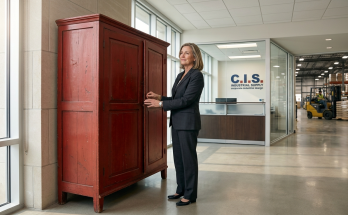
Sunlight entered through the glass doors and fell across the red wardrobe.
I stopped in front of it.
The paint was still cracked.
The scars remained.
One leg was new inside but matched carefully enough that most people never noticed.
I opened the doors.
Ran my hand across the wood.
Grandfather had owned it when it was useful because his family had little furniture.
Dad had kept it when everyone thought it ugly.
Mom hated it.
Thomas mocked it.
Sarah ignored it.
I carried it home because it was the only thing they gave me.
That sentence used to sound tragic.
It didn’t anymore.
They gave me the wardrobe.
Dad made sure they would.
Because he understood them.
And because, perhaps, he understood me.
He knew Thomas would choose the house.
Sarah would choose the gold and the car.
Mom would choose the distribution that created the least immediate resistance.
Everyone would overlook the scarred cabinet.
Everyone except me.
I opened the bottom drawer.
Dad’s notebook waited inside.
I removed it.
The first pages were business records.
Numbers.
Names.
Warnings.
Toward the back were notes that had nothing to do with money.
Thomas needs to learn that rescue can become permission.
Sarah needs confidence that isn’t purchased.
Helen believes helping is always kindness. It isn’t.
Then my name.
Margaret needs to know that asking for nothing does not mean she deserves nothing.
I stopped.
I had read that sentence before.
That morning it felt different.
I sat on the floor beside the wardrobe.
Owner of a company.
Beneficiary of a trust.
Woman wearing gold bracelets and an old scratched watch.
Still Dad’s daughter sitting beside an ugly red cabinet.
I turned the page.
One final note appeared near the bottom.
It was not dated.
Maybe Dad wrote it months before dying.
Maybe years.
I would never know.
Worth is often easiest to miss when everyone agrees something has none.
I smiled.
“Subtle, Dad.”
No answer.
I closed the notebook.
At nine, employees began arriving.
Phones rang.
The warehouse came alive.
My assistant passed the wardrobe.
“Morning, Margaret.”
“Morning.”
She stopped.
“I’ve been meaning to ask.”
“What?”
“Why do you keep that old thing here?”
I looked at the wardrobe.
There were many answers.
Because it held evidence.
Because it led me to Samuel.
Because it exposed the will.
Because it revealed the trust.
Because it led to Box 317.
Because it helped protect Dad’s company.
Because it forced my mother to tell the truth.
Because it forced Thomas to stop running from consequences.
Because it returned Grandma’s bracelets to me.
Because Dad’s last lesson had been hidden inside the one object everyone else considered worthless.
Instead I said, “It belonged to my father.”
My assistant smiled.
“That’s a good reason.”
“Yes.”
It was.
After she left, I closed the wardrobe doors.
I did not lock them.
There was nothing left to hide.
The house could be sold someday.
Cars wore out.
Gold could disappear.
Companies could succeed or fail.
Money moved.
Property changed hands.
Even Dad’s notebook would eventually become fragile.
But what the wardrobe had given me could not be redistributed at a dining-room table.
I knew what had happened.
I knew what belonged to me.
I knew what I could forgive without surrendering.
I knew that loving my family did not require making myself smaller for them.
And I finally knew that being the strongest person in the room did not mean I had to accept the smallest share.
Dad had left my brother believing he had a house.
My sister believing she had gold.
My mother believing she could keep the family peaceful by arranging everything before I asked questions.
And he left me a broken red wardrobe.
In the end, it was the only inheritance that contained what all of us had been missing.
The truth.
I touched the scarred red paint once more, then walked into my office and began the day.
The End
Read more original stories on Feel Every Story.