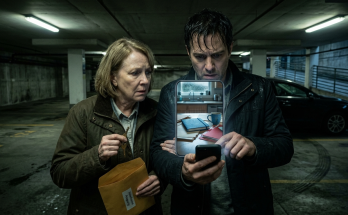
Detective Harris did not tell me who R.H. was immediately.
That irritated me more than I expected.
I had reached the point where uncertainty felt worse than bad news.
Every unanswered question had a history of becoming something ugly.
But Harris was careful.
“We need confirmation before we attach a person to initials.”
“You already have someone in mind.”
“Yes.”
“Who?”
“I’m not discussing it until we verify.”
Tessa sat across from me in the office, pretending to review payroll while listening to every word.
I looked at the ledger photograph again.
R.H.
The letters appeared beside transfers totaling more than ninety thousand dollars.
Not one payment.
Not two.
A pattern.
“What does Marcus say?”
“He claims he doesn’t know.”
“Do you believe him?”
“No.”
At least Harris still answered some questions directly.
“Does Brielle?”
“She isn’t speaking.”
That had changed too.
In the first hours after her arrest, Brielle apparently insisted the entire case was a misunderstanding.
Then she blamed Marcus.
Then me.
Then she requested an attorney.
Since then, silence.
I hated how relieved I felt.
Every accusation she made required someone else to spend time disproving it.
Silence, at least, stopped creating new fires.
“When will you know about R.H.?”
“When the evidence tells us.”
“Harris.”
“I know.”
Her voice softened.
“I understand this is personal.”
“It stopped feeling personal three hundred thousand dollars ago.”
“That’s not true.”
She was right.
Money was accounting.
Betrayal was personal.
I ended the call and looked at Tessa.
“She thinks she knows.”
“Of course she does.”
“What?”
“You make the same face every time someone withholds information.”
“What face?”
“The one that says you’re about to reorganize the universe until it answers.”
I ignored her.
“Payroll done?”
“Yes.”
“Supplier invoices?”
“Yes.”
“Victim file?”
Tessa’s expression changed.
“Twenty-three confirmed so far.”
I exhaled.
“Twenty-three.”
“Some had partial service.”
“Some had nothing.”
“Yes.”
The victims had begun dividing into categories.
People who paid inflated prices but received legitimate Maya’s Table catering.
People who paid for fake catering that never happened.
People who paid Brielle for other wedding services.
People who thought she represented me.
People who knew she had a separate “event coordination” business but had no idea that business used stolen vendor identities.
Each category carried different problems.
Insurance.
Taxes.
Civil claims.
Reputation.
My attorney had told me something I already understood.
Being innocent did not mean escaping consequences.
Customers wanted answers.
Vendors wanted assurances.
Banks wanted documentation.
My insurer wanted interviews.
Every institution required forms proving I had not done something I never knew was happening.
The labor of proving innocence became its own punishment.
At noon, Daniel arrived at the kitchen.
I had not seen him since the failed wedding.
He looked terrible.
Unshaven.
Tired.
Thinner somehow.
He stood in the doorway holding a cardboard box.
“I found more documents.”
I let him into my office.
Tessa disappeared tactfully.
Daniel set the box on my desk.
“Her apartment?”
“Our apartment.”
The correction hurt him.
“What did you find?”
“Everything I should have looked at six months ago.”
He pulled out folders.
Insurance.
Property information.
Receipts.
Bank documents.
One file held travel confirmations for trips Daniel had never taken.
“Who went?”
“I don’t know.”
Then he showed me photographs.
Brielle at restaurants.
Hotels.
A beach resort.
In several, someone had been deliberately cropped out.
An arm.
A shoulder.
A hand holding a drink.
“Marcus?” I asked.
“That’s what I assumed.”
“Now?”
“I’m not sure.”
He handed me a receipt.
A hotel charge under another name.
Rebecca Hale.
R.H.
I stared.
“Who is Rebecca Hale?”
Daniel sat.
“My cousin.”
I looked at him.
“What?”
“Second cousin. Technically.”
“Does Brielle know her?”
“She introduced them.”
“When?”
“Two years ago.”
My pulse accelerated.
“What does Rebecca do?”
“Financial planning.”
Of course.
Nothing could be simple.
“What kind?”
“Investments. Private clients. Retirement accounts.”
I stood.
“Call Harris.”
Daniel already had his phone out.
Within forty minutes, the detectives were at my kitchen.
I closed the front office to customers.
Harris examined the hotel receipt.
“Where did you find this?”
Daniel explained.
“Tell me about Rebecca.”
He did.
Rebecca Hale had worked for a regional financial-services company until about eight months earlier.
She left suddenly.
Daniel believed she started consulting independently.
“Why?”
“No idea.”
“Were you close?”
“Not really.”
“Did she attend the wedding?”
Daniel stared at her.
“She was invited.”
“Did she come?”
“No.”
His face changed.
“She texted that morning saying she was sick.”
Harris and Miller exchanged a look.
I noticed.
“What?”
“Nothing yet.”
I was beginning to hate that phrase.
Miller opened his laptop.
“Do you have Rebecca’s number?”
Daniel did.
“Current address?”
He searched.
“I have an old one.”
The detectives took everything.
Before leaving, Harris asked one more question.
“Did Rebecca ever discuss investments with Brielle?”
Daniel frowned.
“Once.”
“When?”
“Last year.”
“What did she say?”
“Brielle told me Rebecca had an opportunity.”
“What opportunity?”
“I didn’t pay attention.”
“Why not?”
“Because I don’t invest in anything I don’t understand.”
I almost laughed at the contrast.
Apparently Daniel had one instinct Brielle could not manipulate.
“What happened?”
“She got annoyed.”
“Did Brielle invest?”
“She said no.”
We all knew what that answer was worth.
After the detectives left, Daniel remained.
He looked at the fake catering documents pinned to my investigation board.
Yes, I had made a board.
Tessa mocked it constantly.
But organizing facts helped me breathe.
Daniel pointed at one transaction.
“That date.”
“What?”
“That was when Brielle asked to postpone our honeymoon.”
“Why?”
“She said work.”
“Whose work?”
“Mine, apparently.”
He laughed bitterly.
“She always had explanations ready.”
I understood.
“Did you ever catch her lying before this?”
“Small things.”
“Like?”
“Where she bought something. How much she paid. Who she had lunch with.”
“That doesn’t sound small now.”
“No.”
He looked at me.
“Did you?”
“With Brielle?”
“Yes.”
I thought about childhood.
Teenage years.
Adulthood.
The answer depended on how we defined lying.
Brielle had always edited reality.
She borrowed clothes and forgot.
Spent money and minimized.
Made promises and revised what she had meant.
But family language protected her.
Forgetful.
Emotional.
Impulsive.
Dramatic.
Nobody called it manipulation because that sounded too serious.
“Yes,” I said.
“All the time.”
Daniel closed his eyes.
“I thought I was the exception.”
“That’s what people think when someone makes them feel chosen.”
He looked at me.
The sentence had come out harsher than intended.
“Sorry.”
“No.”
He nodded.
“That’s exactly what she did.”
We sat in silence.
By evening, Harris called.
They had located Rebecca.
She had been preparing to leave the state.
Police intercepted her at an airport.
“What did she have?”
“Cash.”
“How much?”
“Forty-seven thousand.”
My stomach dropped.
“Brielle’s?”
“We’re working on that.”
“Did she say anything?”
“She asked for an attorney.”
Of course.
“What do the records show?”
Harris hesitated.
Then gave me more than she usually did.
“Rebecca appears connected to several accounts receiving money from Brielle and Marcus.”
“How?”
“Investment vehicles.”
“Real ones?”
“Some.”
“Meaning?”
“Some funds went into legitimate brokerage accounts. Others appear to have been routed through businesses with little genuine activity.”
“Was Brielle laundering money?”
“That determination belongs to prosecutors.”
I rubbed my forehead.
“Why would she send Rebecca ninety thousand dollars?”
“We found evidence suggesting Rebecca helped her create documentation to make illegal income appear legitimate.”
The room felt suddenly smaller.
“So Rebecca knew?”
“That remains under investigation.”
“How did Daniel factor in?”
Another pause.
“We believe Brielle intended to use his financial profile.”
I stood.
“What?”
“She had copies of his identification.”
“They were engaged.”
“She also had draft applications using his income.”
“For what?”
“Loans.”
My stomach dropped.
“Did he sign?”
“We don’t believe so.”
“What loans?”
“Property. Business credit.”
I called Daniel.
He answered on the first ring.
When I told him, he went silent.
Then he said, “I gave her documents.”
“What?”
“For the mortgage we were planning after the wedding.”
Of course.
Tax returns.
Income statements.
Identification.
Credit information.
Everything Brielle would need.
“I thought we were buying a house next year.”
Instead, she may have been building a financial exit.
Harris later confirmed one application had already been submitted.
Not approved.
But submitted.
It used Daniel’s income and claimed a business relationship with one of Brielle’s shell entities.
He had never seen it.
The fraud had almost expanded into his credit.
That night, Daniel and I sat in my office again.
He stared at the application.
“She was going to marry me.”
“I know.”
“How do you steal someone’s identity while planning vows?”
I had no answer.
Maybe Brielle did not experience contradiction the way we did.
Maybe every relationship was useful until it wasn’t.
Love and exploitation could coexist in her mind as long as she got what she wanted.
I hated thinking that.
She was still my sister.
There were memories I could not reconcile with the woman in the evidence.
A seven-year-old asleep against my shoulder during a thunderstorm.
A teenager crying when her first boyfriend broke up with her.
A young woman bringing soup when I had the flu.
Were those moments fake?
I didn’t think so.
That was what made everything harder.
People did not become simple because they did terrible things.
Brielle had loved people.
She had also used them.
Both could be true.
The next morning, Harris asked me to identify several documents recovered from Rebecca’s luggage.
One was a business proposal.
The company name belonged to Brielle.
The plan described a regional event-services platform.
Catering.
Florals.
Venues.
Photography.
Luxury coordination.
My company appeared in the document as an “affiliate partner.”
I had never seen it.
Projected annual revenue exceeded two million dollars.
Tessa read over my shoulder.
“She was trying to build a company.”
“With stolen infrastructure.”
Further pages showed expansion plans.
New cities.
Franchise concepts.
Investor targets.
Brielle had not been stealing merely to spend.
She had been trying to transform theft into a legitimate empire.
My company was supposed to become the foundation beneath it.
That realization changed my anger.
She had not simply taken money behind my back.
She had planned a future where one day I might discover the theft only after her company had become large enough to make confrontation difficult.
Maybe she expected to repay things quietly.
Maybe she thought success would erase the method.
Maybe she believed money turned wrongdoing into business.
Then I reached the final page.
Investor notes.
One handwritten line appeared beside my company name.
Maya can be brought in later once numbers prove concept.
I stared.
Tessa whispered, “She thought you’d join her.”
Maybe.
Or maybe Brielle had believed the same thing she had always believed.
That eventually I would adapt.
Eventually I would forgive.
Eventually I would decide protecting family mattered more than what had been taken.
I photographed the sentence.
It was the clearest explanation of her confidence I had seen.
She had not feared me discovering the scheme.
She had planned around my forgiveness.
That afternoon, Harris called again.
Rebecca had begun cooperating.
“She says Brielle promised to legitimize all the money eventually.”
I laughed.
“Eventually.”
“Yes.”
“What does that mean?”
“According to Rebecca, Brielle believed her event company would grow fast enough to repay diverted funds before anyone noticed.”
“She stole from customers to fund a startup?”
“That’s one way prosecutors may characterize part of it.”
“And Rebecca helped?”
“She disputes how much she knew.”
“Of course.”
“However, she gave us access to additional files.”
“What files?”
“Financial projections.”
“I’ve seen the business plan.”
“These are different.”
Harris paused.
“They include a schedule for repaying money taken under Maya’s Table.”
My stomach tightened.
“So she planned to put it back.”
“Some of it.”
That distinction mattered.
“How much?”
“About seventy thousand.”
Out of hundreds of thousands.
Generosity by Brielle’s standards.
“Anything else?”
“Yes.”
“There always is.”
Harris ignored that.
“One line item references a payment to your parents.”
I stopped.
“Dad’s ten thousand?”
“No.”
My chest tightened.
“How much?”
“Fifty thousand dollars.”
I stared at the wall.
“My parents never received fifty thousand.”
“We know.”
“What does it mean?”
“That’s what we need to determine.”
The description beside the payment read simply:
FAMILY BUYOUT.
I had no idea what that meant.
Neither did Dad.
Neither did Mom.
But Brielle had planned to spend fifty thousand dollars on something involving them.
Something she expected would help secure her future.
And suddenly the family damage was not merely behind us.
It was sitting in the plan she had intended to execute next.