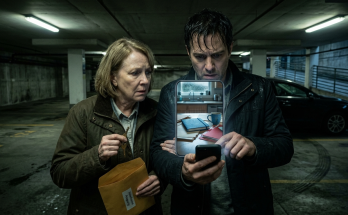
By seven the next morning, Denise had already placed agents near Lake Mercer.
I knew because she called before I had finished my first cup of coffee.
“We’re not waiting until noon,” she said.
“You think Richard is already in trouble.”
“I think his message was written by someone who expected trouble.”
I stood at my kitchen window watching rain gather against the glass.
“Did you find him?”
“Not yet.”
“His car?”
“No.”
“Phone?”
“Off.”
That was worse than disconnected.
Richard had spent enough years hiding to know how to disappear.
The question was whether he had done it voluntarily.
“I’m coming.”
“No.”
“Denise.”
“Susan, the lake is potentially connected to evidence Richard concealed for twenty years. We don’t know who else may know the location.”
“I know the location better than any of you.”
“We have maps.”
I almost laughed.
“You have maps of Lake Mercer. You don’t have a map of my childhood.”
Silence.
Then she asked, “What exactly does that mean?”
“Our father didn’t fish from the public dock.”
“Where did he go?”
“There was an old service road on the north side. It led to a narrow inlet behind an abandoned bait shop.”
“Still there?”
“I don’t know.”
Denise was quiet again.
“That information would have been useful yesterday.”
“You didn’t ask where Dad taught us to fish.”
“Fair.”
An hour later, Robert picked me up.
Sam was in the front passenger seat.
I stopped beside the vehicle.
“No.”
Robert looked back.
“He insisted.”
“Then he can insist from another car.”
Sam turned.
“Susan, Richard is my problem too.”
“No. Richard is my brother.”
“And he helped me disappear.”
“Exactly.”
Robert rubbed his forehead.
“I would very much like to reach the lake sometime this morning.”
I got in.
Sam said nothing during the drive.
Neither did I.
Rain softened the highway into gray streaks. The farther north we traveled, the more familiar the landscape became. Strip malls disappeared. Pines crowded the road. Small houses sat behind wet lawns.
Lake Mercer had once felt enormous to me.
When Richard and I were children, our father woke us before sunrise, packed sandwiches in wax paper, and drove us there in an old green truck that smelled of gasoline and tobacco.
Richard hated worms.
I hated removing fish from hooks.
Our father pretended not to notice either weakness.
He believed children improved through inconvenience.
The main entrance to the lake had changed.
A paved parking lot replaced the gravel clearing. There were picnic tables, signs about invasive species, and a new wooden dock.
Agents waited there.
Denise walked toward us.
“Show me the inlet.”
We drove another mile along the main road before I recognized a bend.
“There.”
Robert slowed.
A narrow opening in the trees was nearly hidden behind brush.
The old service road remained.
Barely.
Two SUVs could not fit, so we continued on foot.
The rain had thinned to mist.
Branches brushed my coat.
The ground sucked at my shoes.
Sam walked several paces behind me.
I could feel his presence without looking.
“That tree used to have a tire swing,” I said.
No one answered.
I wasn’t speaking to anyone in particular.
Memory kept rising from the landscape.
A boulder where Richard once split his knee.
A ditch where our father got the truck stuck.
The hill where I claimed to see a bear and made Richard run half a mile before admitting it was a stump.
Then we reached the inlet.
The bait shop had collapsed.
Only one wall remained upright.
The water beyond it was dark and still.
Robert scanned the area.
“Where would Richard hide something?”
I looked around.
“If he meant Dad taught us to fish, not just Lake Mercer, there’s only one place.”
I walked toward the water.
Our father had kept a rusted metal tackle box beneath loose boards in a tiny storage shed. The shed was gone, but part of its concrete foundation remained.
I knelt.
There were four large stones near the edge.
Three were natural.
One looked wrong.
Too square.
I pointed.
“That wasn’t here.”
Robert stopped me before I touched it.
An agent photographed the area, then lifted the stone with gloves.
Beneath it was a plastic container wrapped in black tape.
My heart began pounding.
“Richard.”
The agent opened it.
Inside were two sealed bags.
One contained a thick handwritten ledger.
The other contained photographs, old floppy disks, and several envelopes.
Denise exhaled.
“That’s our contingency.”
Sam stared at the ledger.
“I never saw that.”
Robert looked at him.
“Good.”
He sealed the box for transport.
I looked toward the lake.
“Then where is Richard?”
No one had an answer.
One of the agents called from the collapsed bait shop.
“We have blood.”
Everything inside me tightened.
I turned.
A dark smear marked one broken board.
Not much.
Enough.
“Fresh?” Denise asked.
“Likely within twenty-four hours.”
I walked toward it.
Robert stopped me.
“Susan.”
“That could be my brother.”
“I know.”
“You keep saying that.”
His expression softened.
“I know because I have a brother too.”
That silenced me.
The agents spread out.
Twenty minutes later, someone found tire impressions deeper in the mud.
Two vehicles.
One had arrived recently.
The second had left in a hurry.
Then they found Richard’s phone.
It had been smashed beneath a rock.
Denise picked up one fragment.
“This was deliberate.”
“Could Richard have done it?”
“Yes.”
“Would he?”
She looked at me.
“You know him better.”
I stared at the shattered phone.
Richard could be cautious.
He could be secretive.
He could run.
But he was sentimental about objects in ways he pretended not to be.
He once carried the same pocketknife for thirty years because our father gave it to him.
Destroying his phone seemed wrong.
“No.”
Denise nodded.
“I agree.”
Sam moved toward the waterline.
“There are tracks here.”
Agents followed.
A partial shoe print descended toward the shore.
Then another.
Then scuffed mud.
A struggle.
I felt sick.
“Did someone put him in a boat?”
“Possibly.”
A small aluminum fishing boat was missing from a nearby rack.
The owner arrived after agents contacted him.
He swore it had been chained.
The chain had been cut.
Denise organized a search of the water and shoreline.
I stood beneath a pine while rain collected on my hair.
Sam approached cautiously.
“I’m sorry.”
I did not look at him.
“For which thing?”
“For Richard.”
“We don’t know he’s dead.”
“I didn’t say that.”
“Everyone keeps speaking as though we’re already preparing ourselves.”
“Susan.”
I turned.
“If he is alive, I want to be angry at him while he is alive.”
Sam nodded.
“That makes sense.”
“If he is dead, I don’t want anyone telling me his secrets killed him.”
“I won’t.”
“They were his choices.”
“Yes.”
I looked toward the lake.
“Yours too.”
“Yes.”
For once, he did not defend himself.
That almost hurt more.
Around ten-thirty, Robert called us back toward the foundation.
They had opened one envelope from the cache.
Inside were photocopies of checks.
Hundreds of thousands of dollars had moved through shell companies.
One name appeared repeatedly.
CALDER DEVELOPMENT GROUP.
“Is that our Calder?” I asked.
“Likely,” Denise said.
“Real company?”
“It existed.”
“Who owned it?”
“We’re checking.”
Sam studied the check copies.
“There.”
He pointed to a signature.
E.C.
“Who?”
“I don’t know.”
Denise turned to another document.
A corporate filing.
The registered agent was Leonard Thompson.
Another name appeared under beneficial interest.
Elias Calder.
Robert looked at Denise.
“We have a real identity.”
“Maybe.”
“You think alias?”
“Very possibly.”
Sam shook his head.
“Martin never used a first name.”
“You never saw this?”
“No.”
I looked at the ledger.
“Richard knew.”
“Yes.”
“And he kept it hidden for twenty years.”
Denise closed the evidence bag.
“Which means Richard had leverage the entire time.”
That bothered me.
“If he had leverage, why live afraid?”
“Because leverage only works if the other side believes you’ll use it.”
Richard had never been good at decisive threats.
He complained.
He maneuvered.
He rationalized.
But committing himself to a point of no return frightened him.
Maybe Calder knew that.
One of the search agents returned quickly.
“We found the boat.”
My knees weakened.
“Where?”
“Quarter mile east, against reeds.”
“Anyone in it?”
“No.”
We followed to the shoreline.
The boat had drifted into shallow water.
There was blood on one bench.
More than at the bait shop.
A torn piece of blue fabric caught on a bolt.
I recognized it.
Richard owned a blue canvas jacket.
He had worn it in pictures he sent me two winters earlier.
I covered my mouth.
Sam stepped toward me.
I raised one hand.
He stopped.
Denise looked inside the boat.
“No body.”
“That’s supposed to comfort me?”
“It means we don’t assume the worst.”
“Then what do you assume?”
“That someone was injured.”
“Richard.”
“Probably.”
“And taken where?”
“We need to determine that.”
The search expanded.
Divers arrived.
Dogs worked the shoreline.
By noon, Richard had not called.
His contingency had activated exactly as he expected.
I stared at my phone at 12:01.
Nothing.
At 12:05, Denise approached with another envelope from the cache.
“This one is addressed to you.”
My name was written in Richard’s hand.
SUE.
I opened it.
Inside was a letter dated three weeks earlier.
He had expected me to read it only if things went wrong.
Sue,
If you have this, I probably ran out of ways to pretend the past had finished with us.
I stopped.
My hands shook.
Richard admitted everything Sam had already revealed.
He described taking Delaney money.
Helping Sam leave.
Lying to me.
But then he wrote something new.
Calder had approached him six years ago.
The same year Richard supposedly moved to Florida.
Calder wanted the ledger.
Richard refused.
After that, Richard left Michigan permanently.
He had not drifted from me.
He had deliberately reduced contact so nobody could use me to find him.
I almost laughed from anger.
Again.
Another man protecting me by removing my right to understand my own life.
I kept reading.
If Calder finds out Jared opened Leonard’s files, he will clean up everyone connected to them.
Not frighten.
Not negotiate.
Clean up.
That phrase made my stomach turn.
Richard wrote that Martin had spent years insulating Calder from direct exposure.
Leonard had done the same through legal entities.
Now Leonard was dead.
Martin was compromised.
Jared had reopened old files.
Sam had returned.
The structure protecting Calder was collapsing.
Then came the sentence that mattered most.
Calder is not a stranger to you.
I stopped breathing.
I read it again.
Calder is not a stranger to you.
Below it:
Ask Sam what happened at your father’s funeral.
I looked up.
Sam had been watching my face.
“What?”
I held out the letter.
“Richard says I know Calder.”
Sam read.
Then his expression changed.
“What happened at my father’s funeral?”
He did not answer.
“Sam.”
“There was a man.”
“What man?”
“He came late.”
“My father knew hundreds of people.”
“This one didn’t sign the guest book.”
“Who was he?”
Sam looked toward the lake.
“I thought he was one of Richard’s business contacts.”
“Name.”
“I never knew.”
“What happened?”
“He spoke with Richard outside.”
“And?”
“They argued.”
“About what?”
“I couldn’t hear.”
“You never told me.”
“I didn’t think it mattered.”
I almost screamed.
Twenty years of my life had been built on men deciding what mattered.
Denise asked, “Can you describe him?”
Sam did.
Tall.
Gray at the temples even then.
A scar beneath his left ear.
Expensive coat.
Heavy gold watch.
Robert began searching records.
An agent brought over one of the old photographs from Richard’s cache.
“There are several unidentified people here.”
We spread them across a folding table.
Company dinners.
Construction sites.
Golf outings.
Political fundraisers.
Then I saw him.
Not because I recognized his face immediately.
Because I recognized the watch.
My father had hated flashy jewelry.
At his funeral, I remembered a man standing near the cemetery gate with an oversized gold watch catching the sun.
At the time, I assumed he was someone from Richard’s business.
I pointed.
“Him.”
Denise took the photo.
The man stood beside Martin Vale.
On the back, Richard had written:
E.C. / Calder / 1998.
My skin went cold.
Robert returned with a tablet.
“We found Elias Calder.”
The screen showed an old corporate photograph.
Same man.
Older now.
Scar beneath the ear.
Gold watch.
“Where is he?”
Robert scrolled.
“Officially?”
“Yes.”
“Retired. Residence in Hilton Head, South Carolina.”
Georgia and South Carolina.
Close.
Richard had been near Savannah.
“He was near Richard.”
“Possibly.”
My phone rang.
Unknown number.
Everyone froze.
Denise gestured for me to answer on speaker.
“Hello?”
Breathing.
Then Richard’s voice.
Weak.
“Sue.”
I gripped the phone.
“Where are you?”
“I don’t know.”
“Are you hurt?”
“Yes.”
Denise signaled agents.
“Can you see anything?” I asked.
“Dark room.”
“Who has you?”
Silence.
Then Richard whispered one word.
“Calder.”
A second voice came onto the line.
Smooth.
Older.
“Mrs. Miller.”
My entire body went cold.
I recognized the voice.
Not from childhood.
Not from my father’s funeral.
From three years earlier.
A man had called me after my furnace broke, claiming to represent a local assistance program.
He had asked questions about my finances.
My household.
Whether anyone lived with me.
I had forgotten the call.
Until that moment.
“Elias.”
He chuckled.
“So Richard finally gave you a name.”
“Let him go.”
“Bring me what he took.”
“The ledger?”
“Yes.”
“It belongs to federal investigators now.”
Silence.
That was information he had not expected.
“You’re lying.”
“No.”
Richard cried out in the background.
I gripped the phone.
“Stop.”
Calder’s voice hardened.
“You have until sunset to recover it.”
“I can’t.”
“Then your brother pays for your cooperation.”
“You’ve been hiding for twenty years.”
“No, Mrs. Miller.”
His voice became almost pleasant.
“I’ve been living very comfortably.”
The call ended.
I lowered the phone.
Denise immediately began giving orders.
They had traced only part of the connection.
But it was enough to narrow a region.
Robert looked at me.
“You did well.”
I stared at Richard’s letter.
“No.”
“What?”
“I gave Calder exactly what he needed.”
“What?”
“He now knows the ledger is out of his reach.”
Denise understood before Robert did.
“That changes Richard’s value.”
“Yes.”
As leverage, my brother mattered.
As a source who had already surrendered his evidence, he became a liability.
I looked toward the lake where Richard had hidden the truth for twenty years.
“We have until sunset,” I said.
Denise shook her head.
“No.”
“What?”
“We have less.”