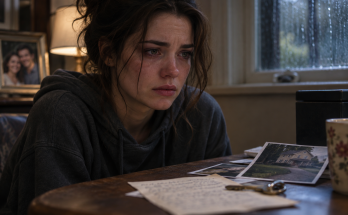
I thought I had learned everything there was to know about my parents' decision to miss the funeral.
Then Daniel called about Susan.
I was sitting at the kitchen table, reading the latest foundation documents, when his name appeared on my phone.
It was 9:18 on a Tuesday morning.
Lily's purple pencil rested beside my notebook.
Ethan's coffee mug sat on the shelf above the counter.
And Noah's sneakers were still underneath the hallway bench.
Nothing in the house had changed.
But the person living inside it had.
I answered the phone.
"Good morning, Daniel."
"Good morning, Claire. I've spoken with Susan."
I put down my pencil.
"Did she remember anything else?"
"Quite a bit, actually."
I sat straighter.
Daniel explained that Susan had agreed to provide a written account of what she remembered from Melissa's birthday celebration.
She had reviewed the date.
She had confirmed who attended.
And she had described the conversations she personally heard.
I looked toward the window.
"Did she know about Ethan and the children?"
"Not when she arrived."
I swallowed.
"Then how did she find out?"
Daniel paused.
"Your mother mentioned the accident during the dinner."
I closed my eyes.
The image came immediately.
My parents sitting at a restaurant.
Melissa surrounded by friends.
Birthday decorations.
People eating and laughing.
And somewhere in the middle of that celebration, my mother mentioning that my husband and children had died.
As though she were explaining why someone couldn't attend.
I pressed my fingers against my forehead.
"What did she say?"
Daniel spoke carefully.
"According to Susan, your mother explained that you'd suffered a terrible loss, but that Ethan's parents were taking care of the arrangements."
I stared at the table.
I remembered Margaret holding me upright at the cemetery.
Robert standing beside his son's casket.
The two of them grieving so deeply that I wondered how they were still breathing.
And my mother had apparently treated their presence as a reason she didn't need to come.
Daniel continued.
"Susan says someone asked whether your parents needed to leave."
My chest tightened.
"What did they say?"
"She remembers your father saying that the arrangements were being handled."
I couldn't speak.
Daniel waited.
Then he added, "Susan was clear that she didn't hear every conversation that evening."
I nodded.
That mattered.
I didn't want her to exaggerate anything.
I wanted the truth.
Only the truth.
"Did she say anything about Melissa?"
"She remembers Melissa being upset that people were discussing the accident during her celebration."
I closed my eyes.
Of course.
Even then, Melissa had wanted the attention returned to her.
I remembered the text my mother sent three days after the funeral.
Melissa felt hurt that you didn't call her on her birthday.
For months, I had tried to understand how anyone could write those words to a woman who had just buried her family.
Now I understood a little more.
My parents had spent that evening protecting Melissa's feelings.
They had spent the months afterward protecting their own reputation.
And when the settlement appeared in the newspaper, they began protecting the money they imagined should belong to them.
Not once had they protected me.
"Claire?"
Daniel's voice brought me back.
"I'm here."
"Are you all right?"
I looked at the empty chair beside me.
"No."
He waited.
"But I want you to keep going."
He explained that Susan's account could help establish what was said at the dinner if my father continued making claims about the family's support.
It did not prove every conversation.
It did not automatically resolve the legal dispute.
But it was a firsthand account from someone who had been present.
I appreciated that Daniel didn't make it sound bigger than it was.
I had already lived through too many people trying to change the meaning of facts.
"Has my father responded to the rejection?" I asked.
"Yes."
I closed my eyes.
"What did he say?"
"His attorney sent another letter yesterday."
I looked toward the blue folder in the drawer.
The folder containing every demand.
Every accusation.
Every attempt to make me feel guilty.
"Is he still asking for a million dollars?"
"He's no longer repeating that exact proposal."
For a moment, I felt relieved.
Then Daniel continued.
"He's suggesting a formal review of your decision-making process concerning the foundation."
I rubbed my forehead.
"So he's still trying to interfere."
"Yes."
I took a breath.
"Does he have any evidence that I couldn't understand what I was signing?"
"Nothing presented to us establishes that."
I looked at the foundation documents.
The notes I had made.
The questions I'd asked.
The meetings I'd attended.
I remembered sitting across from Daniel while he explained the fifteen-million-dollar commitment.
I remembered asking him to go through the numbers again.
I remembered signing only after I understood the arrangements.
I hadn't made those decisions in one frightened afternoon.
I had made them over months.
And I hadn't changed my mind.
"Then I want to keep going," I said.
"We will."
After the call, I sat in the kitchen for a long time.
The clock above the stove ticked.
A car passed outside.
The refrigerator hummed.
Ordinary sounds.
I had once hated those sounds.
After the accident, silence had frightened me because it meant the children weren't home.
But lately, I had begun to notice something else.
The house could be quiet without becoming empty of love.
Their photographs were still there.
Their belongings were still there.
And I was still there.
I made another cup of tea.
Then I opened Lily's drawing.
Four figures beside a house.
Ethan.
Me.
Lily.
Noah.
I ran my finger over the uneven letters.
Then I whispered, "I'm still trying."
That afternoon, Aunt Ruth came over.
She brought a small box of photographs.
I had asked whether she had any more pictures from the summer before the accident.
She found twelve.
Some were blurry.
Some had someone's finger covering part of the picture.
One showed Noah running across the yard with a plastic bucket on his head.
I laughed when I saw it.
Ruth smiled.
"He insisted it was a helmet."
I shook my head.
"That sounds like him."
We spread the photographs across the kitchen table.
Lily holding a watermelon slice.
Noah chasing bubbles.
Ethan standing beside the grill.
One picture showed me sitting on the porch steps with both children leaning against me.
I didn't remember Ruth taking it.
I stared at the photograph.
Lily had one hand wrapped around my arm.
Noah was resting his head against my shoulder.
I looked tired.
But happy.
Terribly happy.
Ruth sat beside me.
"That was a good afternoon."
I nodded.
"I didn't know how good."
She touched my hand.
"Nobody ever does."
We sat quietly.
Then I told her about Susan.
Ruth listened.
Her expression changed when I described what had been said at the birthday dinner.
She lowered her eyes.
"I wish I could say something that made it easier."
I shook my head.
"You don't have to."
She looked at me.
"I mean that, Ruth."
My voice trembled.
"You came."
Her eyes filled.
"When I needed someone, you came."
She squeezed my hand.
"I loved those children."
I nodded.
"I know."
That was the difference.
Love hadn't required an explanation from her.
She heard about the crash from a neighbor.
She got into her car.
She drove six hours.
And she came.
Nobody had needed to convince her.
Later that afternoon, I showed Ruth the foundation documents.
I explained the first grant recommendation.
The proposed driver fatigue education program.
The oversight requirements.
The questions we were still reviewing before any final approval.
Ruth listened carefully.
Then she looked at Lily's photograph.
"She would have asked whether the money could buy more school buses."
I laughed.
"She probably would have."
Ruth smiled.
"And Noah would have asked for a dinosaur."
I looked at his picture.
"He would have asked for a hundred dinosaurs."
We laughed together.
Then we cried.
I was beginning to understand that both could happen in the same conversation.
Grief didn't always arrive alone.
Sometimes it brought a memory worth smiling about.
After Ruth left, I put the photographs into an album.
I didn't hide them in a drawer.
I placed the album on the living room shelf beside Ethan's old family pictures.
Then I made dinner.
One plate.
One glass.
One chair.
It still hurt.
But I ate.
I was learning that taking care of myself wasn't the same as moving on without them.
The following morning, Daniel called again.
He had finished reviewing Susan's written account.
He wanted to know whether I would authorize him to send a limited response to my father's attorney addressing the latest accusations.
I agreed.
He explained what he intended to include.
The documented history of my legal representation.
The repeated meetings.
The foundation's independent administrative and financial oversight.
And the fact that my father's claims about family support did not give him authority over my decisions.
I listened carefully.
Then I asked about Susan.
Daniel explained that he would preserve her statement and use it only where relevant and appropriate.
I nodded.
"Good."
I didn't want Susan dragged into a public fight unnecessarily.
She had already done something important.
She had told the truth when telling it was uncomfortable.
I appreciated that.
Three days passed.
I worked on foundation materials.
I went grocery shopping.
I visited the cemetery.
I ate dinner with Margaret and Robert.
For a little while, my life began to have a routine that didn't revolve around my parents.
Then Friday arrived.
At eleven that morning, I received an email from Daniel.
The subject line was short.
Response received.
I called him.
He answered immediately.
"Claire."
"What happened?"
"Your father's attorney has acknowledged our response."
I waited.
"He's requested additional time to review the documents and discuss the matter with his client."
I stared at the kitchen window.
"Does that mean they're stopping?"
"Not necessarily."
I nodded.
"All right."
Daniel continued.
"But we haven't received a formal court filing establishing any claim against your settlement or foundation."
I felt my shoulders relax.
It wasn't over.
But it wasn't the disaster I had imagined.
My father couldn't simply write an angry letter and take control of the money.
He couldn't turn my grief into proof that I was incapable of making decisions.
And he couldn't force the foundation to become a family checking account.
Not without a legal basis he had yet to establish.
I thanked Daniel.
Then I went for a walk.
The air was cold.
I wore the scarf Ethan had given me two Christmases earlier.
It was dark green.
He had picked it because he said it matched my eyes.
It didn't.
Not even close.
But I loved it anyway.
I walked past houses where children had left bicycles in the driveways.
One little boy was trying to climb onto a red scooter.
His mother stood beside him.
"Helmet first," she said.
He complained.
She held out the helmet.
He put it on.
I stopped walking.
For a second, I couldn't breathe.
Noah had argued about helmets too.
He hated the strap beneath his chin.
Ethan always insisted.
I looked away.
Then I kept walking.
The pain followed me.
But it didn't stop me.
That was something new.
When I reached home, there was a letter in the mailbox.
It came from the foundation's administrative team.
Inside was a summary of the first proposed grant.
The review had advanced.
The necessary safeguards were being finalized.
And the recommendation was ready to move through the foundation's formal approval process.
I carried the letter inside.
Sat at the table.
And read it twice.
Then I called Margaret.
"Can you and Robert come over tomorrow?"
"Of course, sweetheart."
"I want to show you something."
She hesitated.
"Is everything all right?"
I looked at the letter.
"For once, I think it might be."
The next afternoon, Margaret and Robert arrived with bread and a container of soup.
I laughed when I opened the door.
"Again?"
Margaret smiled.
"You know us."
We sat in the kitchen.
I showed them the grant recommendation.
Robert put on his reading glasses.
He examined every page.
Margaret followed along.
When I explained the proposed educational work, Robert nodded slowly.
"This is a real start."
I looked at him.
"You think so?"
He tapped the document.
"Yes."
Then he looked toward Ethan's photograph.
"I wish he could see this."
My throat tightened.
"Me too."
Margaret reached for my hand.
"He'd be proud of you."
I looked at her.
I wanted to believe it.
I was beginning to.
We spent the afternoon talking about the foundation.
Robert suggested questions about how driver fatigue education would reach smaller transportation companies.
Margaret wanted to know whether bereaved families would have access to support resources.
I wrote everything down.
Nobody argued about who deserved money.
Nobody asked how much they would receive.
Nobody demanded a share.
We were talking about helping people.
That was all.
When they left, I felt something I hadn't expected.
Anticipation.
I was looking forward to the next meeting.
I wanted to hear the answers.
I wanted to see the work begin.
For months, the future had frightened me.
Every future I imagined was missing three people.
Now I could imagine a future in which their names still did something good.
I knew it wouldn't replace them.
Nothing could.
But it was something I could carry.
That evening, I received a voicemail from an unfamiliar number.
I almost deleted it.
Then I heard Melissa's voice.
She had apparently borrowed someone else's phone.
"Claire, it's me."
I sat down.
Her voice sounded strained.
"Dad says you're trying to make us look like criminals."
I closed my eyes.
"We're not asking for anything unreasonable."
I kept listening.
"Mark and I have had to change our wedding plans because of all this."
I stared at the wall.
She continued.
"You could have helped us. Instead, you're giving millions to strangers."
My hand tightened around the phone.
Then she said something that made me feel cold.
"You know, Lily and Noah wouldn't have wanted you treating their aunt like this."
I stopped breathing for a second.
She had used their names.
Not to remember them.
Not to tell me she missed them.
But to make me feel guilty.
I ended the voicemail.
Saved it.
Then forwarded it to Daniel.
I didn't respond.
I had spent enough time trying to explain myself.
The next day, Aunt Ruth called.
She had heard that Melissa and Mark were arguing about their wedding expenses.
Apparently, they had planned around financial help they expected to receive.
I sat very still.
"From me?"
Ruth sighed.
"That's what I'm hearing."
I looked toward Ethan's photograph.
Melissa had asked for four hundred thousand dollars.
I had refused.
And still, she had apparently counted on getting it.
I shook my head.
"She never had a reason to expect that money."
"I know."
Ruth sounded tired.
"Your father told people you would eventually come around."
I closed my eyes.
There it was.
The old family pattern.
They made plans.
They decided what I should do.
Then they expected me to agree because refusing would disappoint them.
For years, it had worked.
But not this time.
I looked at Lily's drawing.
"Ruth, I'm not changing my mind."
"Good."
Her answer came so quickly that I smiled.
She continued.
"You've explained yourself enough."
I nodded.
"I think so too."
The following week, Daniel invited me to a final review meeting for the first grant.
I arrived early.
The same conference room.
The same table.
The same folder bearing Lily and Noah's names.
But this time, I wasn't afraid to ask questions.
The program team presented its revised proposal.
They had addressed the concerns we raised.
They had clarified the budget.
They had explained how progress would be measured.
And they had agreed to regular reporting.
I listened.
Then I asked about the families who might benefit.
One adviser explained how improved awareness and safer practices could reduce certain risks.
I knew no program could guarantee that every accident would be prevented.
But I also knew that doing nothing guaranteed nothing would improve.
When the discussion ended, Daniel looked at the team.
"Are there any further questions before we proceed through the approval process?"
I looked down at my notebook.
I thought about Ethan.
Lily.
Noah.
Then I closed it.
"No."
The recommendation moved forward for its final required approval.
It was not a grand ceremony.
There were no cameras.
No speeches.
Just people doing careful work.
And somehow, that felt right.
After the meeting, I stayed behind.
Daniel was putting away his papers.
"Claire, you've done something important."
I shook my head.
"We haven't helped anyone yet."
He smiled gently.
"Then keep going until you do."
I looked at the foundation name on the folder.
I nodded.
"That's the plan."
As I walked toward the elevator, my phone vibrated.
An email from Daniel's assistant had arrived with the latest legal correspondence.
I opened it in the parking garage.
My father's attorney had written again.
This time, the letter was shorter.
It stated that, after reviewing the available information, the attorney would not continue pursuing the proposed family financial arrangement without additional supporting evidence.
I read the sentence twice.
Then I called Daniel.
"Does this mean it's over?"
He was careful.
"It means his attorney isn't advancing that proposal on the present record."
I leaned against my car.
"But my father could still try something else?"
"Anyone can attempt to raise a new claim. That doesn't mean there's a valid one."
I closed my eyes.
For the first time, I realized I no longer needed absolute certainty.
I didn't need my father to admit defeat.
I didn't need Melissa to apologize.
I didn't need my mother to tell the truth.
I needed to know that my decisions were protected.
That the foundation could continue.
And that I didn't have to surrender simply because someone was angry.
"Thank you, Daniel."
"You're welcome, Claire."
After the call, I sat in my car.
I thought about my father.
He had spent months demanding control.
He had hired lawyers.
He had pressured relatives.
He had contacted the foundation's potential partners.
He had tried to turn my grief into evidence against me.
And now his own attorney was declining to advance the financial proposal without more support.
I didn't feel triumphant.
I felt sad.
Because my father could have spent those months getting to know the daughter he almost lost.
Instead, he had spent them trying to claim what was left of her life.
I drove home.
The house was quiet when I entered.
I hung my coat beside Lily's jacket.
I looked at Noah's shoes.
Then I walked into the kitchen.
Ethan's mug stood on the shelf.
The purple pencil lay beside the foundation folder.
I picked it up.
And wrote one sentence in my notebook.
We can begin helping people now.
For the first time, those words felt real.
That evening, I went to the cemetery.
I carried three white roses.
One for each of them.
I placed the flowers carefully.
Then I sat on the grass.
The sun was low.
The air was cold.
I told Ethan about the meeting.
I told Lily about the folder with her name on it.
I told Noah that the people working on the foundation were trying to help make roads safer.
I stayed until the light began to fade.
Then I touched each headstone.
"I haven't forgotten what I promised."
I stood.
Brushed the grass from my coat.
And walked back to my car.
I had spent months fighting people who wanted to take something from my children's deaths.
Now I could finally return my attention to what I wanted to give.
Click here to continue reading: PART 10: My Parents Lost Their Claim to My Children’s Settlement, but the Real Ending Came When I Finally Learned How to Live Without Their Approval
My Husband Bought Professional Hair Clippers for Our Garden, but the Way He Looked at My Family Home Made Me Uneasy
Part 9 of 10