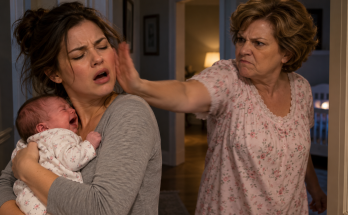
She had always understood that fear could make people careless. She also understood that caution was not the same thing as dishonesty.
Voss folded his arms. “Tessa, I need to know what evidence exists and how it was obtained.”
“You will.”
“That isn’t an answer.”
“No,” I said. “It’s a promise.”
For a moment, nobody spoke.
Outside the hospital room, a cart squeaked down the hallway. A nurse laughed softly at something another nurse had said. The ordinary sounds seemed almost unreal.
My family had told the police I was unstable.
Maybe they expected me to be incoherent. Maybe they thought pain would make me confess to anything just to be left alone.
But I had spent two years preparing for the possibility that nobody would believe me.
I had learned to keep copies.
I had learned to write down dates.
I had learned that a quiet person could be mistaken for a powerless one.
Bridget turned the laptop toward Voss.
“The first folder is labeled Northstar,” she said. “That’s the family business.”
“Northstar Senior Support,” I added.
Voss opened the first spreadsheet.
Northstar was the company my mother had built fifteen years earlier. On paper, it provided in-home assistance to elderly clients who needed help with meals, transportation, medication reminders, and household tasks.
My father handled contracts and insurance.
My mother handled staff.
Emma had recently started working in the office, mostly managing social media and client newsletters.
And I had handled the books.
At least, that was what everyone believed.
I had started as a receptionist when I was nineteen. Within a year, I was processing invoices. By twenty-three, I was reconciling accounts and preparing reports for the accountant.
That was how I first noticed the numbers that didn’t make sense.
Small inconsistencies.
A client billed for three visits on a day when the assigned aide had been out sick.
Mileage reimbursement submitted for routes no employee had driven.
Supplies charged to clients who had never requested them.
At first, I assumed it was sloppy bookkeeping.
Then I found a payment made to a company called Cedar Lane Consulting.
The company had no website, no employees, and no listed office address.
Its registered agent was my father.
I stared at the spreadsheet on the screen.
“It wasn’t one mistake,” I said. “It happened every month.”
Voss scrolled through the records.
“How much?”
“Across four years? Approximately eight hundred thousand dollars.”
He looked at me sharply.
I added, “That’s only what I could trace.”
Bridget placed another document in front of him. “The payment trail is supported by bank statements and tax filings. Tessa also preserved internal emails.”
Voss opened a message.
The sender was my mother.
*Move the client adjustments before the quarterly review. Tessa is asking too many questions.*
The recipient was my father.
His reply was brief.
*I’ll handle it.*
Voss leaned back.
“Why didn’t you report this?”
The question was reasonable.
It still hurt.
“Because I thought I could fix it without destroying everyone,” I said.
Bridget’s expression softened.
I kept looking at the screen.
“My mother had built the company from nothing. Employees depended on it. Some of the clients depended on it. I thought if I gathered enough information, I could make them stop quietly.”
“And did they know you were looking?”
“I don’t think so.”
Voss studied me. “What changed?”
I touched the edge of the blanket.
“Last spring, I found a second set of records. Payments weren’t just being moved through Cedar Lane. They were being used to cover personal debts.”
“Your parents’ debts?”
“Yes.”
“How personal?”
“Credit cards. A renovation loan. A private settlement with a former employee.”
Voss’s face hardened. “What kind of settlement?”
“I don’t know all the details. I found a copy of the agreement, but several pages were missing.”
Bridget reached into the banker’s box and removed a clear evidence sleeve.
Inside was a torn document.
“Those pages were not missing,” she said. “They were shredded. Tessa found fragments in the office recycling bin and reconstructed what she could.”
Voss read the visible lines.
His jaw tightened.
“What happened to the employee?”
“She was fired after reporting false billing. My mother told everyone she had stolen money.”
“Had she?”
“No.”
I said it quietly, but the certainty behind it surprised me.
“Her name was Lorna Bell. She had worked for Northstar for eight years. I found a message she sent Dad. She said she had proof that supervisors were being told to sign visit logs for services they never provided.”
Voss looked back at the screen.
“Where is Lorna now?”
“I don’t know. She moved out of state.”
Bridget glanced at me. “We can locate her.”
“I hope you do.”
The room became quiet again.
I had spent so long carrying those facts alone that seeing them displayed in orderly folders felt almost frightening. Evidence was supposed to make me feel safe.
Instead, it made everything real.
My family had not simply been cruel.
They had built a life around decisions they kept insisting were harmless.
One altered invoice became a habit.
One false accusation became a method.
One frightened employee became an inconvenience.
And whenever anyone questioned them, they called that person difficult, unstable, or ungrateful.
Voss clicked open another folder.
This one was labeled *Personal*.
There were photographs, scanned letters, and audio files.
“Why did you keep personal material with the financial evidence?” he asked.
“Because the two were connected.”
He opened a photograph.
It showed a white envelope on a desk.
The handwriting belonged to my mother.
Voss zoomed in.
“‘Dr. Vale,’” he read.
My chest tightened.
Dr. Miriam Vale was our family physician. She had treated my parents for years. She had also signed the emergency psychiatric commitment request that my family submitted after leaving me.
“I met with her once,” I said. “About six months ago.”
Bridget looked at me.
“You didn’t mention that.”
“I didn’t know if it mattered.”
“What happened?”
“I went in for migraines. She asked whether I was sleeping. I told her I was having trouble because of stress at home.”
“And?”
“She asked if I felt safe.”
Voss watched me carefully.
“What did you say?”
“I said I wasn’t sure.”
The words felt different now that I heard them aloud.
At the time, I had been thinking about the financial records. About my mother’s anger whenever I asked questions. About my father’s habit of locking his office door. About Emma sending me messages from the next room instead of speaking to me directly.
I had not meant that I was in immediate danger.
I had meant that home no longer felt like home.
“But Dr. Vale wrote that I was paranoid,” I continued. “She said I had an unhealthy fixation on my family’s finances.”
Voss opened the report.
There it was.
*Patient exhibits suspicious thought patterns and possible persecutory ideation.*
My face grew warm.
“I never saw this until after I got here.”
Bridget read the report twice.
“Did you tell her about the missing funds?”
“Yes.”
“Did you show her anything?”
“No. I was afraid my mother would find out.”
Voss rubbed a hand over his chin. “This report was used to support the commitment request.”
“I know.”
“Did Dr. Vale know your parents were involved in the company?”
“She was their doctor before she was mine.”
Bridget leaned toward the screen. “There’s a date on this document.”
“Six months ago,” I said.
“No.” She pointed to the bottom. “The report was amended three weeks later.”
Voss enlarged the page.
The original timestamp showed one date.
The metadata showed another.
The report had been edited after my visit.
Bridget’s expression changed.
“Someone added the language about persecutory ideation later.”
Voss looked at me. “Do you have the original?”
“I do.”
He opened a file with the same name.
The first version was shorter.
It described stress, headaches, and difficulty sleeping. It did not mention paranoia. It did not recommend psychiatric intervention.
Voss stared at both versions.
“Why would a doctor alter a medical record?”
“I don’t know,” I said.
But a thought had already formed.
“Maybe she was asked.”
“By whom?”
I looked at the envelope in the photograph.
“My mother.”
Bridget clicked through the remaining files.
A scan of a bank transfer appeared.
The sender was my father.
The recipient was a company connected to Dr. Vale’s husband.
The amount was twelve thousand dollars.
The description read: *Consulting—office systems review.*
Voss sat very still.
“Do you know what this payment was for?”
“No.”
“Did Dr. Vale’s husband provide services to Northstar?”
“Not that I ever saw.”
Bridget opened another document.
A text message from my mother to an unknown number.
*She is starting to remember conversations differently. I need the paperwork clean before she talks to anyone.*
Voss read it once.
Then again.
“Whose number is that?”
“I don’t know.”
“You saved it?”
“No. I took a screenshot.”
“Why?”
“Because I found it on my mother’s tablet.”
“Were you authorized to access the tablet?”
I met his eyes.
“No.”
Bridget answered before he could. “Detective, we are not asking you to ignore how the evidence was obtained. We are asking you to recognize what it may establish. The original devices can be examined through proper legal process.”
Voss nodded, though reluctantly.
He was not my ally because he believed me.
He was my ally because he was beginning to see reasons to investigate.
That distinction mattered.
Too many people wanted rescuers to arrive with certainty. In real life, certainty usually came later, after paperwork, interviews, and long hours of checking what everyone had said against what had actually happened.
Voss closed the file.
“What happened the night your family left you?”
The question settled over the room.
My fingers curled into the blanket.
Bridget did not interrupt.
I told him what I remembered.
Not every detail.
Only the sequence.
My mother shouting.
My sister holding up her phone.
My father standing in the doorway and refusing to look at me.
The drive.
The cold.
The alley.
Voss listened without moving.
When I finished, he said, “Your family claims you attacked your mother.”
“I didn’t.”
“Your mother has photographs of bruising.”
I looked at Bridget.
She nodded grimly. “She submitted them.”
“I never touched her.”
“I believe you,” Voss said.
The words should have comforted me.
Instead, they scared me.
Belief was fragile. It could shift with the next document, the next statement, the next version of events.
“I have something else,” I said.
Bridget turned toward me.
“You didn’t put it on the drive?”
“No.”
“Where is it?”
“Still in my apartment.”
Voss frowned. “Your apartment has been searched.”
“I know.”
“Then it may be gone.”
“No.” I swallowed. “They searched the obvious places.”
“What did you hide?”
I looked at the ceiling.
For months, I had kept a small metal box in the ventilation duct behind the bookcase. It held a backup phone, a handwritten ledger, and a key.
Not a house key.
A storage key.
The storage unit had been rented under my middle name, with payments made through an account my family didn’t know existed.
Inside was the first evidence I had ever collected.
The documents that had started everything.
“I have a storage unit across town,” I said. “The key is in my apartment.”
Voss stood.
“I’ll arrange for an officer to retrieve it.”
“No.”
His expression tightened. “Tessa—”
“I want to go with you.”
“You’re not being discharged yet.”
“Then I want Bridget to go.”
Bridget was already shaking her head. “Not until you’re medically cleared.”
“I need to know what’s there.”
“You know what’s there,” she said. “You put it there.”
“I know what I put there. I don’t know what my family may have found.”
That silenced her.
Voss glanced at the laptop.
“What exactly is in the unit?”
“A paper ledger. Original letters from employees. A duplicate of the Northstar server archive.”
“Why didn’t you tell me sooner?”
“Because I didn’t know if I could trust you.”
He accepted that without offense.
“Fair enough.”
The door opened, and a nurse stepped inside.
“Sorry to interrupt,” she said. “There’s someone here asking to see Tessa.”
My heart stopped.
“Who?”
The nurse checked her clipboard.
“Emma Hart.”
I expected anger.
Instead, a strange emptiness spread through me.
Emma had not visited since the night I was found.
Not once.
Not even after I woke up.
Voss looked at me. “Do you want to see her?”
I didn’t know.
That was the honest answer.
Bridget leaned close. “You don’t have to.”
I stared at the closed door.
The last clear image I had of Emma was her holding up her phone while I begged her to call for help.
But another image existed too.
Emma at eleven, asleep against my shoulder during a thunderstorm.
Emma at fourteen, asking me to help with her college application.
Emma at nineteen, standing in the kitchen and saying, “Mom gets angry when you ask too many questions.”
I had dismissed that moment as frustration.
Now I wondered if it had been fear.
“Let her in,” I said.
Bridget looked as though she wanted to object, but she only moved her chair closer to mine.
Voss stayed by the door.
Emma entered alone.
She looked different without makeup.
Younger.
Not like a child. She was twenty-two. But without the careful expression she wore around our parents, she seemed uncertain and exhausted.
Her eyes were red.
She stopped when she saw the detective.
“I didn’t know he’d be here.”
“He is,” I said.
She looked at me.
For several seconds, neither of us spoke.
Then she whispered, “I’m sorry.”
The words fell into the room and stayed there.
I wanted to accept them.
I wanted to reject them.
Instead, I asked, “For what?”
Emma’s mouth trembled.
“For recording you.”
My stomach tightened.
“Why did you?”
She looked down at her hands.
“Mom told me to.”
Bridget’s gaze sharpened.
Emma continued quickly. “She said you were dangerous. She said you were going to hurt yourself and blame all of us. She told me to document your behavior so nobody could accuse her of doing anything.”
“You laughed.”
Emma closed her eyes.
“I know.”
“You laughed while I was asking you to call someone.”
“I was scared.”
“People who are scared don’t always laugh.”
“I know.”
Her voice broke, but I did not reach for her.
Not yet.
“What happened to the video?” I asked.
“Mom has it.”
“Did you send it to her?”
“Yes.”
“Did you send it to anyone else?”
Emma shook her head.
Then she hesitated.
That hesitation was small.
But I saw it.
“Emma.”
She lifted her eyes.
“There’s another copy.”
“Where?”
“On my old tablet. I forgot it was still connected to the family cloud account.”
Voss stepped forward. “What does the copy show?”
“More than the video I sent Mom.”
Emma’s hands began to shake.
“It starts earlier. Before you came into the room.”
I felt cold move through me.
“What does it show?”
She looked at the detective.
“Dad was talking to Mom.”
“About what?”
“I don’t know. I wasn’t supposed to be listening.”
“But you were.”
Emma nodded.
“He said the doctor had agreed to sign the paperwork if they could prove you were unstable.”
Bridget stood very still.
“What paperwork?” Voss asked.
“The commitment request.”
My breath caught.
Emma looked at me, and tears finally slipped down her face.
“There’s more,” she said. “Dad told Mom the storage unit was the only thing they still had to find.”
Voss’s attention sharpened.
“What did your father say exactly?”
Emma reached into her coat pocket and pulled out her phone.
“I wrote it down after I watched the video again.”
She unlocked the screen and handed it to Voss.
He read silently.
His expression changed.
Then he looked at me.
The words Emma had transcribed were simple.
*If Tessa gets to that unit, everything is over.*
Below them was a second line.
*And if she remembers who opened the account, we’re finished.*
I stared at the phone.
“I opened the account,” I said.
Emma shook her head.
“No.”
Her voice was barely audible.
“Dad did.”
The room seemed to narrow around us.
Voss looked from Emma to me.
“What does that mean?”
Emma pressed her lips together, as if she had been holding the next words inside for too long.
“The storage unit wasn’t rented under your middle name, Tessa.”
She turned the phone toward me.
A photograph filled the screen.
It showed a rental agreement.
The signature at the bottom was unmistakable.
My father’s.
And beside his name was a second line I had never seen before.
Authorized occupant: Tessa Hart.
Emma whispered, “He put the evidence there before you ever knew it existed.”
I stared at the photograph.
The rental agreement had been folded at the corner, as if someone had carried it in a pocket for a long time. My father’s signature ran across the bottom in his familiar slanted handwriting.
But the date was what held me.
Two years earlier.
Before I had started working at Northstar.
Before I had noticed the irregular invoices.
Before I had even considered that my family might be hiding anything from me.
“Why would Dad rent a storage unit in my name?” I asked.
Emma shook her head. “I don’t know.”
“You said he put the evidence there.”
“I said he put something there.”
“Did you see inside?”
“No.”
“Then how do you know?”
She looked at Detective Voss.
“Because I heard him talking to Mom. He said the unit had been his backup plan since the beginning.”
Voss studied the rental agreement on his phone. “How did you get this?”
“From the family cloud account.”
“Was it saved there?”
“I found it in a folder marked tax documents. I was looking for the old video.”
Bridget took the phone from him and examined the photograph.
“Can you send this to me?”
Emma nodded.
Bridget turned to me. “Tessa, we need to consider the possibility that the unit contains material your father placed there, not material you collected.”
My mind moved through old memories, searching for something I had overlooked.
The small metal box.
The handwritten ledger.
The key.
I remembered finding the key in my father’s desk almost a year ago, tucked beneath a stack of property insurance papers. I had assumed it belonged to a filing cabinet or an old office. When I asked him about it, he had told me it was for a storage unit he no longer used.
I had taken it after he left the room.
At the time, it had felt like a harmless act of caution.
Now I wondered whether he had wanted me to find it.
“Did he know I had the key?” I asked.
Emma looked troubled.
“I don’t know.”
“Think.”
She pressed her fingertips against her forehead.
“Dad used to ask whether you still kept documents in your apartment.”
“When?”
“Last month. At dinner.”
I remembered that night.
My father had been unusually quiet, barely touching his food. My mother had complained that I was spending too much time at the office. Emma had scrolled through her phone, pretending not to listen.
Then Dad had asked, casually, “You still keeping all those old files at home?”
I had laughed and told him I wasn’t running a museum.
He had smiled.
I thought he was making a joke.
“He knew,” I said.
Voss’s voice became careful. “We don’t know that yet.”
“No. But he knew I was looking.”
Bridget placed a hand over the edge of the laptop, stopping the screen from going dark.
“We need a controlled search,” she said. “No one goes to that unit alone.”
Voss nodded. “I’ll contact the prosecutor and request a warrant.”
“How long?”
“Possibly a few hours. Possibly longer.”
“I don’t have a few days.”
“You’re in a hospital bed, Tessa. Your family cannot reach the unit without law enforcement knowing.”
I looked at Emma.
“Can they?”
She flinched.
“I don’t know.”
“Your mother has keys to everything.”
“Not that unit.”
“Your father rented it.”
“He kept the agreement in a cloud folder. That doesn’t mean he kept the key.”
Voss’s phone rang.
He stepped into the hallway to answer it, leaving Bridget, Emma, and me in silence.
For the first time, I noticed how pale Emma looked. Her coat was still buttoned, even though the room was warm. She sat with her shoulders drawn inward, as if she were trying to occupy as little space as possible.
“You should have told me sooner,” I said.
“I know.”
“Why didn’t you?”
She looked at the floor.
“Because I didn’t know which version of you to believe.”
The answer hurt, but it sounded honest.
“What versions were there?”
“The sister who was always trying to prove Mom wrong. The sister who kept asking about money. The sister who suddenly started hiding her phone and locking her bedroom door.”
“I was gathering evidence.”
“I know that now.”
“You could have asked me.”
“I was afraid you’d ask me to choose.”
I studied her face.
“Did Mom ask you to choose?”
Emma swallowed. “She made it seem like I already had.”
Neither of us spoke for several seconds.
I had spent years thinking Emma’s distance meant she loved our parents more than she loved me. Perhaps it had been more complicated. Perhaps she had loved all of us and had not known what to do with the parts of the family that could not exist together.
That did not excuse what she had done.
But it gave the pain a shape I could understand.
Voss returned to the room.
“The prosecutor approved an emergency search request,” he said. “We can go to your apartment first and secure the key, then proceed to the unit if the warrant comes through.”
“I’m coming.”
“You’re not cleared to leave.”
“I can use a wheelchair.”
“You’ve lost blood, suffered exposure, and have a concussion.”
“I can still identify my own belongings.”
Voss glanced at Bridget.
She gave him a level look. “She can go if the physician approves it. I’ll make sure she doesn’t overexert herself.”
The doctor did not like the plan.
He liked it even less after Voss explained the circumstances. But after examining me and consulting with the nurse, he agreed I could leave for a limited period, provided I returned immediately if I became dizzy or confused.
“I won’t,” I promised.
Bridget helped me into a sweater someone from the hospital had brought. It was too large and smelled faintly of laundry detergent. Emma waited by the door, her hands clasped in front of her.
When we reached the parking area, winter air pressed against my face.
I stopped.
Not because I was afraid of the cold.
Because I remembered being left in it.
Bridget noticed.
“You’re safe,” she said quietly.
I nodded.
I wanted to believe her without effort.
Maybe safety was not a feeling that arrived all at once. Maybe it was a fact repeated until the body began to accept it.
The drive to my apartment took twenty minutes.
Voss rode with me. Bridget and Emma followed in another car.
My building stood on a narrow street lined with bare trees. Police tape crossed the entrance to my apartment, though the door itself was closed. A uniformed officer met us in the lobby.
“Nothing appears disturbed,” he said. “But the search was limited.”
I entered slowly.
The apartment looked almost normal.
A mug sat beside the sink. Mail was scattered across the small table. A blanket remained folded over the arm of the sofa. The ordinary details unsettled me more than a mess would have.
Someone had been inside my life, touching things, opening drawers, deciding what mattered.
Voss followed my gaze.
“Where did you keep the key?”
“In my office.”
I led them down the hall.
My desk stood beneath the window. Files had been removed from the shelves and placed in uneven stacks on the floor. The drawers were open. A framed photograph of Emma and me had been turned facedown.
I picked it up.
The glass was cracked.
Emma saw it and stopped behind me.
“I didn’t do that,” she whispered.
“I know.”
Voss crouched near the desk.
“Do you see anything missing?”
“I don’t know yet.”
I opened the bottom drawer.
The key was gone.
My heart sank.
“It was here.”
“Are you sure?”
“Yes.”
Bridget moved beside me. “What else did you keep in this drawer?”
“Old receipts. A spare flash drive. Notes.”
“Are the notes still there?”
I lifted a stack of envelopes.
Most were present.
One was missing.
I recognized the empty space immediately.
“Dad’s old employee directory,” I said.
Voss looked at me. “Why would he take that?”
“It had contact information for former Northstar employees.”
“Lorna Bell?”
“Among others.”
He photographed the drawer and the empty space.
Emma stepped toward the desk, then paused.
“What?”
She pointed to the window.
A small smear marked the inside of the glass.
Not a fingerprint exactly. More like a half-wiped streak.
“Was that there before?” she asked.
I shook my head.
Voss examined it without touching.
“Could be from the search team.”
The officer behind us said, “We wore gloves.”
Voss’s expression tightened.
He moved to the window and checked the latch. It was locked.
“Maybe someone entered before the police secured the apartment,” he said.
I looked at the empty drawer.
My father had found the key.
Or someone had wanted me to believe he had.
A soft buzzing came from Emma’s phone.
She looked down.
A message had appeared from an unknown number.
Stop looking for the unit.
Her face drained of color.
Voss took the phone.
“When did this arrive?”
“Just now.”
“Have you received messages from this number before?”
“No.”
“Could it be your mother?”
Emma shook her head. “She would call.”
“Your father?”
“I don’t know.”
Bridget looked at me.
“Does anyone else know the unit exists?”
“Not that I told them.”
I thought of the original drive.
I had created it in my apartment. I had copied records late at night, then carried the drive to Bridget’s office before my family knew I had hired her. But the paper documents were different. I had collected those slowly, storing them in a box beneath the vent.
The unit had been my idea.
Or I thought it had been.
“Wait,” I said.
I crossed to the bookcase and pulled it away from the wall.
The vent cover sat crooked.
The metal box was gone.
For a moment, I could not breathe.
Voss moved toward me. “What was inside?”
“The first ledger. Original correspondence. An old phone.”
“Anything else?”
I looked at the dust on the floor.
A rectangular outline showed where the box had been.
“Someone took it.”
Bridget’s expression hardened. “When did the police search this apartment?”
“Yesterday afternoon,” the officer said.
“Was the vent checked?”
“No. The search was focused on the bedroom and desk.”
Voss stood.
“Then whoever came here knew where to look.”
Emma’s phone buzzed again.
This time, the message contained a photograph.
It showed the metal box sitting on a wooden table.
The lid was open.
Inside, the old phone lay beside the ledger.
But the photograph had been taken from an angle that revealed something beyond the box: a white wall, a narrow window, and part of a blue metal shelving unit.
I knew that room.
Not the storage unit.
My father’s office at Northstar.
“He has it,” I said.
Voss zoomed in on the image.
“Are you certain?”
“The shelving. The wall. That’s the office.”
Emma stared at the screen.
“Why would he send us a picture of the evidence?”
“Maybe he wants us to know he found it,” Bridget said.
“Or maybe he wants us to think he did.”
Voss turned to the officer. “Can you secure the Northstar office?”
“I’ll need authorization.”
“You’ll get it.”
He called the prosecutor again.
While he spoke, I sat on the edge of the sofa. My legs had started to tremble. Bridget crouched in front of me.
“Stay with me.”
“I’m fine.”
“You’re exhausted.”
“I need to understand.”
“You will. But not all at once.”
I looked at the photograph again.
A corner of paper showed beneath the ledger. It was marked with a handwritten date.
March 14.
I knew that date.
It was the date of my first private meeting with Lorna Bell.
She had come to the coffee shop near the office and asked whether I had ever checked the mileage reports against the client schedules. She had seemed nervous, but not frightened. She had told me she believed Northstar was falsifying records.
I had written down everything she said.
Then, three days later, she had disappeared from the payroll.
I had assumed my father destroyed her original complaint.
But if the ledger was still intact, maybe he had not.
“Voss,” I said, interrupting his call. “The box contains the beginning of the investigation.”
He covered the phone and looked at me.
“Lorna Bell’s original complaint may be inside.”
He relayed that to the prosecutor.
A moment later, his phone chimed.
“Warrant approved for Northstar,” he said. “We’re going now.”
“I’m coming.”
“No.”
“I can identify the office.”
“I can identify it,” Emma said.
Everyone looked at her.
She lifted her chin, though her voice shook.
“I worked there. I know where Dad keeps the files.”
Voss considered her.
“You’ll remain with an officer.”
She nodded.
I expected to feel abandoned when they left without me.
Instead, Bridget stayed.
“I’ll keep you informed,” she said.
“No. Take me to the hospital.”
She studied me.
“I’m not going to Northstar,” I said. “I know that’s what you’re thinking.”
“Do you?”
I looked once more at the photograph.
“My family has been deciding where I’m allowed to go and what I’m allowed to remember. I’m not going to make another decision because I’m afraid.”
Bridget’s eyes softened.
“That’s a better reason.”
At the hospital, a nurse checked my temperature and blood pressure. I answered questions, drank water, and sat beneath a heated blanket while Bridget made calls.
Nearly an hour passed before Voss contacted us.
His voice was low.
“We found the office.”
“What about the box?”
“It was there.”
Relief came so quickly it almost made me dizzy.
“Is the ledger intact?”
“Yes.”
“And the phone?”
“Also intact.”
I closed my eyes.
“What else?”
There was a pause.
“Your father wasn’t there. Neither was your mother.”
“Then why did you sound like that?”
“We found a second box.”
My eyes opened.
“What kind?”
“Same style as yours.”
“That’s impossible.”
“No,” Bridget said quietly. “It means someone prepared more than one.”
Voss continued. “The second box contained copies of documents from Northstar, but they weren’t arranged like your evidence. They were labeled by date and employee.”
“Lorna?”
“Her name was on one folder.”
My pulse quickened.
“What was in it?”
“A signed statement. Several emails. And a photograph.”
“Of what?”
“Your father meeting someone outside the office.”
“Who?”
“He’s difficult to identify from the angle. But the photograph was taken eight years ago, before you worked at Northstar.”
I sat straighter.
“Did you recognize him?”
“Yes.”
“Who?”
Another pause.
“Dr. Miriam Vale’s husband.”
I felt the room tilt.
The payment to the consulting company had not begun recently. The connection went back years.
“What were they doing?”
“I don’t know yet,” Voss said. “But there’s a handwritten note on the back of the photograph.”
“What does it say?”
His voice became even quieter.
“It says, ‘If anything happens to me, ask Tessa what she saw in the basement.’”
I stared at Bridget.
“I’ve never been in the Northstar basement.”
“I know,” she said.
Voss continued, “There’s one more thing.”
“What?”
“The note is in Lorna Bell’s handwriting.”
I could hear my own breathing.
Lorna had vanished after reporting false billing. My father had kept her complaint. Dr. Vale’s husband had been meeting with him long before the financial records began. And somewhere in the second box was a reference to something I had seen but could not remember.
“The basement,” I whispered.
Bridget reached for my hand.
“What did you see there?” she asked.
I searched my memory.
A winter afternoon.
A locked door.
The smell of paint and old paper.
My father telling me not to go downstairs.
And Emma, standing at the bottom of the steps, holding something against her chest.
I had been seventeen.
She had been fifteen.
I had thought it was a scrapbook.
But now, suddenly, I remembered the color.
Blue.
A blue employee badge.
And beneath it, a stack of envelopes addressed to people whose names I had never heard.
My father had taken them from Emma’s hands and told us both to forget what we had seen.
I had forgotten.
Or I had learned how to.
“Voss,” I said, my voice unsteady. “The basement wasn’t empty.”
“What was there?”
“I don’t know. But Emma was with me.”
On the other end of the line, Voss went silent.
Then he said, “She’s here at the office. I’ll ask her.”
“No.”
“Why?”
“Because if she remembers, she needs to tell me herself.”
I looked toward the hospital window, where the first gray light of morning had begun to spread over the city.
For years, I had believed my family’s secrets began with the records I found.
Now I understood they had begun much earlier.
And my sister might have been carrying one of them all along.
PART 4 (THE END)
For several seconds, neither Bridget nor I spoke.
Then I asked Voss, “Can I talk to Emma?”
“I’ll put her on speaker.”
A faint click sounded.
“Tessa?”
Emma’s voice was small and unsteady.
“I’m here.”
“I remember the basement,” she said.
I closed my eyes.
“What do you remember?”
“Not everything. I was fifteen. You were seventeen.” She took a breath. “Mom and Dad had gone to a dinner with investors. I couldn’t sleep, so I went downstairs to get a blanket from the storage room.”
“The door was locked,” I said.
“Yes. But Dad had left his keys on the kitchen counter.”
A picture began forming in my mind: the old basement stairs, the bare bulb overhead, the smell of dust and paint.
“I heard someone talking,” Emma continued. “Not inside the basement. Outside, near the back entrance.”
“Who?”
“Dad. And a woman.”
I frowned.
“Lorna?”
“I didn’t know her name then. She was crying. She kept saying she had done everything they asked, but she wouldn’t sign another document.”
My chest tightened.
“What did you do?”
“I opened the door a little. You came downstairs because you heard me.”
The memory returned in fragments.
Emma’s hand around my wrist.
A blue badge pressed against her sweater.
An envelope lying on the floor.
My father’s voice, low and impatient.
“Give me that.”
“I remember the envelopes,” I said.
“There were a lot of them,” Emma said. “They had employee names on them. I thought Dad was keeping personnel records in the basement.”
“He took them from you.”
“He took the one I was holding. But you picked up another before he saw it.”
I looked at Bridget.
“Did I?”
“You did,” Emma said. “You put it inside your sweater.”
The recollection was faint, but it existed. My own hands, trembling. Paper tucked beneath the waistband of my jeans. Emma whispering that we should go upstairs.
I had forgotten the envelope because I had spent the next several hours trying not to think about anything that had happened in that house.
“What was inside?” I asked.
“A letter from Lorna,” Emma said. “She wrote that Dad had instructed her to change visit records. She said Mom knew about it.”
“Why would Lorna write that if she was standing there?”
“Because Dad wanted her to sign a statement saying she had acted alone.”
Bridget moved closer.
“Did Tessa keep the letter?”
“I don’t know,” Emma said. “But the next morning, she gave me something.”
“What?”
“A blue employee badge.”
I remembered it now.
Not clearly, but enough.
The badge had belonged to Lorna. Emma had taken it from the basement because she thought it might help us find her if our parents sent her away. We had hidden it in an old scrapbook beneath photographs from a family vacation.
Our mother had found the scrapbook months later and thrown it out during a closet cleanout.
I had assumed the badge was gone.
“It wasn’t,” Emma said. “I took it before she threw the scrapbook away.”
“Where is it?”
“In my room.”
Voss came back onto the line. “Emma, do you know what’s written on the back?”
“No. I never looked.”
“Then look now. An officer is with you.”
There was a pause.
Paper shifted.
Emma inhaled sharply.
“What is it?”
“There’s a number.”
“Read it.”
“Fourteen-seven-two.”
Voss asked, “Does that mean anything to you?”
I answered before Emma could.
“It was the old client filing code.”
Bridget turned toward me.
“Northstar used codes for every service file,” I explained. “Fourteen meant transportation and seven-two was the year the client first enrolled.”
“Who was the client?” Voss asked.
I stared at the hospital wall.
“Mrs. Harlow.”
A retired teacher who had been one of Northstar’s earliest clients. She had died several years earlier, but her account had continued appearing in billing reports.
I had thought it was a simple mistake.
Now I understood.
“Her file was used as a template,” I said. “They copied her information onto other invoices.”
Voss was silent for a moment.
Then he said, “We found a cabinet in the basement labeled 1472.”
My pulse quickened.
“What’s inside?”
“Records. Paper copies of client schedules, staff signatures, and what appears to be an instruction sheet.”
“Who wrote it?”
“Your father, according to the handwriting comparison we’ll need to conduct. But it’s signed with the initials R.H.”
“My father’s name is Richard Hart.”
“I know.”
I heard movement on his end.
“There’s also a list of payments,” he continued. “Some to Cedar Lane. Some to a company connected to Dr. Vale’s husband. And several marked as ‘consultation.’”
My eyes filled with tears, though not from fear.
The pattern that had haunted me for years was finally visible to someone besides me.
“Where are my parents?” I asked.
“Your mother is at home with officers. Your father was located at a hotel near the airport.”
“Are they being arrested?”
“They’re being interviewed while the prosecutor reviews the evidence. We’re not going to rush charges just because the story is dramatic.”
I almost smiled.
“That sounds like you.”
“It’s my job.”
“No,” I said. “Your job is to investigate. You chose to be careful.”
He didn’t answer immediately.
Then he said, “You were right not to trust me at first.”
The call ended shortly afterward.
I sat in silence while Bridget helped me drink some water.
“They’ll ask you to make a formal statement,” she said.
“I know.”
“Your family may say the evidence was stolen.”
“Some of it was.”
“Then we’ll be honest about that.”
I looked at her.
“You’re not worried?”
“I’m worried about many things. Whether the truth survives is not one of them.”
Her confidence steadied me.
That afternoon, I gave my first recorded interview.
I described the financial records, the conversations I had witnessed, and the night I had been abandoned. I did not exaggerate. I did not fill in gaps with guesses. When I remembered something uncertain, I said so.
For the first time, my story belonged to me.
Not to my mother’s version.
Not to my father’s silence.
Not to Emma’s phone.
Mine.
The investigation continued for nearly four months.
During that time, Northstar stopped accepting new clients. A court-appointed administrator took control of the company’s remaining accounts, and legitimate employees were offered temporary work through another provider. Several families were contacted and informed that their records might have been falsified.
Some clients were angry.
Some were frightened.
Many were simply tired.
I understood that feeling. Truth did not erase the damage. It only made repair possible.
Lorna Bell was found living in Oregon.
She agreed to speak with Voss by video first. Then, after several conversations with Bridget, she returned to the city.
When I met her, we sat in a quiet café near the courthouse.
She was older than I remembered, with silver threaded through her dark hair. But her eyes were the same.
“I’m sorry,” she said.
I stared at her. “For what?”
“For leaving you with all of it.”
“You didn’t know I was looking.”
“I knew someone in that family would eventually find out.” She wrapped both hands around her coffee cup. “I hoped it would be your father.”
“He knew.”
“Yes.”
“Why didn’t you go to the police?”
She looked down.
“Because I did, in a way. I reported the billing fraud to the state licensing office. Your father found out before they finished reviewing it. Then he accused me of stealing from Northstar.”
“You weren’t fired for stealing.”
“No.”
“What happened after?”
“I was exhausted. I had two children and no savings. Your mother offered me a settlement if I signed a nondisclosure agreement.”
“Did you?”
“I signed something. I thought it protected me from being sued. I didn’t understand how broad it was.”
The settlement papers in the banker’s box had been real, but they had not been the whole story. The missing pages contained a clause that threatened legal action if Lorna discussed the company’s records publicly.
“I’m sorry,” I said.
She looked surprised.
“You were young.”
“So were you, in a different way.”
That made her smile faintly.
“The letter you found,” she said. “Did it help?”
“It helped establish the timeline.”
“I wrote it because I thought someone should know what happened, even if I couldn’t say it aloud.”
“You knew I had it?”
“No. I saw you pick up the envelope. I hoped you would.”
Her words stayed with me.
Sometimes evidence survived not because someone was fearless, but because someone made one small choice to leave a door open.
Emma testified next.
That was harder for both of us.
She admitted recording me at my parents’ direction. She described the conversation she had overheard and provided the original video from her tablet. The longer version showed that I had been sitting on the floor, confused and injured, while my mother repeatedly instructed Emma to keep recording.
It also showed my father entering the room.
He did not call an ambulance.
He did not ask whether I could stand.
He looked at my mother and said, “We can’t have her talking to anyone tonight.”
That sentence became important.
Not because it proved every accusation, but because it contradicted the story they had told police. My family had claimed I ran away after attacking my mother. The video showed them making decisions about what to do with me.
There was also audio from the drive.
Emma had not known her phone was still recording.
My father said they should leave me near the strip mall because it had cameras and “would look like she wandered off.”
My mother answered, “By morning, everyone will think she did it to herself.”
Listening to it in the prosecutor’s office, I felt no triumph.
Only grief.
I had wanted justice to feel like a door opening into sunlight.
Instead, it felt like standing in a room where I had loved people and realizing the furniture had been arranged around a lie.
My parents were charged with fraud, falsifying business records, insurance-related offenses, and endangering an adult in their care. Additional charges related to my abandonment were filed after the district attorney reviewed the medical records and video evidence.
Dr. Vale surrendered her medical license pending a professional investigation. Her husband was charged separately for his role in the consulting payments.
The court did not accept every claim immediately. Some charges were reduced. Some documents were ruled inadmissible because of how they had been obtained. The process was slow, careful, and often frustrating.
But it moved forward.
My father eventually pleaded guilty to the financial offenses. My mother continued insisting that she had been protecting the family until the day she entered her plea.
I did not attend every hearing.
Bridget reminded me that witnessing accountability did not require me to witness every moment of it.
Emma moved out of our parents’ house and found a small apartment near the community college where she had begun taking classes in social work.
For a while, we met only in public places.
Coffee shops.
The hospital garden.
A library near my apartment.
She never asked me to forget what she had done.
That mattered.
One afternoon, she brought me a paper bag.
Inside was the blue employee badge.
“I kept it all these years,” she said.
I turned it over.
The number was faded, but still visible.
“Why didn’t you tell me you had it?”
“I was ashamed.”
“Of taking it?”
“Of knowing something was wrong and pretending I didn’t.”
I looked at her.
“You were young.”
“So were you.”
The words echoed Lorna’s, but they did not feel borrowed.
Emma sat across from me.
“I don’t expect us to be sisters the way we were before,” she said.
“We can’t be.”
“I know.”
“But maybe we can become something else.”
Her eyes filled.
“Something better?”
“Something honest.”
She nodded.
That was the beginning.
Not forgiveness in one dramatic moment. Not a clean return to the past.
A beginning made of small, reliable choices.
She told me when she was afraid.
I told her when I was angry.
Sometimes we ended conversations early because neither of us could continue without saying something hurtful. Then one of us called the next day.
That counted too.
A year after the night in the alley, I stood outside the courthouse with Bridget and Detective Voss.
Winter had returned, but the air felt different.
I wore a wool coat and boots. My hands were warm inside my gloves.
Voss handed me a document.
“The final restitution order,” he said. “Funds recovered from the Northstar accounts will go to affected clients and employees.”
I scanned the first page.
Lorna’s name was on the list of former employees receiving compensation.
“So it’s over?” I asked.
“The criminal case is resolved,” he said. “The civil claims will take longer.”
I looked up at the courthouse steps.
“No,” I said. “It isn’t over.”
Bridget smiled slightly.
“No. But it’s no longer yours to carry alone.”
That was the difference.
For years, I had believed strength meant collecting enough proof to survive the moment someone finally tried to destroy me.
Now I understood that strength could also mean allowing other people to help repair what had been broken.
I still had nightmares sometimes.
I still hesitated when someone raised their voice.
I still checked the locks more than once.
Healing did not make me forget.
It taught me that remembering did not have to control me.
A week later, I visited the new nonprofit that had taken over many of Northstar’s legitimate services. The director asked whether I would help design an internal audit system.
I almost said no.
Then I thought of the employees who had been afraid to question the numbers. The clients whose names had been treated as entries on a spreadsheet. The people who needed care but had been given excuses instead.
“I’ll help,” I said.
Not because I wanted to remain tied to Northstar.
Because I wanted to build something that could not depend on silence.
That evening, Emma came over for dinner.
She brought a loaf of bread and a stack of forms from her classes. We argued gently about whether the soup needed more salt. We laughed when she spilled flour across the counter.
For a moment, we looked like any two sisters.
Then she grew quiet.
“Do you ever wish you had never found the records?” she asked.
I considered the question.
“Yes,” I said. “Sometimes.”
She nodded, accepting the answer.
“But I also wish I had found them sooner,” I added.
“Why?”
“So I could have stopped believing that keeping a family together meant keeping its secrets.”
Emma looked down at her bowl.
“I thought if I told the truth, we would lose everything.”
“We did lose a lot.”
“I know.”
“But not everything.”
She lifted her eyes.
I reached across the table and took her hand.
Not as proof that the past no longer mattered.
As proof that it no longer decided every part of the future.
Outside, snow began to fall, covering the dark pavement in a clean white layer.
I remembered waking there without shoes, without a coat, without any reason to believe I would be heard.
But I had survived.
More than that, I had been believed—not because I had begged loudly enough, but because the truth had been preserved carefully, piece by piece, until it could stand on its own.
My mother had thought silence would protect her.
My father had thought paperwork could rewrite reality.
Emma had thought fear left her no choices.
I had once thought being abandoned meant I had been left with nothing.
I was wrong.
I had my memory.
I had the evidence.
I had the courage to tell the truth.
And, slowly, I was learning that a family could be rebuilt—not from denial, not from shared secrets, but from the difficult and liberating decision to become honest.