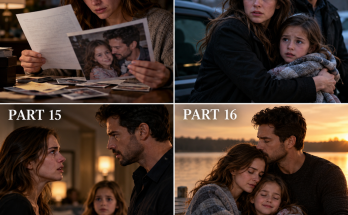
Ten years after Thomas died, I found one final envelope.
Not hidden.
Not sealed inside furniture.
Not left by a lawyer under instructions.
I found it because I was cleaning a bookshelf.
That difference mattered.
The envelope had slipped behind a row of old photo albums.
Thomas's handwriting was on the front.
ELLIE — SOMEDAY.
I stood in the middle of my living room holding it.
For several seconds, I considered not opening it.
Ten years earlier, that would have been impossible.
Every envelope had contained danger.
Ownership.
Confession.
Instructions.
Another person Thomas had failed.
Another decision he made without me.
Now paper no longer frightened me.
I made tea.
Sat by the window.
Opened it.
One page.
No trust language.
No asset list.
No legal instruction.
Just Thomas.
Ellie,
If you find this before I die, put it back and pretend you didn't.
I laughed.
Out loud.
He continued.
If you find it after, then either I hid it badly or you finally cleaned that shelf.
I looked toward the bookshelf.
“Ten years, Thomas.”
The page continued.
I have spent most of my life believing responsibility meant making sure nothing fell apart.
Sometimes that made me useful.
Sometimes it made me unbearable.
I smiled.
Accurate.
I kept reading.
If I could leave you one thing that is not money, not company, not house, it would be permission to stop carrying what I should have carried myself.
My throat tightened.
I stared at the page.
No elaborate apology.
No instructions for Eric.
No attempt to control what I did next.
I am sorry for the things I made you clean up.
The sentence was simple enough to hurt.
Then:
I hope one day the company is just a company to you.
I hope the house is just a house.
I hope Eric becomes just our son again instead of a problem we keep solving.
And I hope I become just Thomas.
Not the best thing that happened to you.
Not the worst.
Just the man you chose for a long time.
I cried then.
Quietly.
Not like the bank vault.
Not like the first weeks.
A softer grief.
The kind that arrives after truth has had years to settle.
The final lines read:
You once put “Still choosing” inside my ring.
You were right.
Choice has to stay alive or love turns into ownership.
I understood that too late in too many places.
I hope you didn't.
Love,
T.
I folded the page.
No revelation.
No hidden beneficiary.
No disputed shares.
Just the lesson every document before it had been trying to reach.
Love turns into ownership when choice disappears.
Thomas had done that with the company.
With Raymond.
With my shares.
With my name.
With Eric's future.
Even with his own idea of responsibility.
Eric had done it with the house.
The company.
Money.
His father's promises.
And I had participated by allowing other people to make decisions simply because conflict exhausted me.
We all learned late.
But not too late.
That afternoon, Eric came for dinner.
He was fifty-one.
That startled me whenever I remembered it.
In my head, part of him remained forty-one beneath a funeral-home awning, saying, “For now.”
He was different now.
Not transformed into someone unrecognizable.
Still impatient.
Still capable of overconfidence.
Still occasionally convinced a conversation ended because he had made the strongest point.
But he apologized faster.
Asked more.
Took less.
And when he failed, he no longer expected one repair to erase the pattern.
He arrived carrying groceries.
“Why do you keep bringing food?”
“Because your refrigerator looks like a bachelor lives here.”
“This from the man who survived on restaurant delivery for fifteen years.”
“I changed.”
“Apparently into a food inspector.”
He smiled.
Then noticed the envelope.
His expression changed.
“No.”
I laughed.
“What?”
“Absolutely not.”
“What do you think it is?”
“I don't care. Burn it.”
“Your father wrote it.”
“That makes my argument stronger.”
I laughed harder.
He sat.
“Is it bad?”
“No.”
“Money?”
“No.”
“Trust?”
“No.”
“Secret cousin?”
“No.”
“Thank God.”
I slid the page toward him.
“Read.”
He did.
His face softened.
Halfway down, he stopped.
Then continued.
At the end, he touched the words with one finger.
Just our son again.
His eyes filled.
“He wrote that?”
“Yes.”
“When?”
“No date.”
“Before the final trust?”
“Probably.”
Eric leaned back.
“Did we ever get there?”
“What?”
“Just son.”
I looked at him.
“Yes.”
His face changed.
“When?”
“I don't know.”
That was the truth.
No single day.
No final trust review.
No repaid balance.
No job promotion.
No house renunciation.
Somewhere across ten years of ordinary choices, he stopped being a project.
He became my son again.
“I think it happened when I stopped checking your trust reports before asking how work was.”
He smiled.
“That took a while.”
“Yes.”
“And me?”
“What?”
“When did you stop being something I was afraid to disappoint?”
I blinked.
“Did you?”
“Mostly.”
“Good.”
He thought.
“Maybe when you sold Willow Lane.”
“Why?”
“Because you did something I hated and I survived.”
I laughed softly.
“That is a useful skill.”
“Yes.”
He handed the letter back.
“What will you do with it?”
“Keep it.”
“Frame?”
“No.”
“Good.”
“Why?”
“Not everything needs to become evidence.”
That was another lesson.
Some things could simply be private.
Not secret.
Private.
The company continued without Thomas.
That sentence once would have sounded impossible.
Whitmore Distribution grew more slowly than during some of his aggressive years.
Also more steadily.
Employee ownership reached twelve percent.
Mara held four.
I held reduced but meaningful shares after gifting part into the employee trust.
The Thomas succession trust remained the largest single economic holder but no longer controlled voting outcomes.
Eric never requested full voting delegation.
He retained limited trust voting power.
Enough to contribute.
Not enough to dominate.
He once told Amelia:
“If the company ever needs one person to control it, we've already designed it wrong.”
She put that in her annual report.
I teased him about sounding like a governance seminar.
He deserved it.
Priya remained CEO.
Mara eventually became board chair.
Not because Thomas planned it.
Because the directors elected her.
That distinction mattered.
When Mara accepted, Eric stood and applauded.
Then said:
“Does this mean I finally report to you again?”
She answered:
“You never stopped.”
Everyone laughed.
The Raymond Fund became part of the company's identity.
Not charity for public relations.
A real pipeline.
People completed training.
Some succeeded.
Some failed.
Some returned later.
Raymond's story became useful precisely because it was imperfect.
Elena joined the board of the fund, never Whitmore Distribution.
Her choice.
Claire became an accountant.
Eventually she audited one of our employee-plan reports.
She found an error.
Nothing fraudulent.
Still embarrassing.
I laughed for two days.
Thomas would have hated being audited by Claire.
Raymond would have found it hilarious.
Eric remarried at fifty-three.
He had been divorced long before Thomas died, but family chaos had filled so much space we rarely discussed his personal life.
Her name was Rachel.
She was an architect.
The first time she visited my house, Eric told her:
“Do not mention the kitchen.”
She loved the kitchen.
I immediately liked her.
They bought their own house.
Not too large.
When Eric told me, he said:
“We can afford it.”
Not:
It will appreciate.
Not:
Family should have property.
Not:
Dad would have liked it.
We can afford it.
A sentence built on arithmetic.
Thomas would have considered that unimpressive.
I considered it beautiful.
They asked me to dinner after closing.
Eric handed Rachel the keys.
Not himself.
I noticed.
He saw me notice.
Neither of us said anything.
Some lessons no longer required explanation.
Years earlier, I had worried that correcting the company records would destroy Thomas's legacy.
It did not.
It made the legacy smaller.
That was healthier.
He was no longer the entire story.
Just part.
A large part.
A complicated part.
His name remained on the building.
Not because we worshiped him.
Because the company still carried the name.
We added a historical display inside the lobby.
Thomas.
Raymond.
Me.
Mara.
Early employees.
Major company eras.
A section on ownership evolution.
No scandal board.
No public confession wall.
Just accurate institutional history.
One photograph showed Thomas beside the first truck.
Another showed Raymond driving it.
Another showed me at the original accounting desk.
Visitors saw all three.
Children on school tours asked which one founded the company.
The guide answered:
“All of them.”
That was enough.
My estate plan remained transparent.
Eric knew the broad structure.
Claire knew hers.
The Raymond Fund knew its charitable allocation.
The employee trust knew its future share gift.
No one knew exact dollar amounts because they did not need to.
Transparency did not mean surrendering every private detail.
It meant nobody's life depended on discovering a surprise after my death.
My new house would go to Eric if he survived me.
He never asked again.
That made leaving it to him feel clean.
A gift.
Not payment.
Not prize.
Not proof.
He would own it because I chose to give it.
Not because he had waited successfully.
Not because Thomas wanted it.
Not because family blood created a right.
Choice.
That was the difference.
One autumn afternoon, Eric and I drove past Willow Lane.
We had no reason.
Traffic diverted us.
The new owners had painted the front door red.
Thomas would have hated it.
Eric slowed.
“They changed the porch.”
“Yes.”
“Looks terrible.”
“It is their porch.”
He sighed.
“I know.”
Then laughed.
I laughed too.
We continued driving.
No stopping.
No appraising.
No story about taking it back.
Just a house someone else owned.
That was freedom.
At the cemetery, Thomas's stone weathered.
The word Builder became less sharp around the edges.
I visited less often.
Not because I missed him less.
Because he lived elsewhere in memory now.
In the sound of diesel near a loading bay.
In badly grilled chicken.
In Eric's stubborn chin.
In my habit of labeling tax folders.
In Rebecca's laughter when someone mentioned hidden envelopes.
In Raymond's photograph.
In the maple tree.
Love survived without requiring physical custody.
That might have been the lesson beneath every other one.
On the tenth anniversary of Thomas's funeral, Eric asked if I wanted to visit the gas station where he left me.
I stared at him.
“Why?”
“I don't know.”
“Terrible answer.”
He laughed.
“I drive past sometimes.”
“So?”
“I thought maybe I should apologize there.”
“You already apologized.”
“Yes.”
“Years ago.”
“Yes.”
“Repeatedly.”
“Yes.”
“So why?”
He thought.
“I think some part of me still feels like that's the place everything broke.”
I understood.
“No.”
He frowned.
“No what?”
“That is not where everything broke.”
“Where then?”
“Years before.”
The money.
The silence.
The rescues.
Thomas's choices.
My avoidance.
Eric's entitlement.
The road shoulder was only where the hidden structure became visible.
“Then what happened there?”
“You crossed a line I could finally see.”
He looked away.
“And the envelope?”
“It gave me permission to stop pretending I hadn't seen it.”
That was the true beginning.
Not of the family's collapse.
Of correction.
Eric nodded.
“Do you want to go?”
“No.”
Relief crossed his face.
“Good.”
“Why?”
“That gas station coffee was terrible.”
I laughed.
He laughed too.
We went to lunch instead.
No pilgrimage.
No reenactment.
No need to prove closure by standing where pain occurred.
Closure had happened in thousands of choices afterward.
At lunch, Eric asked:
“Do you regret not cutting me off completely?”
I looked at him.
“No.”
“Ever wonder if Dad should have?”
“Yes.”
He smiled.
“Fair.”
“Do you regret that he didn't?”
Eric thought.
“No.”
“Why?”
“Because limits worked better than abandonment.”
I nodded.
“That was what he hoped.”
“He almost went too far the other direction.”
“Yes.”
“So did you.”
I raised an eyebrow.
“How?”
“You spent years making sure I felt every consequence.”
“That sounds healthy.”
“Sometimes you enjoyed it.”
I laughed.
“Probably.”
“You see?”
“Maybe.”
He smiled.
We could joke because the work had been done.
Not finished.
Work like this is never finished.
But deep enough to hold humor.
He asked another question.
“What do you think Dad actually wanted at the end?”
I looked out the window.
Not the company preserved exactly.
Not the house kept forever.
Not Eric wealthy.
Not me obedient to his documents.
All those goals changed across years.
At the end, I think Thomas wanted us to stop repeating him.
“I think he wanted you to become trustworthy.”
Eric nodded.
“And you?”
“To become less afraid of my own decisions.”
“And Elena?”
“To be recognized.”
“Mara?”
“To have real authority.”
“Raymond?”
I thought.
“To stop being erased.”
Eric looked at me.
“And Dad?”
That was harder.
What did Thomas want for himself?
Forgiveness?
Maybe.
Accuracy?
Eventually.
Love?
Always.
“I think he wanted to be understood without being excused.”
Eric became quiet.
“That sounds impossible.”
“No.”
“Did you manage it?”
I smiled sadly.
“Yes.”
Understanding is not acquittal.
Love is not acquittal.
Forgiveness is not forgetting.
Those distinctions had saved us.
Years after his death, I could say:
Thomas took my shares.
He lied.
He used my name.
He protected our son badly.
He harmed Raymond.
He controlled too much.
And:
Thomas worked beside me for thirty-four years.
He loved me.
He built with me.
He cared for employees.
He tried to correct what he could.
He changed.
He was afraid.
He was generous.
He made me laugh.
He was my husband.
Both.
No contradiction required resolution.
That evening, I placed Thomas's “SOMEDAY” letter inside the wooden box with his wedding ring.
Not hidden.
The box sat openly on a shelf.
Eric knew it existed.
Claire knew.
Rebecca knew.
No instruction attached.
No condition.
No future test.
If someone found it after I died, fine.
If not, also fine.
The meaning was already alive elsewhere.
Before bed, I walked outside.
The maple had grown tall.
Eric and I planted it where I wanted.
He had argued.
I had decided.
Then he had helped dig.
That seemed a fitting summary of us.
My phone buzzed.
Eric.
A photograph.
His new backyard.
Rachel standing beside a small tree.
Caption:
Asked before planting.
I laughed.
Then replied:
Where did she want it?
He answered:
Not where I wanted it.
I typed:
And?
A minute later:
Her yard too.
I smiled.
There it was.
Not a dramatic redemption.
Not inheritance.
Not control.
Just an ordinary boundary respected on an ordinary evening.
That was the true outcome.
Thomas's envelope had not saved the company.
The company did not need saving in the way Eric imagined.
It had not preserved the house.
I sold it.
It had not made Eric owner.
He ended with less control than he once expected.
It had done something harder.
It interrupted the belief that love, blood, promises, sacrifice, or future inheritance gave one person the right to take what belonged to another.
The house was mine until I sold it.
The company belonged to everyone who legally owned and responsibly governed it.
Raymond's contribution belonged in the history.
Mara's authority belonged to her work.
Elena's settlement belonged to her claim.
Eric's future belonged to what he chose and earned.
Thomas's mistakes belonged to Thomas.
My choices belonged to me.
And love belonged nowhere it could be possessed.
I stood beneath the maple until the evening cooled.
Then I went inside.
No envelope waited on the table.
No hidden key.
No unanswered claim.
Only the life that remained.
And for the first time in a very long time, nothing in it felt borrowed from someone else's decision.
The End
Read more original stories on Feel Every Story.
Before Thomas Was Buried, Our Son Began Speaking About the House as Though His Father Had Already Given It Away
Part 35 of 35