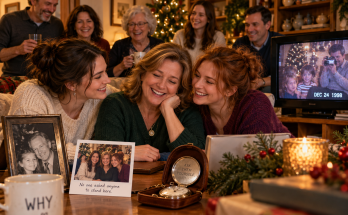
The decision came eighteen months later.
Mom called both of us.
Not a group ambush.
A scheduled video call.
She looked tired but calm.
"I want to sell the house."
Addison stared.
"Now?"
"Within the year."
"Why?"
Mom looked around the room behind her.
"Because I'm ready."
I said nothing.
She continued.
"The stairs are getting annoying. The yard is ridiculous. And the bathroom renovation helped, but this house is too much for one person."
All practical reasons.
Then she added:
"And I don't want either of you waiting for me to admit it."
That was the emotional reason.
The trustee reviewed everything.
The settlement already allowed a voluntary surrender of occupancy rights.
Mom could move.
The trust would sell.
Net proceeds would be administered according to the corrected beneficial structure.
Equal.
Transparent.
Boring.
Addison asked Mom where she wanted to go.
"Apartment."
"Near me?"
Mom smiled.
"Not that near."
Good.
They had both learned something.
Mom found a two-bedroom condo twenty minutes from Maple Drive.
One floor.
Small balcony.
Enough space for sewing.
No yard.
She financed her own portion from permitted personal assets.
The trustee did not quietly shift anything.
No daughter subsidized the move.
Mom did not ask.
When closing approached, the house had to be emptied.
That was harder than the sale.
Forty years of objects.
Dad's tools.
Mom's dishes.
Childhood furniture.
Christmas decorations.
Boxes with labels nobody understood.
Addison and I took three weekends.
Mom participated.
Denny came one afternoon to collect a few things that belonged to him.
The interaction between him and Mom was polite.
Sad.
Private.
I stayed out of it.
Ruth came for coffee and accidentally left with four boxes of books.
"How did this happen?"
"You stood near the books."
"Manipulation."
"Family tradition."
She laughed.
The house grew hollow.
Without furniture, rooms looked unfamiliar.
Smaller.
The living room where the Christmas trap unfolded became only walls and outlets.
The kitchen table was donated.
Mom asked whether either of us wanted it.
We both said no.
She laughed.
"Finally, agreement."
Dad's chair created more debate.
Addison wanted it.
Then didn't.
Then wanted it again.
I refused to decide for her.
Eventually she took it.
Not to preserve a shrine.
She had it reupholstered.
That horrified Mom.
"Daniel chose that fabric."
"Daniel chose brown plaid."
"He liked it."
"He was wrong."
I sided with Addison.
Dad could survive new fabric.
His study took longest.
We sorted carefully.
Not because we expected hidden evidence anymore.
Because habit had made us methodical.
Receipts.
Personal letters.
Tax forms far beyond required retention.
Manuals for appliances no longer manufactured.
Dad apparently never threw away warranties.
"Maybe that's where I got it," I said.
"Your obsession with records?"
"Yes."
Mom laughed.
"No. That was you at six."
"What did I do at six?"
"You kept receipts from your birthday money in a pencil case."
Addison stared at me.
"You were born forty."
"Apparently."
Near sunset on the final Saturday, only one closet remained.
Hallway upstairs.
The one where winter coats had hung.
We emptied boots, blankets, an old vacuum.
Then Addison pulled out a cardboard box.
No label.
"Suspicious."
"Open it," Mom said.
Addison looked at me.
"Together."
We sat on the floor.
Inside were VHS tapes.
Photographs.
School programs.
Dad's old camcorder.
Nothing ominous.
Then one tape carried handwriting.
CHRISTMAS 1998.
Addison groaned.
"Our hair."
"Your hair."
"Yours was worse."
Mom laughed.
We almost set it aside.
Then curiosity won.
The camcorder no longer worked, but one of the tapes had been digitized years earlier onto a DVD stored beneath it.
Dad's doing, apparently.
We found an old laptop with a drive.
Miraculously, it played.
Christmas 1998 appeared.
Shaky camera.
Bad lighting.
Dad behind the lens.
I was a teenager.
Addison younger.
Mom looked startlingly young.
We watched from the bare hallway floor.
On screen, teenage me opened a gift.
A portable CD player.
I laughed.
"I loved that thing."
"You broke it in six months," Mom said.
"Addison sat on it."
"I did not."
The video proved she did.
We laughed.
Then a scene shifted.
Mom handed Addison a larger present.
Some expensive art set.
Teenage me watched.
My expression changed slightly.
Dad's camera moved toward me.
He asked, "You okay?"
I shrugged.
"Fine."
Adult me recognized the gesture.
Fine.
The word capable children learn early.
On video, Dad lowered the camera.
We heard him whisper to Mom.
"What did we get Ren besides the CD player?"
Mom answered quietly.
"She said she didn't need anything."
My throat tightened.
Teenage me had probably said that.
I remembered wanting a camera.
Not asking because money had been tight.
Dad said:
"That doesn't mean she doesn't want anything."
Mom replied:
"Daniel, don't start."
The camera moved away.
Conversation lost.
We sat silently watching our younger selves.
Nothing criminal.
Nothing secret.
Just the pattern.
Old enough to be visible on a home video.
Addison whispered, "You looked hurt."
"I probably was."
Mom stared at the screen.
"I thought you were being mature."
"I was trying to be."
"I rewarded it."
"Yes."
The video continued.
Later, teenage Addison offered me one of her art markers.
I rejected it.
She insisted.
We argued.
Then laughed.
Mom covered her mouth.
"What?"
"You two were trying to fix it yourselves."
Maybe we always had been.
Badly.
Without language.
But still.
The video ended with Dad turning the camera toward himself accidentally.
Half his face filled the frame.
He cursed.
Mom shouted from the kitchen.
"Daniel!"
We laughed so hard the empty hallway echoed.
When the screen went black, none of us moved.
That tape was worth nothing.
Maybe that made it important.
After months where every object became evidence, we had finally found something that did not prove a crime or establish ownership.
It just proved we had been a family before we became a case.
Good moments.
Bad habits.
Affection.
Irritation.
Unequal gifts.
Sisters fighting over markers.
Dad filming badly.
Mom cooking.
Real life.
"I want this," Addison said.
"The DVD?"
"The video."
I nodded.
"Copy it."
Mom looked at me.
"You too?"
"Yes."
Three copies.
No fight.
Mom held the original.
The trust did not need to administer Christmas 1998.
The sale closed in spring.
We went to Maple Drive one last time after the movers left.
No furniture.
No curtains.
Every footstep echoed.
Mom carried the keys.
At the front door, she paused.
"I thought I'd feel worse."
"Maybe later," Addison said.
"Probably."
We walked through once.
Not ceremonially.
Just checking.
Closets empty.
Cabinets empty.
Shed empty.
That shed.
I stood in the yard looking at it.
Addison joined me.
"Want the key?"
"Absolutely not."
"Could frame it."
"Don't."
She laughed.
Mom came outside.
For a second the three of us stood in the same place where a year and a half earlier she had tried to turn a shed key into humiliation.
Mom looked at the building.
Then at me.
"I'm sorry about that night."
"I know."
"No, specifically."
She touched the key ring.
"The neighbors. The recording. The gift."
I waited.
"I wanted to make you feel small before you could make me feel exposed."
There was no defense left in the sentence.
"Thank you."
"For apologizing?"
"For saying exactly what it was."
Mom nodded.
Then she removed the shed key from the ring.
Held it out.
My body stiffened.
She smiled.
"Not for you."
Then she dropped it into the metal recycling bin beside the garage.
Addison burst out laughing.
"So dramatic."
"I raised you."
"Fair."
Mom locked the front door one last time.
Placed the house keys in the trustee's envelope.
Then we walked away.
No one looked back immediately.
Halfway to our cars, Mom did.
So did Addison.
I didn't.
Not because the house meant less to me.
Because I already knew what was behind us.
The good.
The damage.
Dad.
The lies.
The repairs.
I did not need one last image to preserve it.
The proceeds were distributed months later.
Equal beneficial treatment.
Statements sent directly.
No mystery.
No hidden ledger.
I used part of mine to pay off the remainder of my own mortgage.
Not because I had to prove independence.
Because I wanted to.
That distinction still felt luxurious.
Addison invested most of hers.
Bought one absurdly expensive pottery wheel.
"Financial irresponsibility," I told her.
"Personal autonomy."
"Fair."
Mom's condo became home gradually.
New curtains.
Plants.
Smaller table.
Dad's pocket watch did not go there.
It stayed with me.
His chair went to Addison.
The Christmas 1998 video existed in all three homes.
Pieces.
Distributed.
No single house required to carry the family anymore.
Then one evening, nearly two years after the first Christmas invitation, Mom called.
"Do you have Dad's watch nearby?"
"Yes."
"Can you open the back?"
"Why?"
"I remembered something."
I took it from the case.
Opened the silver back.
His initials.
His father's initials.
Then Mom told me to look beneath the inner rim.
Tiny lettering.
Almost invisible.
I angled it toward the lamp.
A scratched sentence appeared.
ASK THEM YOURSELF.
I froze.
"What?"
Mom laughed softly.
"He had that engraved near the end."
"Why didn't anyone tell me?"
"He never told me what it said. I saw it once."
I read the three words again.
Ask them yourself.
The rule everywhere.
In his notebook.
In the undelivered card.
Now on the watch.
Dad had known exactly what our family lacked.
Direct questions.
Direct answers.
No messenger.
No translation.
He had turned the lesson into metal.
I closed the watch carefully.
For once, finding one more hidden message did not feel like discovering another secret.
It felt like being reminded of something we already knew.
Click here to continue reading: PART 35: Years After the Christmas Invitation That Exposed Everything, We Finally Learned What It Meant to Be a Family Without Speaking for One Another
Five Years After My Family Stopped Calling, a Christmas Invitation Arrived With One Sentence That Made Me Drive Home
Part 34 of 35