
The estate meeting took place six weeks later.
By then, autumn had stripped most of the leaves from the trees around Dad’s house. The rooms looked brighter without the summer canopy outside, though the light exposed every scratch in the floors and every faded rectangle where photographs had hung too long.
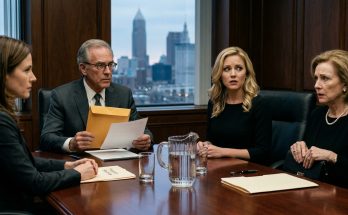
Mr. Bennett arrived carrying fewer folders than usual.
I noticed immediately.
“Are we running out of secrets?”
He almost smiled.
“I would never make that promise about your family.”
Alyssa laughed.
I did too.
That was progress of an unusual kind.
Grandma came.
Vivian did not.
That was her decision.
Or perhaps her recognition that not every family event required her presence.
Mr. Bennett reviewed the final accounting.
Dad’s estate was substantial but not enormous.
The majority passed to me, consistent with the revised will.
Alyssa received a smaller but meaningful share.
Vivian remained financially secure through separate arrangements Dad had established while alive.
The lake house belonged jointly to Alyssa and me.
The restored trust remained mine.
Mom’s invested funds would be handled separately after tax and legal review.
Numbers.
At last, numbers.
I expected them to feel important.
They did not.
Mr. Bennett slid the final documents toward me.
“Questions?”
I looked at the figures.
“No.”
Alyssa shifted beside me.
“I have one.”
We turned.
“Can I disclaim part of my inheritance?”
Mr. Bennett frowned.
“Legally, yes, depending on what you intend.”
“I don’t want to disclaim it exactly.”
She looked at me.
“I want to use some for a scholarship.”
“You can do that after distribution.”
“Good.”
Mr. Bennett nodded.
“I can refer you to someone who handles charitable structures.”
“Nothing complicated.”
“Sometimes simple is better.”
She smiled.
“I’m learning.”
Grandma looked proud.
Alyssa noticed and immediately said, “Don’t make this noble.”
Grandma blinked.
“I wasn’t—”
“Yes, you were.”
She smiled gently.
“I’m not giving money away to balance some cosmic scale. I just want to do something useful.”
Grandma nodded.
“That sounds reasonable.”
The correction was small.
But I noticed.
Alyssa was refusing roles now.
Favorite daughter.
Guilty daughter.
Redeemed daughter.
She was becoming simply herself.
Mr. Bennett turned to me.
“There is also the matter of William’s personal property.”
The walnut desk.
Books.
Fishing equipment.
Photographs.
Letters.
Dad had left those to me.
I had almost forgotten amid the larger discoveries.
“What do you want to do with them?”
“Take some to Chicago.”
“Which?”
“The desk.”
Alyssa smiled.
“That thing weighs more than your car.”
“Then you’re helping.”
“I withdraw my support.”
I took Dad’s books too.
Not all.
Alyssa wanted several.
We divided them without argument.
That felt more remarkable than the estate itself.
At one point, we both reached for the same battered mystery novel.
Dad had written notes in the margins.
Alyssa held one side.
I held the other.
We looked at each other.
“Rock-paper-scissors?” she asked.
“You’re forty-something years old.”
“So are you.”
“Fine.”
I won.
She accused me of cheating.
I reminded her that was biologically impossible to prove.
The joke came out before either of us thought.
We froze.
Then Alyssa laughed.
Hard.
I did too.
Months earlier, DNA had been a weapon.
Now we could touch the subject without bleeding.
That did not mean the wound was gone.
It meant it had begun becoming a scar.
After the meeting, Grandma asked to speak with me alone.
We went into the kitchen.
She looked older than she had at Dad’s funeral.
Maybe I was simply seeing her more accurately.
“I owe you more than an apology,” she said.
“I know.”
“I should have intervened.”
“Yes.”
“I kept telling myself William was your father and it was his place.”
“That was convenient.”
“Yes.”
She accepted it.
“I loved him.”
“I know.”
“I protected him.”
“I know.”
“Sometimes from consequences he needed.”
I looked at her.
“Yes.”
She took my hand.
“I cannot change that.”
“No.”
“What can I do?”
The question resembled Vivian’s.
My answer differed.
“Be available.”
“For what?”
“For the uncomfortable version.”
She frowned.
“When people talk about Dad, don’t turn him into a saint because he died.”
Grandma’s eyes filled.
“He was a good man.”
“He was.”
The answer surprised her.
“He was also a man who failed.”
“Yes.”
“I need both.”
She nodded.
“I can do that.”
“Good.”
She squeezed my hand.
“I am proud of you.”
The phrase irritated something old inside me.
Then I realized she was not praising survival.
She was simply saying it.
I let her.
“Thank you.”
That afternoon, movers collected Dad’s desk.
I stood in the study while they wrapped it in blankets.
When they carried it through the doorway, a rectangle of unfaded flooring remained beneath where it had sat for decades.
The room looked wrong.
Alyssa stood beside me.
“Feels like stealing.”
“It’s mine.”
“I know.”
“Dad left it to me.”
“I know.”
“Then why does it feel like stealing?”
“Because it’s been there forever.”
We watched the movers navigate the stairs.
The desk would go to my Chicago apartment.
For the first time, something from Dad’s house would enter the life he had only observed from a distance.
I liked that.
Not as reconciliation with a dead man.
As integration.
I no longer wanted my life divided into before family and after family.
Ohio and Chicago.
Wanted and unwanted.
Belonging and exclusion.
The desk could simply be furniture with history.
That evening, Alyssa and I went through the dining-room cabinets.
The house would eventually be sold.
Neither of us wanted it.
Too much of its architecture belonged to conflict.
The lake house was different.
We had decided to keep that one for at least a year before reconsidering.
No permanent promises.
Just time used intentionally.
In a drawer, Alyssa found old place cards from some Thanksgiving.
Names written in Vivian’s handwriting.
William.
Vivian.
Alyssa.
Grandma.
Mine was missing.
A familiar ache surfaced.
Then Alyssa reached deeper.
“Wait.”
She pulled out another card.
Candace.
My name.
The corner was bent.
I stared.
“Maybe you were invited.”
“Maybe.”
“Do you remember?”
“No.”
“Could be from the year you came.”
“Could be.”
We no longer forced every artifact into an accusation.
Some things were simply unclear.
That was new too.
A week later, Dad’s desk arrived in Chicago.
It barely fit through my apartment door.
The movers complained.
I tipped them generously.
I placed it near the window.
For several days, I did not use it.
Then one Saturday morning, I sat down with coffee and opened my laptop.
Dad’s old scratches covered the wood.
A circular stain marked the corner.
I remembered making that stain with a glass of lemonade when I was eight.
Dad had pretended outrage.
I smiled.
Then I wrote.
Not about family.
An ordinary article.
Work.
For three hours, Dad’s desk was simply where I worked.
That mattered more than I expected.
Mom called that afternoon.
We had begun speaking twice a week.
Not scheduled.
Naturally.
She planned to visit Chicago in spring.
This time, no intermediary.
No permission.
No letters passed through someone else’s hands.
She would book a flight and come.
“Do you want me to stay with you?” she asked.
The question carried decades inside it.
I thought carefully.
“Yes.”
She went quiet.
“Okay.”
“Guest room.”
“I assumed.”
“You snore.”
“I do not.”
“You absolutely did.”
“When you were six.”
“Some characteristics are permanent.”
She laughed.
After we hung up, I realized I had invited my mother into my home without fear that doing so betrayed Dad.
For most of my life, relationships had been presented as choices between people.
Mom or Dad.
Dad or Vivian.
Me or Alyssa.
Biology or love.
Truth or family.
The framework itself had been wrong.
Alyssa came to Chicago the following weekend.
Her first therapy appointment had been three days earlier.
“How was it?”
“Terrible.”
“Good.”
“Why does everyone say that?”
“Did you go back?”
“I scheduled another.”
“Then terrible-good.”
She rolled her eyes.
We walked to a café near my apartment.
For the first time, we met somewhere without legal documents.
No letters.
No funeral.
No DNA.
Just coffee.
We talked about books.
Music.
Work.
She hated one of my favorite authors.
I insulted her taste in music.
She told me she had once wanted to study architecture.
I stared.
“You did?”
“Yes.”
“What happened?”
“Mom said it was impractical.”
“Did Dad know?”
“No.”
“Why didn’t you tell him?”
She smiled sadly.
“I was good at silence too.”
That landed.
“What would you do now?”
“I don’t know.”
“You don’t have to change careers because of one childhood dream.”
“I know.”
“But?”
“I signed up for a drawing class.”
I smiled.
“That sounds reasonable.”
“Stop approving of me.”
“I’ll try.”
She sipped her coffee.
“Can I ask something?”
“Yes.”
“Do you resent the inheritance?”
“What?”
“The money.”
“Why would I?”
“Because it’s Dad trying to compensate.”
I considered.
“Some of it is.”
“Does that bother you?”
“Yes.”
“Then why accept it?”
I looked through the café window.
People moved along the sidewalk.
“It belonged to him.”
“That’s not an answer.”
“No.”
I thought again.
“Because refusing it would not return the years.”
Alyssa waited.
“And accepting it doesn’t mean I agree the years had a price.”
She nodded slowly.
“I think I needed to hear that.”
“Why?”
“I kept wondering whether I should refuse mine.”
“Do you want to?”
“No.”
“Then don’t.”
“But—”
“Alyssa.”
She stopped.
“Dad left you something because you were his daughter.”
Her eyes filled.
“DNA doesn’t cancel that.”
“I know.”
“Then stop making the test more powerful than it deserves to be.”
She looked down.
For someone who had once demanded biology settle everything, she was now struggling to accept that it settled very little.
“Okay.”
We left the café and walked along the river.
Cold wind came off the water.
At one point, Alyssa said, “I’m sorry about the funeral.”
I looked at her.
“You’ve apologized.”
“I know.”
“Then why again?”
“Because I keep remembering how certain I was.”
“That’s probably part of learning.”
“I wanted everyone watching.”
“I remember.”
“I wanted you embarrassed.”
“I remember that too.”
She stopped walking.
“I don’t want to become someone who uses apology to make the other person comfort me.”
“Good.”
“So I won’t ask whether you forgive me.”
I appreciated that.
“But I want you to know I understand now that it wasn’t only the DNA test.”
“No.”
“It was thirty years of trying to make you smaller.”
“Yes.”
Her eyes filled.
“I’m sorry.”
This time, I touched her arm.
“I believe you.”
She nodded.
That was enough.
We continued walking.
Two months later, the Harper house went on the market.
Before the listing photographs were taken, Alyssa and I returned to remove the last personal items.
The rooms were nearly empty.
Without furniture, voices echoed.
In the dining room, Alyssa stood where the old table had been.
“Dad asked about your day first.”
I smiled faintly.
“So you keep telling me.”
“I need you to believe it.”
“I do.”
She looked around.
“I hated you for having something I thought I needed to take.”
“I hated you for having something I thought you had already taken.”
“Dad.”
“Yes.”
She nodded.
“We were both wrong.”
“Mostly.”
“Mostly?”
“You did have better clothes.”
She laughed.
“That’s true.”
We carried the final box outside.
Before locking the door, I looked back.
I expected grief.
Instead, I felt release.
Not because the house meant nothing.
Because it no longer had authority.
The truth had escaped it.
No hidden vent could put the letters back.
No locked study could return Dad’s confessions to silence.
No dining table could make us children again.
I closed the door.
Alyssa waited beside the car.
“What now?”
I looked at the house.
“Now somebody else buys it and complains about the plumbing.”
She laughed.
Then her phone rang.
Her expression changed when she saw the screen.
“Who?”
“Mom.”
She answered.
I watched her listen.
Her face tightened.
“What happened?”
Alyssa looked at me.
Vivian had been sorting belongings at Aunt Carol’s house.
She found something.
Not another secret account.
Not another paternity claim.
A photograph album.
Dad had given it to her shortly before he died with instructions to give it to Alyssa only after the estate was settled.
Alyssa closed her eyes.
“Why didn’t she give it to me?”
I could hear Vivian crying faintly through the phone.
Alyssa listened.
Then looked at me.
“What?”
“She says she forgot.”
I raised an eyebrow.
Alyssa almost smiled despite herself.
“She says she knows I won’t believe that.”
“Do you?”
“No.”
“What does she think happened?”
Alyssa listened again.
Then her expression softened.
“She says she couldn’t bear to give away the last thing Dad handed her.”
That, I believed.
Alyssa ended the call.
“Do you want to go get it?”
She looked at the empty house.
Then at me.
“Yes.”
We drove to Aunt Carol’s.
Vivian met us at the door carrying a large album.
She handed it directly to Alyssa.
No speech.
No justification.
Alyssa opened the cover.
The first photograph showed Dad holding her as a baby.
The next showed her first day of school.
Then birthdays.
Lake trips.
Graduation.
College.
A life.
Dad had built an album for her.
Near the back, the photographs changed.
There was one of me.
Then one of Alyssa.
Then one of us together.
The lake house.
Recent.
Taken by Grandma during our first return after the funeral.
Alyssa stared.
“How did Dad have this?”
“He didn’t,” Vivian said.
“That one was added later.”
“By who?”
Vivian looked at me.
“Your grandmother.”
Alyssa turned the page.
Blank spaces remained.
Many.
At the bottom of the final completed page was Dad’s handwriting.
Leave room.
Nothing more.
Alyssa touched the words.
Then looked at me.
“He knew there would be more?”
“He hoped.”
Vivian stood quietly.
For once, she did not tell us what the message meant.
Alyssa closed the album.
“I’m keeping it.”
“It’s yours,” Vivian said.
“I know.”
Then Alyssa did something I did not expect.
She hugged her mother.
Briefly.
Vivian froze.
Then returned it.
When they separated, Alyssa said, “This doesn’t mean everything is okay.”
“I know.”
“I’m still angry.”
“I know.”
“I still love you.”
Vivian began crying.
“I know.”
For once, those two words were enough.
As Alyssa and I walked back to the car, she carried the album against her chest.
The empty pages waited behind the photographs.
Not promises.
Possibilities.
And for the first time in our lives, neither sister needed the other one erased to imagine what came next.
Click here to continue reading: PART 21: Before We Sold Dad’s House, Alyssa and I Returned to the Empty Dining Room and Finally Understood What We Had Been Fighting Over
At My Father’s Funeral, My Sister Turned an Old Family Rumor Into a Public Challenge I Could No Longer Ignore
Part 20 of 24

One Comment on “PART 20 – As the Estate Finally Settled, Alyssa Made Her First Choice Without Vivian’s Influence, and I Faced What Accepting Dad’s Inheritance Really Meant”